

“Summer Baseball Nation: Nine Days in
the Wood Bat League”
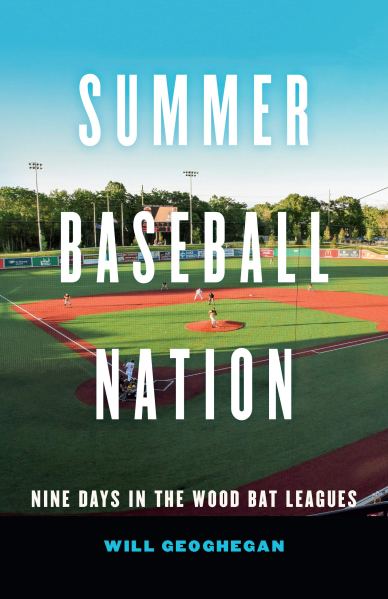
The author:
Will Geoghegan
Also follow at:
Summer9Nation
The publishing info:
University of Nebraska Press
$29.95
240 pages
Released April 1
The links:
At the publisher’s website
At Amazon.com
At BarnesAndNoble.com
At Powells.com
At Indiebound.org
At the author’s website
The review in 90 feet or less
How far would one go to watch Wood Bat League baseball?
 Consider how Will Geoghegan is based in Rhode Island working for the weekly Independent covering University for Rhode Island and prep sports, as well as focusing on the Cap Cod League. The roadie he takes to Alaska and then veering south through Santa Barbara during the summer of 2016 kind of defines how much pine-tared affection he has for the subject. And a wish we could have tagged along.
We recall once talking to USC baseball coach Rod Dedeaux about the pros and cons of aluminum bats. At the time, Dedeaux was proudly getting around with a cane famously fashioned out of a wooden bat.
“You just get used to it, but I’d prefer wood bats any time,” he said as we watched a USC-UCLA game from Dedeaux Field.
Same here.

Dedeaux had been one of the first major names to start funneling future Trojan players through the Alaskan Summer League experience – Tom Seaver, a recruit from Fresno City College, had yet to prove himself at this level and Dedeaux wanted to see if he was worthy of a scholarship, so the Alaska Goldpanners gave him a shot.
Dedeaux’s Alaskan pipeline was established.
While Geoghegan starts and ends his journey in his home turf of Cape Cod as well as venturing over to Newport, R.I., for more research, it’s his far-away trip to Fairbanks, Alaska on the summer solstice of June 21 for the Midnight Sun Game that brightens our day.
That’s followed up by a fascinating trip to Santa Barbara to document the success of the Foresters, a perennial National Baseball Congress World Series squad headed up by Bill Pintard, that reveals more about the California Collegiate League that spans from Long Beach to wine country has plenty of noteworthy talent as well to choose from. (Note: They also use flat-seemed baseballs).
Cape Cod visits make up three of the “nine days” as the title says, in addition to trips to Hampton, Va.; Washington D.C., Kenosha, Wisc. – places where college players get to play with other top talent in their region, specifically using wood bats so the pro scouts can have another frame of reference in their notes.
Some of it can be the stuff of movies.
So maybe “Summer Catch” with Freddie Prinze Jr. and Jessica Beal in 2001 didn’t circle the bases for you. It’s another of San Fernando Valley-based producer Mike Tollin’s sports-related themed movies that uses sports as a platform to tell another relationship story. Even as much of it was filmed in North Carolina. Yet, there’s Hank Aaron making a cameo as a scout. Too rich.
The Alaska trip is one we’ve had on a bucket list, particularity the Midnight Game, which we read now actually starts at about 10:30 p.m., leads to the crowd singing the Alaska state song in the inning closest to midnight, then takes a hiatus if the sun decides to disappear for an elongated dusk for a couple hours, with the knowledge it will come back quick enough. Listen, you’re less than 200 miles from the Arctic Circle, where ice fishing and curling should be king. But baseball is the kingfish during the longest day of the year, and it goes back more than 50 years and has survived some problematic hurdles of the modern world.
Geoghegan reminds us that the best-attended Midnight Game was in 1967, when 5,200 saw a USC product, Bill Lee, pitch against a team from Japan. Lee circled back 42 years later, in 2008, and at 61, threw six innings and got the win, before 4,900.
In the game Geoghegan saw, there was enough Southern California talent to note – pitcher Joe Fernandez was wearing a Compton Baseball sweatshirt before the game, a reference to the JC ball he played at El Camino-Compton Center. Second baseman Alex Mascarenas is a former UCLA football player who started two games at defensive back in 2011 before concussions led him to leave. He is trying to come back in baseball after having gone to Santa Ana College. Now he’s a Goldpanner, too. (Still wondering: Is he the head softball coach at Mt. SAC?)
(Spoiler alert: The game Geoghegan attends is suspended because of … get this … darkness. Or mostly thick clouds that won’t disperse until the next day. Which is actually the same day. So it is completed but … )
(Non-spoiler alert: W actually know someone who played in the Alaska Summer League … chew on that)
In Santa Barbara, the Foresters play on the same field in Carpinteria as UCSB’s Gauchos, and the rosters over the years have been supplemented by USC and other college powerhouses. Of most interest is how Pintard created a method of tabulating an “Offensive Pressure” formula for his team to aim to achieve each game — an insightful way any coach can use a goal-orientated approach toward providing the best-chance elements of a game that will, percentage-wise, lead to a more likely victory (i.e.: earn nine “freebies” such as a walk, stolen base or error, create as many eight-pitch at-bats against opposing pitchers that lead past a 150 pitch-count thresholds, and it’s not easy to lose).
There’s also a great back story to Pintard and his son that’s worth uncovering.
The theme Geoghegan discover unveiling in front of him becomes obvious:
I found great stories, surrounded by the same trappings that had always seemed so perfect. Big dreams. Small towns. Warm nights. Through the lens of nine days, a summer picture emerged.
How it goes in the scorebook
A perfect pitch, matched by a perfect pace.
Peaceful and profound in many ways. A rhythm of summer captured with the proper tone all while getting the best wood of the barrel of the bat, label up, on the right notes of information.
Just by reading, so many senses are revisited and reopened to similar experiences we’ve had a smaller, slower-paced ballparks around the country.
And if you crave more, Geoghegan has a website of his own, plus one dedicated to the Cape League called rightfieldfog.com. Catch it this summer, hopefully.

More reviews
== From Publishers Weekly: “The players only play for few months in these leagues before the short season ends, so Geoghegan offers only brief glimpses of the them, focusing more on the coaches, GMs, and owners, who, as locals or rooted transplants, have stronger ties to their communities. Though Geoghegan says the teams are all about community, there’s little about the fans, the families that host players, or what college kids do in, say, Fairbanks, Alas., for a summer. Geoghegan’s exploration of little-known baseball leagues is best suited for diehard baseball fans.”
Coming up related to wood bats
 == “The Major League Baseball Bat, From Tree to the Swing, 19th Century to Today,” by Stephen M. Bratkovich, (McFarland, $29.95, 190 pages, due June 2020).
From the publisher: “Why do modern-day sluggers like Aaron Judge prefer maple bats over the traditional ash bats swung by Ted Williams and others? Why did the surge of broken bats in the early 21st century create a crisis for Major League Baseball and what steps were taken to address the issue? Are different woods being considered by players and manufacturers? Do insects, disease and climate change pose a problem long-term? These and other questions are answered in this exhaustive examination of the history and future of wooden bats, written for both lifelong baseball fans and curious newcomers.”
Exhaustive? It’s 190 pages.
More info
 The California Collegiate League announced a new format for this summer, if there is play to be held: A three-Division (North, Central and South) set up with: North Division features the Healdsburg Prune Packers, Lincoln Potters, Solano Mudcats, and Walnut Creek Crawdads. Central Division teams include the San Luis Obispo Blues, Santa Barbara Foresters and Conejo Oaks. The South Division teams are the Arroyo Seco Saints, MLB Academy (Compton) Barons, and the Orange County Riptide.


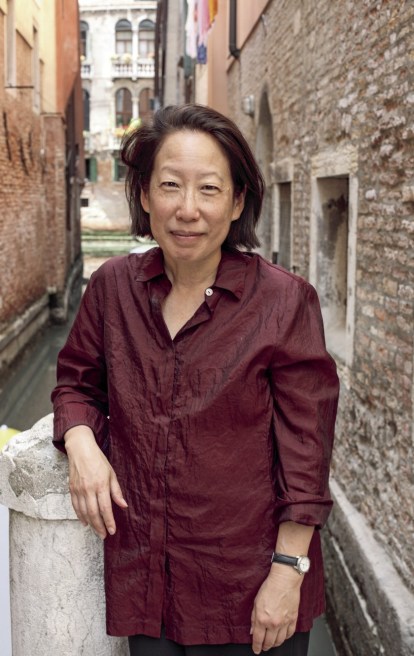 We did become enamored with the challenge of considering this after a review/interview in the


 Hatcher deserves to be in a Hall all his own.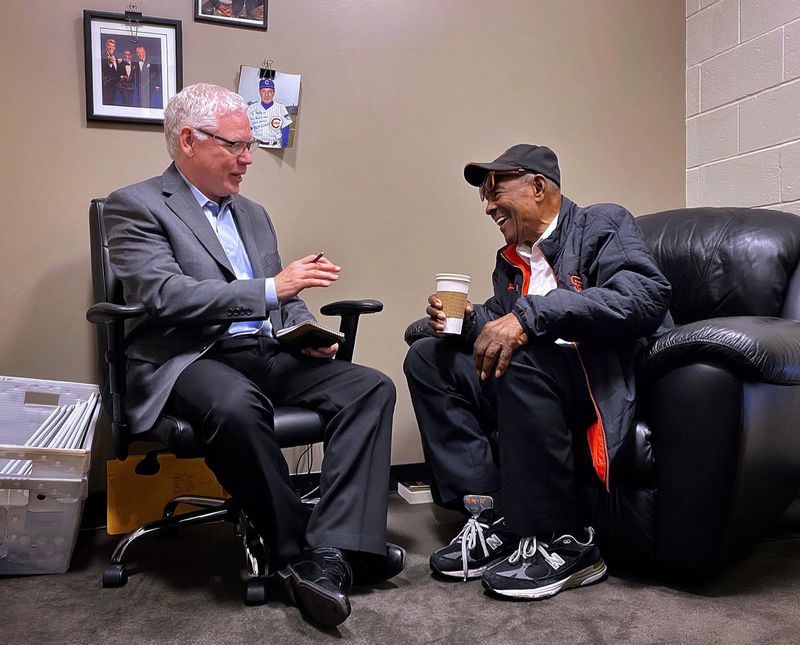


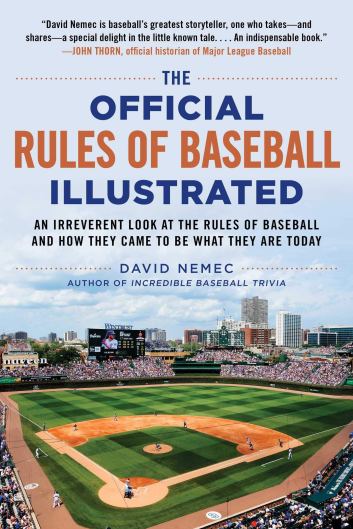 The author:
 As a Laguna Woods/Leisure World of Orange County 80-something resident who
  A playwright, novelist and former Ohio State University baseball player has so much of his own resource material handy that it’s no coincidence in this revised edition of the Illustrated Rules – it first came out in 1999 but hasn’t been touched since a 2006 version — he has himself mentioned in the index four times. Even that seems a bit too modest.
