This is the latest post for an ongoing media project — SoCal Sports History 101: The Prime Numbers from 00 to 99 that Uniformly, Uniquely and Unapologetically Reveal The Narrative of Our Region’s Athletic Heritage. Pick a number and highlight an athlete — person, place or thing — most obviously connected to it by fame and fortune, someone who isn’t so obvious, and then take a deeper dive into the most interesting story tied to it. It’s a combination of star power, achievement, longevity, notoriety, and, above all, what makes that athlete so Southern California. Quirkiness and notoriety factor in. And it should open itself to more discussion and debate — which is what sports is best at doing.
The most obvious choices for No. 53:
= Don Drysdale, Los Angeles Dodgers = Keith Erickson, UCLA basketball = Rod Martin, Los Angeles Raiders
The not-so-obvious choices for No. 53:
= Jim Youngblood, Los Angeles Rams = Lynn Shackleford, UCLA basketball
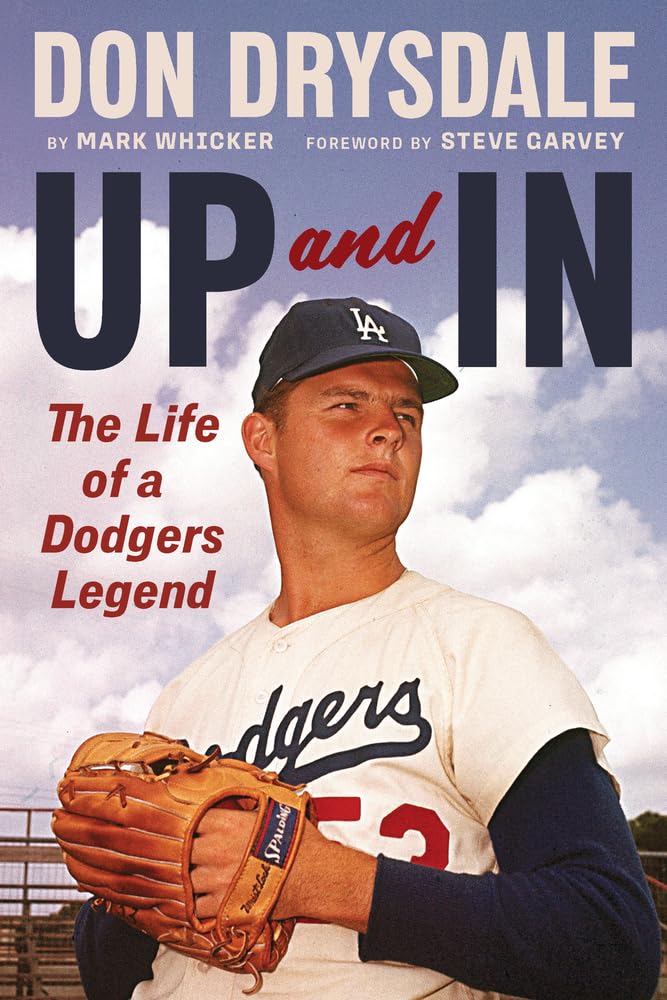
The most interesting story for No. 53: Don Drysdale, Los Angeles Dodgers pitcher (1958 to 1969), California Angels broadcaster (1973 to 1981), Los Angeles Rams broadcaster (1973 to 1976), Los Angeles Dodgers broadcaster (1988 to 1993)
Southern California map pinpoints: Van Nuys, Bakersfield, Hollywood, Los Angeles (Coliseum, Dodger Stadium), Anaheim
To tell the truth about the dogma of Don Drysdale, there’s a legendary aura of “Big D” that goes beyond bigger-than-life discoveries about the 6-foot-6 right-handed sidewinder, a San Fernando Valley-reared kid who spent all 14 years of his big-league career with the Dodgers organization, moved with them back to Los Angeles from Brooklyn, and spent the last six years of his life as a broadcaster with them.
See how this works:
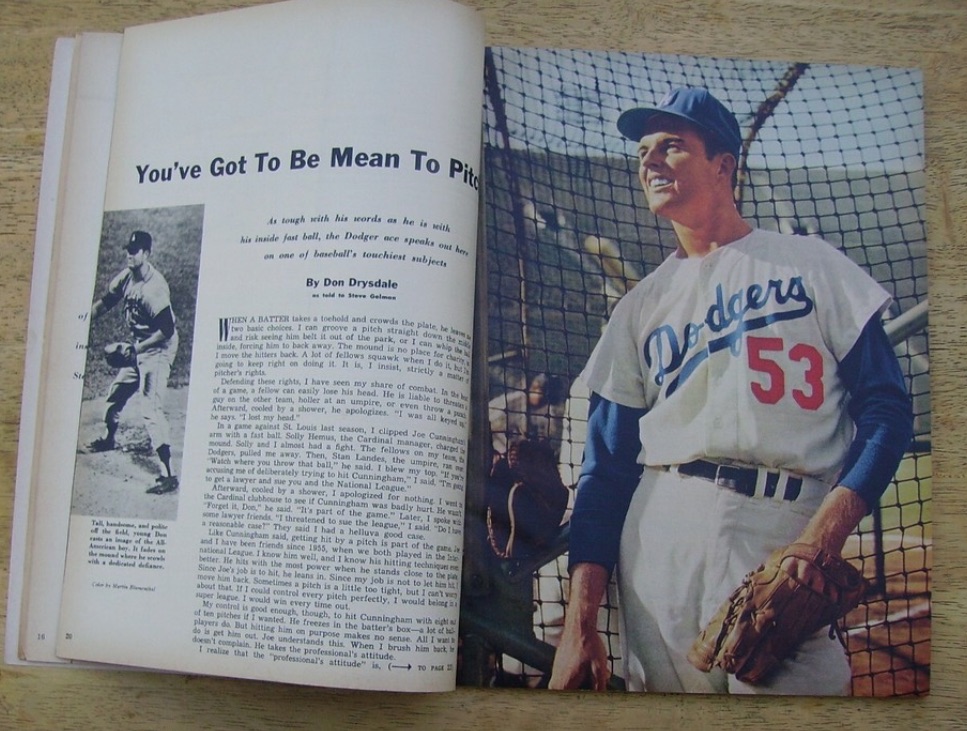
From the 1960 issue of Sport magazine, the self-authored story: “You’ve Got to Be Mean to Pitch”
Truth that’s been told: Don Drysdale led the league in putting the “mean” in a meaningful pitch.
Dare to discover: If some SABR-cat researcher was compelled to look it up, we’d suspect there was enough evidence to confirm Drysdale threw more brushback/purpose pitches than anyone else in his era. Four times, he led the majors in plunking batters — 154 HBP in all, more than 10 a season, and an National League record at the time of his retirement in 1969. But it played into his philosophy: You knock down/hit one of my guys, I knock down/hit two of yours. If they are hit in the process, well …
Further research from Fangraphs on the essence of the “Two For One Special,” aka the “Drysdale Revenge Factor,”‘ shows that 18 times in his career, Drysdale hit two or more batters in a game. That mindset traces back to Drysdale’s by former veteran Brooklyn teammate Sal “The Barber” Maglie. Properly stated, it puts the idea in a batter’s mind that while the pitcher could claim ownership to half of the 17-inch home plate, you weren’t always sure which half Drysdale picked in that situation.
Batters knew the drill.
“Batting against him is the same as making a date with the dentist,” Pittsburgh’s Dick Groat once said. Added San Francisco’s Orlando Cepeda: “The trick against Drysdale is to hit him before he hits you.”
In a 1979 interview with the New York Times’ Dave Anderson, Drysdale, 10 years after his retirement, said delivering the inside pitch was a “lost art.”
“I just feel,” he was saying now, his right forefinger swirling the ice in his Scotch, “that when you’re pitching, part of the plate has to be yours. … The pitcher has to find out if the hitter is timid. And if the hitter is timid, he has to remind the hitter he’s timid.”
Back by somewhat unpopular demand — maybe query a few authors whose books in the recent past I might have ended up splaying with an intent to de-boned, all in the name of honest criticism — the 2025 version of the newest spring/summer baseball book reviews returns for another attempt at education and entertainment.
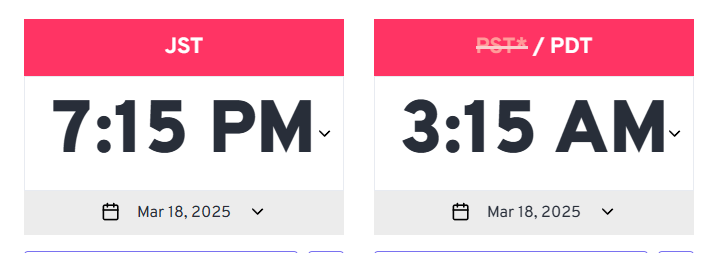
It coincides with the start of the Dodgers-Cubs series leading off the ’25 MLB season in Japan. The clocks are being adjusted as we try to spin forward.
Here, as we have done since 2011*, reviews are more an exercise in empathy for those who open their veins to write these things in the first place, along with our attempt at explaining how the subject matter connects in our universe. Then, there’s an efficiency trying to cover more than a couple dozen new titles that have come into the marketplace since the end of the ’24 season.
This whole thing, initially focused on the insane premise of posting 30 reviews once day over the 30 days in a row in April, challenges us to stay current while also adding some context.
*Our memory is fading and we weren’t actually sure, but that’s the best guess, since we’ve got The Wayback Machine to find things we’ve posted going to the InsideSoCal.com platform that started in 2006.
This ’25 baseball book review project again deviates a bit from its original calisthenics stress test. We can’t do 30 in a row, but the target remains at least 30 reviews. All done by summer.
There’s also a new stipulation: No more links to purchasing books on the website named after a river in South America and empties into the Atlantic. Reviews are no longer posted on the social media site once known as Twitter.
Resistance isn’t futile. It’s long overdue.
Consider this: A book called “How To Resist Amazon And Why: Updated and Expanded — The Fight For Local Economies, Data Privacy, Fair Labor, Independent Bookstores and a People-Powered Future” by Danny Caine, owner of the Lawrence, Kansas-based Raven Book Store, sells for a reasonable $14.95 on the Microcosm Publishers’ website. As well as on Caine’s store site, a zine version for $3.
The website in question, meanwhile, not only offers this book that meticulously besmirches its existence, but has it at 40 percent off for those looking to prove everything the book points out.
From our storage unit, here’s what we plan to cover in ’25:
= “I Felt the Cheers: The Remarkable Silent Life of Curtis Pride,” by the former Angels outfielder who also played for Montreal, Detroit, Atlanta, Boston and the Yankees, and was a coach at Gallaudet, the world’s leading university for deaf and hard of hearing students and was also named Major League Baseball’s Ambassador for Inclusion.
The point it to let readers know these works exist, should you be tempted to pick them up for purchase without knowing their caveats. It’s also a way to uncover projects that otherwise might be off the radar. No fees attached. Enjoy.
Before the first reviews, a short Q&A:
Seinäjoki Library in Seinäjoki, Finland.
Q: What happens to all the baseball books collected during the course of the year to review?
A: Pay it forward, if that’s still a phrase. As in, donate them to the local library.
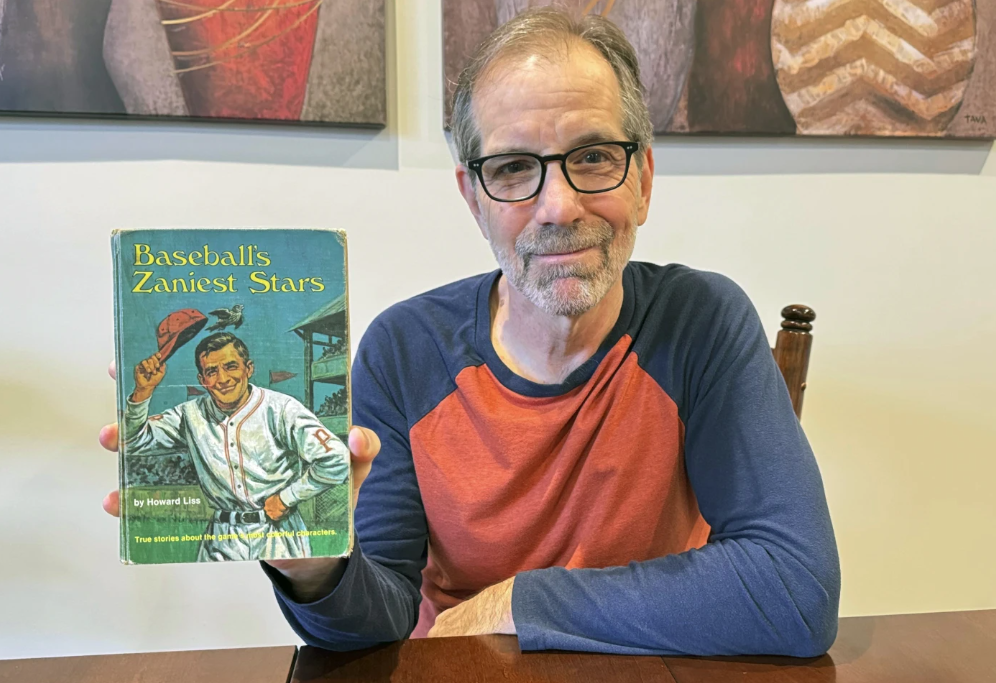
The 144-page book by Howard Liss released by Random House aimed at school kids interested in sports-related bios was first published in 1971.
Chuck Hildebrandt, a 63-year-old retired digital marketing exec living in Chicago, explained to the Detroit Free Press that he purposefully visited the public library in the Detroit suburb of Warren, Mich., while in town visiting family for Thanksgiving. The reason was to bring back a copy of “Baseball’s Zaniest Stars,” which he recalls borrowing from the city’s Walt Whitman Branch on Dec. 4, 1974, when he was a 13-year-old.
He had forgotten to return it. Fifty years later, he sought some closure.
Hildebrant said he came across it on his bookshelf about five years ago, noticed the Dewey decimal library sticker on the spine, and figured out what happened.
In December of 2024, he tried to give it back. The library declined.
“Some people never come back to face the music,” said library director Oksana Urban. “But there was really no music to face, because he and the book were erased from our system.”
Still, what would the fine have been for a return this late? More than $4,500 according to Hildebrant’s math. To be precise, it was $4,563.75 to be precise, if he had been charged the normal fees.
“I am still somewhat embarrassed so I want to make good on it in some way,” Hildebrant wrote on a social media post.
Hildebrant decided to start a GoFundMe.com fundraiser to see if he could match that $4,564 projected fine, and then donate it to Reading Is Fundamental, the nation’s leading children’s literacy non-profit since the 1960s that so many of us Boomer-types remember from our childhood as well.
To date, the effort raised more than $5,300 with more than 100 donations.
Maybe we can keep contributing. Or …
This book looked familiar, and my recollection must have been finding it at my own library when I was in middle school. The cover illustration of Casey Stengel taking off his cap and having a sparrow he kept hidden in his suddenly fly out was something I wouldn’t have forgotten.
In the book, it explains how Stengel, just traded from Wilbert Robinson’s Brooklyn Robins (pre-Dodgers) to the Pittsburgh Pirates in 1918, was back for the first time at Ebbets Field in Brooklyn, playing right field. He noticed in the Brooklyn bullpen that former teammate Leon Cadore was able to scoop up a sparrow that landed. On his way to the dugout at the end of the inning, Stengel asked Cadore to give him the sparrow. When Stengel went to bat that inning, the fans gave him a rousing ovation. He stepped into the batter’s box, dropped his bat, bowed low and raised his cap — and the sparrow fluttered a moment and flew off.
“I always knew that Stengel had birds in his top story,” Robinson was reported to have said.
After reading the story about Hildebrandt — and realizing we are about the same age — I tracked down a New Jersey used book store called Between the Covers listed on AbeBooks.com (the one-stop used book store repository) and picked up a nice copy of “Baseball’s Zaniest Stars.”
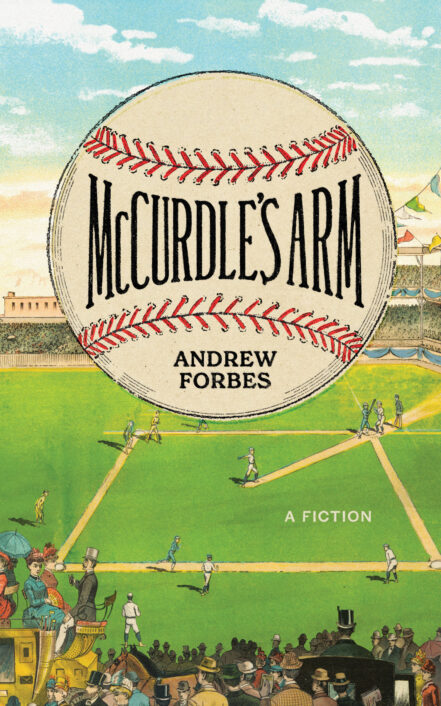
It went for $20 (plus $5 shipping). I really did enjoy re-reading it from cover to cover this past winter. Simultaneously, I had been reading Andrew Forbes’ latest piece of fiction, “McCurdle’s Arm,” a 108-page novella released in August of ’24 by Invisible Publishing, and the two seemed joined at the spine.
Forbes’ ultra-creative use of 1890s quirky baseball prose told the story of Robert James McCurdle, who could have been a character in “Baseball’s Zaniest Stars,” along with Stengel, Bobo Newsom, Dizzy Dean, Babe Herman and Rabbit Maranville.
Re-reading that review recently was again somewhat as therapeutic as it was writing it four years ago. The cover illustrations were spectacular as well.
Armed with “McCurdle’s Arm” and star struck again by “Baseball’s Zaniest Stars,” I felt as if I was thrust back in time. No hurry for anyone to come to my emotional rescue.
So, with the start of this ’25 review, “McCurdle’s Arm” goes back on my shelf for safe keeping, and “Baseball’s Zaniest Stars” will go next to it, or I’ll deliver it to my local library with all the other books set to be donated this time around.
The hope is that everything will be fine, and there are no fines attached to anyone’s future enjoyment. And a RIF donation is forthcoming.









 Tom Hoffarth's The Drill: More Farther Off the Wall