
Day 5 of 2026 baseball book reviews: M(ake) E(nshittification) T(errible) S(omewhere) in the N.Y. branding

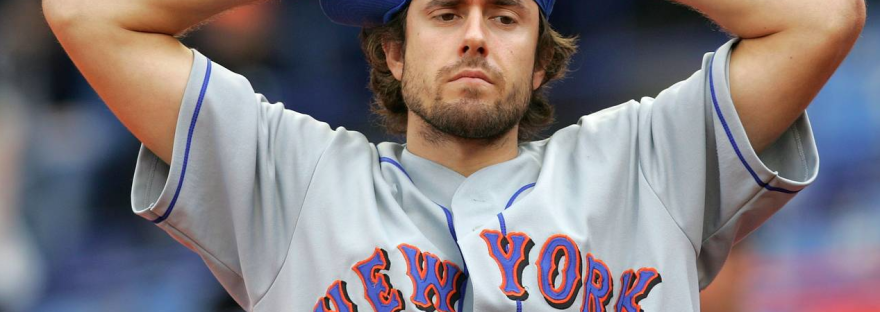
Embrace the disgraced general concept of enshittification as it pertains specifically to the New York Mets and, by geographic circumstances, also to the New York Yankees.

As pent-up anger and frustration ruins the way we wade through an existing world of A.I. slop, we learn that the Enshittocene — a noun coined by author Cory Doctorow and then fleshed out in his 2025 book about “Why Everything Suddenly Got Worse and What to do About it” — expanding the definition beyond soul-crushing Big Tech stalwarts can be a healthy exercise for those who need a way to explain their grief and lack of relief.

If the Amazin’ Mets are an Amazon-Meta mashup, and the Yankees, way more than Waymo or Yahoo in their Oracle world, continue to reflect as the IBM of baseball, you Reddit right that it all happens under what locals call the Big Apple, but really it’s acting on algorithms engineered by the gigabytes of  Tim Cook’s Apple Inc.

No wonder the Mets and Yankees start this new week having each lost on five consecutive days for the first time in history, according to Sportradar.

An AI query about how any of this might Venn diagram itself on the circles of despair looks like this:
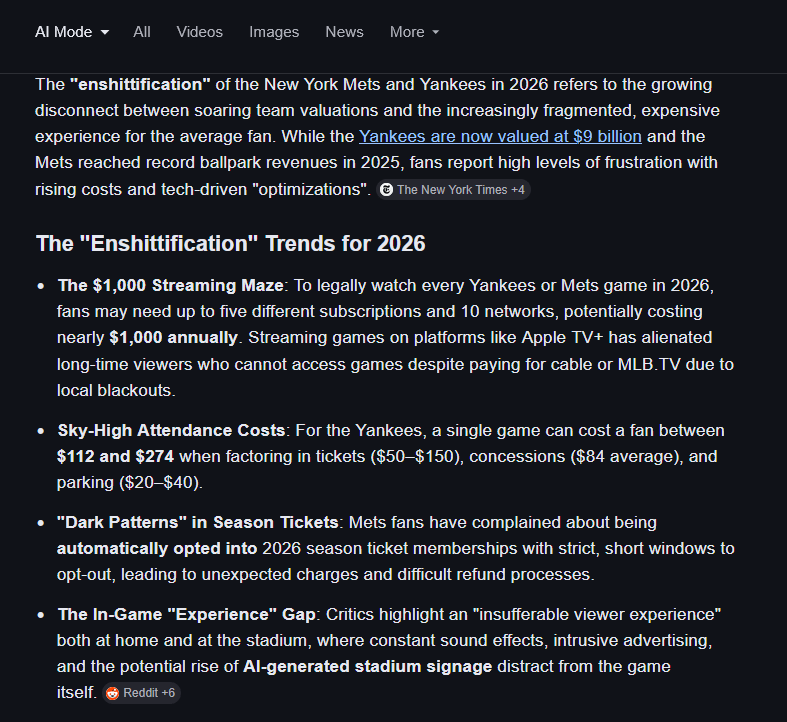
Plenty of other sources that explain how Steven Cohen, who in 2020 bought the Mets for $2.4 billion from his hedge-fund stash that wasn’t penalized for insider trading, has granted the team a MLB-top $352 million payroll for the 2026. The Mets have under contract the highest-paid player in outfielder Juan Soto, averaging $61.9 million in salary. He is currently injured.

The Dodgers circumvent much of this by deferring payments that otherwise would boost their ’26 payroll to $395 million. They also are on tap to pay the highest tax rate on the Competitive Balance Tax payroll for exceeding MLB’s $244 million threshold. The Mets and Yankees are second and third on that list.
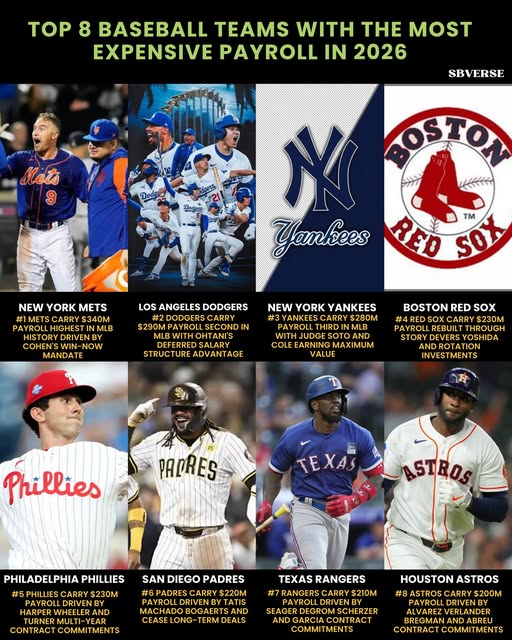
For all the lamentations that the Dodgers are ruining baseball with their ownership spending … why is it every July 1 that we’re all reminded that it is the Mets who continue to give 1999 retiree Bobby Bonilla a $1.193,240.20 paycheck and will do so through 2035 for its example of how defer payments continue to haunt a fanbase looking for excuses to be even more disheveled?

ESPN already has already crunched the numbers to deduct that this Mets-Dodgers matchup is on the hook for more than $1 billion in salary liability. Last year’s meeting between the Mets and Dodgers was the previous most expensive series at $764 million in combined payroll — $36 million in total payroll behind this year’s matchup. When you add in their tax bills, the total jumps to over $1.07 billion, surpassing last year’s record of $1.025 billion. The Dodgers and Mets have ranked first and second (in some order) in total payroll four times since 2022. 2023, when the Mets ranked first and the Dodgers fourth, is the only exception during that stretch.

Aside from cash flow, there’s the Zeitgeist/ethos comparison that can also provide more entertainment.
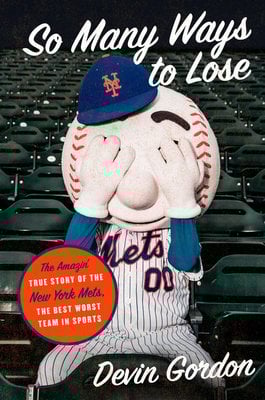
When the New York Times ran an essay in its opinion pages recently with the headline — “Help! My Favorite Athlete is an Idiot” — it was no coincidence that the author was Devin Gordon, who in 2021 produced the most intriguing and pointed book “So Many Ways to Lose: The Amazin’ True Story of the New York Mets — the Best Worst Team in Sports” (our review here).

His riff was about how the franchise that continues to provide him with comedic fodder had to be somewhat dismantled over the last offseason because of political ideology that was contaminating the clubhouse vibe. Note: That was Brandon Nimmo batting leadoff for the Texas Rangers during last Dodgers’ homestand instead of what we’ve been used to seeing the Mets as they come into town this week.

As with most NYT stories, some of the best material is buried in the reader responses. Such as:

Continue reading “Day 5 of 2026 baseball book reviews: M(ake) E(nshittification) T(errible) S(omewhere) in the N.Y. branding”

No. 37: Tom Seaver

This is the latest post for an ongoing media project — SoCal Sports History 101: The Prime Numbers from 00 to 99 that Uniformly, Uniquely and Unapologetically Reveal The Narrative of Our Region’s Athletic Heritage.  Pick a number and highlight an athlete — person, place or thing — most obviously connected to it by fame and fortune, someone who isn’t so obvious, and then take a deeper dive into the most interesting story tied to it. It’s a combination of star power, achievement, longevity, notoriety, and, above all, what makes that athlete so Southern California. Quirkiness and notoriety factor in. And it should open itself to more discussion and debate — which is what sports is best at doing.

The most obvious choices for No. 37:

= Donnie Moore: California Angels
= Lester Hayes: Los Angeles Raiders
= Ron Artest/Metta World Peace: Los Angeles Lakers

The not-so-obvious choices for No. 37:

= Kermit Johnson, UCLA football
= Bobby Castillo: Los Angeles Dodgers
= Ron Washington: Los Angeles Angels manager
= Tom Seaver: USC baseball

The most interesting story for No. 37:
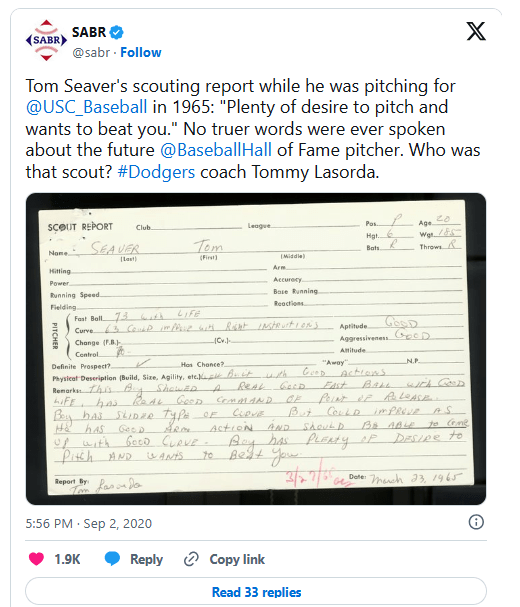
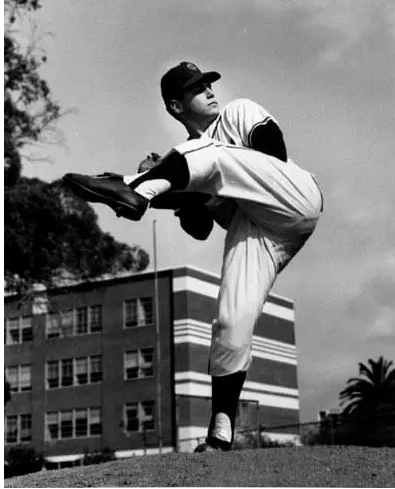
Tom Seaver: USC baseball pitcher (1965)
Southern California map pinpoints:
Los Angeles (USC), Manhattan Beach, Twentynine Palms


Tom Seaver was a stellar bridge player.

Bridge can be a tricky game. The trick is to gather the least the number of tricks bid by the partnership at the four-person table. The rules seem simple, but mastering the strategy and complexity of it all takes time and practice. Intelligence and patience are rewarded.

During his brief time as a USC student — a pre-denistry major, because he sensed he might need a fallback career — Seaver sometimes could be found with friends hanging out at the 901 Club on Jefferson Blvd., famous for its hamburgers and beer.

And bridge building, when he was there.

In the abridged version of how Seaver went from college baseball to a pro career, there should have been a simple bridge there for him to cross from USC to the Los Angeles Dodgers’ stellar starting rotation of the 1960s.

Instead, there was a toll to pay, and the Dodgers balked.

That’s where Seaver’s poker face came into play. A fantastic 2020 book by acclaimed author and former minor leaguer Pat Jordan revealed how deep a Seaver was. But when it came to his MLB future, Seaver wasn’t bluffing on contract demands. Eventually, both the Dodges and USC lost out.

As the Vietnam War started in 1962, Seaver wasn’t keen on being drafted out of Fresno High, where he just finished his senior baseball season with a 6-5 record but made the Fresno Bee All-City team. Still, he had no pro offers, nor any college interest.

So Seaver enlisted in the U.S. Marine Corps Reserves in 1962 and ’63, with bootcamp at Twentynine Palms. He realized eventually the extra weight and strength he gained in that training allowed him to eventually throw a more effective fastball and slider.

His roadmap to the bigs started with one season at Fresno City College as a freshman, then earning a scholarship to play at USC, the perennial NCAA title team under coach Rod Dedeaux (see SoCal Sports History 101 bio for No. 1).

After Seaver posted an 11-2 mark at Fresno City, the Dodgers were interested. But not more than $2,000 interested. Maybe it was $3,000. That was their reportedly their offer in 1964, the last time MLB teams would have the freedom to sign whomever they wanted before the draft kicked in.

Seaver declined the Dodgers’ gesture and went panning for gold elsewhere.

Dedeaux, who called Seaver the “phee-nom from San Joaquin,” agreed to give him one of his five USC baseball full scholarships — if Seaver first played in Alaska summer ball in ’64. Dedeaux worked out a deal for Seaver to pitch for the Alaska Goldpanners of the Alaska Baseball League, which showcased college talent. The 19-year-old experienced his first Midnight Sun Game in Anchorage — the 10:30 p.m. start on June 21 for the summer solstice that has become part of baseball lore.

In 19 games, starting five, Seaver was 6-2 with a save and 4.70 ERA to go with 70 strike outs in 58 2/3 innings. Later that summer, playing in an National Baseball Congress World Series in Wichita, Kansas, Seaver, now with the Wichita Glassmen, hit a grand slam in a game where he had been called in as a relief pitcher. Seaver would say that was one of his career highlights.

At USC, Dedeaux slotted Seaver as the Trojans’ No. 3 starter – also on the staff was junior Bob Selleck, the 6-foot-6 older brother of eventual USC basketball, baseball and volleyball player and actor Tom Selleck.

Continue reading “No. 37: Tom Seaver”