


This post is part of a media project called SoCal Sports History 101: The Prime Numbers from 00 to 99 that Uniformly, Uniquely and Unapologetically Reveal The Narrative of Our Region’s Athletic Heritage. Pick a number, and consider the list of athletes attached to it. Who wore it best? Or, what’s the most compelling story linked to it? Any person, place or thing is in play with Southern California connections. Star power, transformational achievement, longevity, notoriety and quirkiness all factor in. Whatever leads to a lively discussion and interpretation.
The most obvious choices for No. 37:

Donnie Moore: California Angels
Lester Hayes: Los Angeles Raiders
Ron Artest/Metta World Peace: Los Angeles Lakers
Kermit Johnson: UCLA football, Southern California Sun, out of Blair High of Pasadena
The not-so-obvious choices for No. 37:
Bobby Castillo: Los Angeles Dodgers
Ron Washington: Los Angeles Angels manager
Tom Seaver: USC baseball
Ken McBride: Los Angeles Angels
The most interesting story for No. 37:
Tom Seaver: USC baseball pitcher (1965)
Southern California map pinpoints:
Twentynine Palms, Los Angeles (USC), Manhattan Beach
Reference books on the subject:
“Tom Seaver: A Terrific Live,” by Bill Madden, 2020
“Tom Seaver and Me,” by Pat Jordan, 2020
“Baseball Is My Life,” by Tom Seaver with Steve Jacobson, 1973
“Pitching With Tom Seaver,” by Tom Seaver with Steve Jacobson, 1973
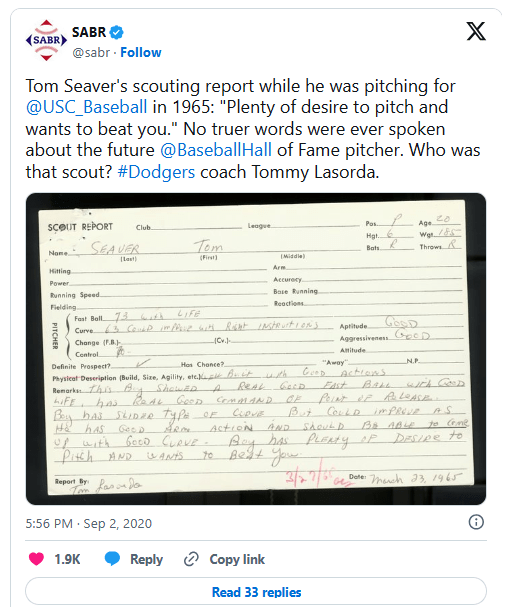
Tom Seaver, if he was to put all his cards on the table, could acknowledge that he was a stellar bridge player.
The trick to the game, often played in baseball locker rooms by the smarter-then-average players who kept their brain’s strategy lobe engaged, is to collect the fewest the number of tricks bid, together with a partner. The rules seem simple for this four-person back-and-forth, but mastering the strategy and complexity takes time. Intelligence and patience are rewarded.
That was Tom Seaver, USC master student.
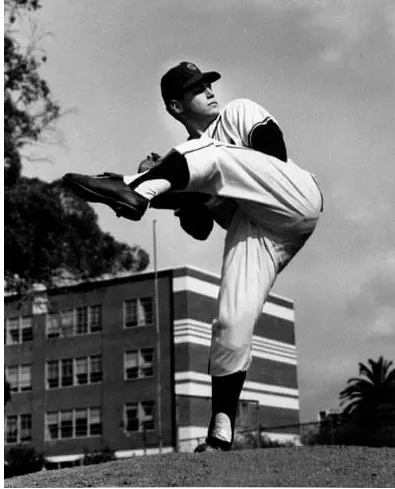
As a USC pre-denistry major — he sensed he might need a fallback career — Seaver often found himself with a group of friends at the popular 901 Club on Jefferson Blvd., slopping up hamburgers and beer. And dealing cards.
In the abridged version of how and why Seaver slithered his way in and out of USC, could have set himself up as a member of the Los Angeles Dodgers famed starting rotation of the 1960s but fell into a Hall of Fame career in New York and beyond with a unique drop-and-drive delivery, speaks more to his way of playing things close to the vest and trusting himself.
A fascinating 2020 book by acclaimed author and former minor leaguer Pat Jordan reveals how Seaver believed in himself enough to know he wasn’t bluffing when it came to negotiating what was best for him in contract give-and-take.
Because of that, both USC and the Dodgers folded. And Seaver’s poker face approach won for him.

Tom Seaver was already concerned about where his future might take him when the Vietnam War came onto his radar in 1962 and he was pitching at Fresno High.
He wasn’t keen on being drafted for the military. He made the Fresno Bee’s All-City team despite a modest 6-5 record for his senior season. But there were no pro offers to field. No college interest.
Seaver’s idea was to instead enlist in the U.S. Marine Corps Reserves in 1962 and ’63. It led to him being sent to bootcamp at Twentynine Palms, in the heart of Mojave Desert, where he had to gain extra weight and strength. Turns out, he saw how that helped him throw a more effective fastball and slider. Thanks, U.S. government.
The other thing he said worked best for him was a summer job lifting heavy crates that brought in raisins in from the Fresno’s fertile agricultural business.
“A machine emptied the raisins but somebody had to get the empty boxes off and they were heavy,” Seaver explained in his 1973 book, “Pitching with Tom Seaver.”
“They were called ‘sweat boxes,’ which was exactly right. I was actually smaller than almost everybody in high school but that job and the six months I spent in the Marine Corps build up my whole body.”
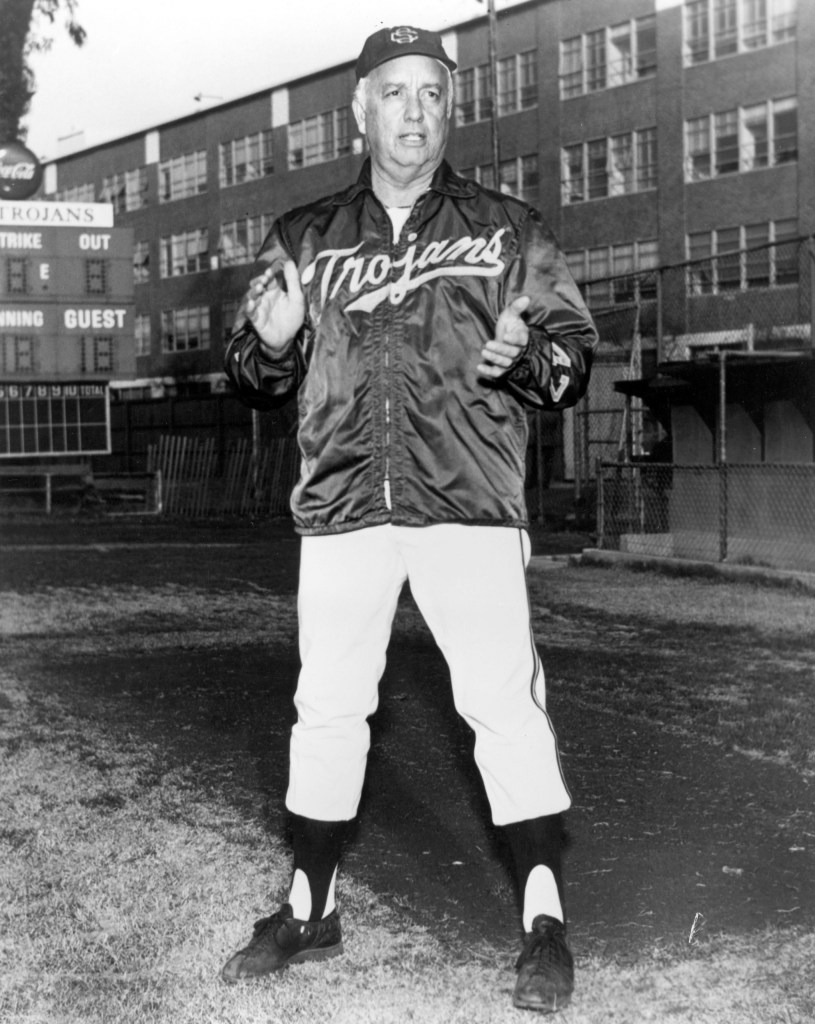
Seaver also diverted to a freshman season at Fresno City College and sported an 11-2 record. USC, the perennial NCAA title team under Rod Dedeaux (see SoCal Sports History 101 bio for No. 1), saw what was happening and was intrigued by the player he called the “phee-nom from San Joaquin.”
The Dodgers’ interests were also piqued. Reports vary, but they were said to be ready to give Seaver a $2,000 deal — maybe $3,000 — in 1964. Neither side knew it for sure, but this would be the final year before the MLB Draft was instituted and teams were free to negotiate at will with players in high school and college.
Seaver declined the Dodgers’ offer and went panning for gold elsewhere.
Dedeaux’s angle was to give him a full USC baseball scholarship if he first pitched in Alaska Summer League of ’64. Dedeaux worked out a deal for the 19-year-old Seaver and other USC recruits to join the Alaska Goldpanners, and experience the glory of the famed Midnight Sun Game in Anchorage — the one with the 10:30 p.m. start on June 21 for the summer solstice that has become part of baseball lore.
In 19 games, starting five of them, Seaver struck out 70 in 58 2/3 innings, posting a 6-2 mark with one save and 4.70 ERA. Later that summer, he also played for the Wichita Glassmen in the National Baseball Congress World Series in Wichita, Kansas. That’s when he hit a grand slam in a game where he had been called in as a relief pitcher, and Seaver called it one of his baseball career highlights.
Dedeaux slotted Seaver as his No. 3 starter on a staff that included junior Bob Selleck, the 6-foot-6 older brother of eventual USC basketball, baseball and volleyball player (and actor) Tom Selleck (see Selleck’s bio for No. 42).
When USC started practices in March of ’65, some of Seaver’s teammates suggested he start lifting weights to increase his upper body strength, which matched up to his already impressive leg mechanics. That was said to be the starting point of Seaver’s ultra-effective delivery. His fastball went up from 85 mph to the mid-90s in that time.
Continue reading “No. 37: Tom Seaver (and Bill Bordley)”
