
No. 92: Rich Dimler

This is the latest post for an ongoing media project — SoCal Sports History 101: The Prime Numbers from 00 to 99 that Uniformly, Uniquely and Unapologetically Reveal The Narrative of Our Region’s Athletic Heritage.  Pick a number and highlight an athlete — person, place or thing — most obviously connected to it by fame and fortune, someone who isn’t so obvious, and then take a deeper dive into the most interesting story tied to it. It’s a combination of star power, achievement, longevity, notoriety, and, above all, what makes that athlete so Southern California. Quirkiness factors in. And it should open itself to more discussion and debate — which is what sports is best at doing.

The most obvious choices for No. 92:

= Rich Dimler, USC football, Los Angeles Express

The not-so-obvious choices for No. 92:

= Rick Tocchet, Los Angeles Kings
= Don Gibson, USC football

The most interesting story for No. 92:
Rich Dimler, USC football nose guard (1975 to 1978), Los Angeles Express defensive tackle (1983 to 1984)
Southern California map pinpoints:
Los Angeles, Glendale, Inglewood, Hawthorne, Torrance, Rancho Palos Verdes


Los Angeles Times, Sept. 8, 1978.

Raise a glass to Rick Dimler. With caution.

The fact he made it through 44 years of roughhousing, and once heralded by USC defensive line coach Marv Goux as “the toughest player I’ve seen in 22 years of coaching” while playing on four straight Trojan bowl victories, is worthy of a toast.

But then again, there was the time when his home town in New Jersey tried to throw a parade in his honor, and it didn’t end well.

Homecomings can be problematic if the honoree celebrates too early and too often.

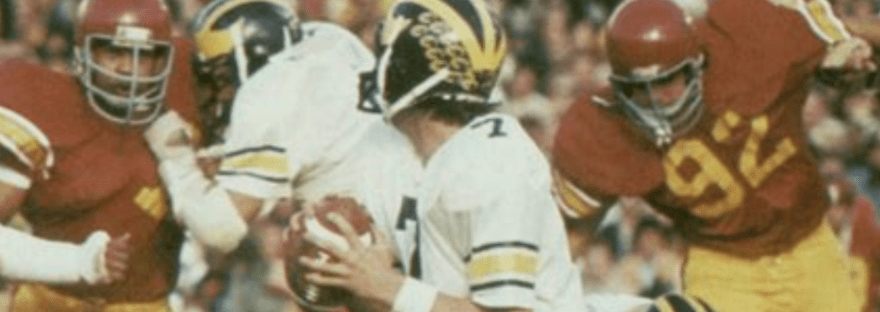
In March of 1979, Dimler was living off the fame of finishing his four years of football at USC, capped off by a 12-1 season, co-captain of the defensive squad that was highly effective in a Rose Bowl win over Michigan, and giving the Trojans a national championship in the eyes of many voters of such polls.

At this point, Dimler was back visiting friends and family in Bayonne, New Jersey. The cityfolk were finalizing plans for what would be Rich Dimler Day — a parade in his honor, a key to the city, the red-carpet treatment. Beers hoisted and thrown back as he could now look forward to what the NFL might bring.

The party was set for April, but, again, Dimler put himself in a situation that had penalty flags flying all over the place.

On March 12, Bayonne police say they saw Dimler in a car racing another car right down Broadway through the city, and started chasing him at 2 a.m. Dimler, according to the authorities, ran three red lights trying to escape. The other car got away. Dimler was hauled in.

At that point, the 6-foot-6, 260-pound Dimler had a dim view on how this might be a teachable moment.

“I’ll have your jobs; I’ll have both your jobs!” Dimler was said to have screamed at the officers, pushing one of them away. He was eventually accused of striking a patrolman in the chest at police headquarters and deemed “unruly” while in the jail cell.

“He flunked his breathalyzer test in flying colors,” said Lt. Vincent Bonner said in newspaper accounts. The .22 result was well above the legal limit of .15.

As soon as Dimler was out on bail facing charges of assault and battery and creating a disturbance, reporters covering the incident discovered he had been arrested just a month earlier in Los Angeles on driving under the influence, but no charges were filed.

Those digging further into his legal history found a disturbing incident in 1973, the year before he left New Jersey to attend USC, when Dimler, then 17, was acquitted of a death by auto charge in juvenile court. He had been charged of hitting and killing a 10-year-old girl as she crossed the street, and he left the scene. All that happened at the time was getting put on probation.

Bayonne City Councilman Donald Ahern — who happened to be Dimler’s high school coach in the mid-’70s — was asked about how all this might tarnish te upcoming day in his honor.

“He’s a good kid with a good heart; I’d be the last guy to leave the ship for that kid,” said Ahern.

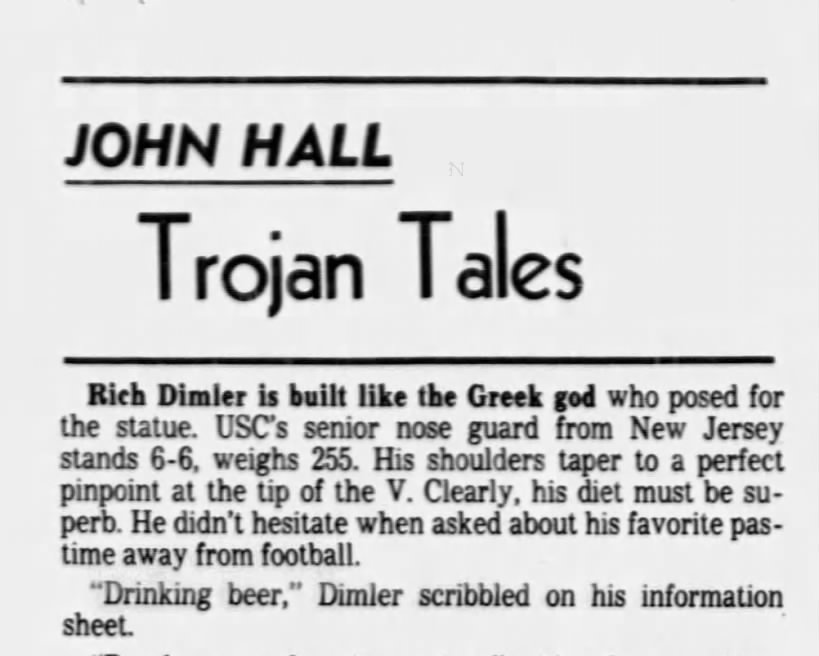
If Dimler needed another character witness, in November of ’78, USC coach John Robinson was telling the Los Angeles Times’ John Hall about how the season had been progressing with Dimler in command of the defense.

“If they ever draw up a blueprint for the ideal leader,” Robinson said, “that’s Dimler.”

Continue reading “No. 92: Rich Dimler”

No. 7: Todd Marinovich

This is the latest post for an ongoing media project — SoCal Sports History 101: The Prime Numbers from 00 to 99 that Uniformly, Uniquely and Unapologetically Reveal The Narrative of Our Region’s Athletic Heritage.  Pick a number and highlight an athlete — person, place or thing — most obviously connected to it by fame and fortune, someone who isn’t so obvious, and then take a deeper dive into the most interesting story tied to it. It’s a combination of star power, achievement, longevity, notoriety, and, above all, what makes that athlete so Southern California. Quirkiness factor sin. And it should open itself to more discussion and debate — which is what sports is best at doing.

The most obvious choices for No. 7:

= Bob Waterfield: UCLA football; Los Angeles Rams
= Lamar Odom:
Los Angeles Clippers; Los Angeles Lakers
= Matt Barkley: USC football
= Julio Urias: Los Angeles Dodgers
= Don Rogers: UCLA football
= Steve Yeager:
Los Angeles Dodgers
= Mark Carrier, USC football

The not-so-obvious choices for No. 7:

= Todd Marinovich: Mater Dei High football, Capistrano Valley High football
= Mark Harmon: UCLA football
= Jay Schroeder: UCLA football
= Frankie Kelleher:
Hollywood Stars baseball
= Dennis Thurman: USC football

The most interesting story for No. 7:
Todd Marinovich, Santa Ana Mater Dei High School and Capistrano Valley High football quarterback (1985 to 1989), USC football quarterback (1988 to 1990), Los Angeles Raiders quarterback (1991 to 1992), Los Angeles Avengers quarterback (2000 to 2001)
Southern California map pinpoints:
Mission Viejo, Santa Ana, Los Angeles (Coliseum, Staples Center), Newport Beach, Irvine, Indio


Proceed with caution if you decide to use Todd Marinovich as sports’ poster boy for the ultimate “cautionary tale.” It’s old news in this case.

The label can still a bit addicting for journalists who think they’ve accurately reported on his creation story, going back to his time as a high school quarterback in Orange County setting California state high school passing records. They then observed his personal and playing career arch reveal extreme highs and lows at USC, the NFL’s Los Angeles Raiders, circling back to Los Angeles for a run with an Arena League team to support a drug habit, and eventually landing on a Palm Springs football field near the age of 50 still trying to find himself.

Tale as old as time, but one that needs a fresh angle every now and then.

In a 2019 piece for the Chicago Tribune by Rick Telander, the “cautionary tale” reference got its latest rewind when dissecting Team Marinovich and the mess it seemed to make in the public eye:

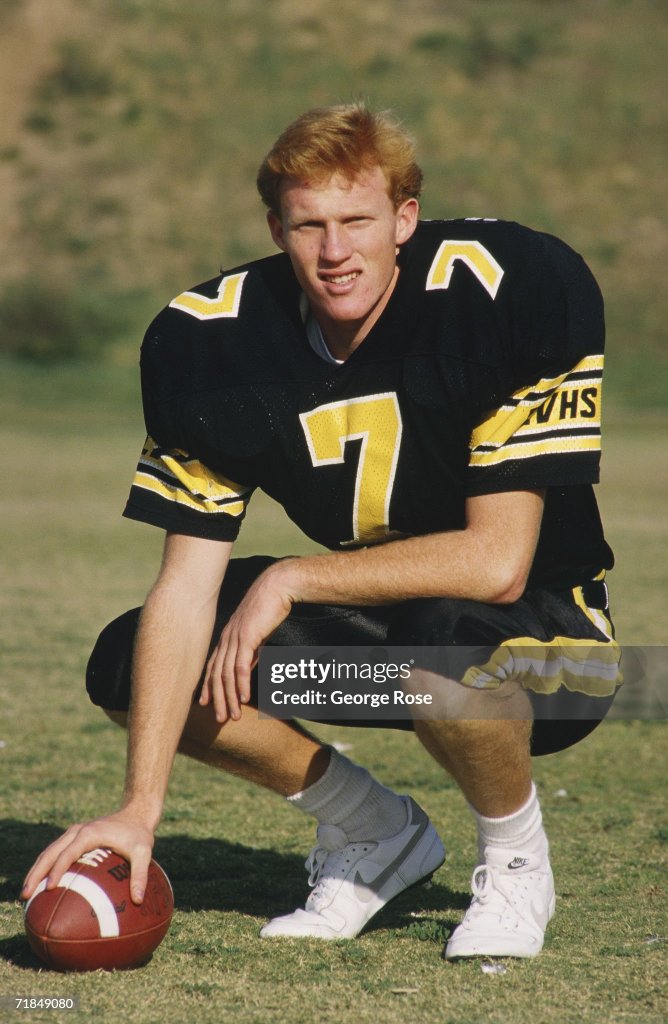
Todd Marinovich at Capistrano Valley High School in 1987. (George Rose/Getty Images)

You’ll recall that Todd was the young man manipulated from birth (actually pre-birth) by his father to be the best, purist, greatest quarterback the world had ever seen. Marv had played football at USC, and he wanted, for reasons buried deep within his own inadequacies, to create a boy who would have the sporting genetics for quarterbacking and be trained incessantly, focused unfailingly and driven like a sled dog toward the apex of the country’s most popular game.”

Telander dragged that trope out because he just read something in Sports Illustrated by Michael Rosenberg, titled “Learning To Be Human Again.” As if Marinovich was emancipated from some reverse metamorphic process.

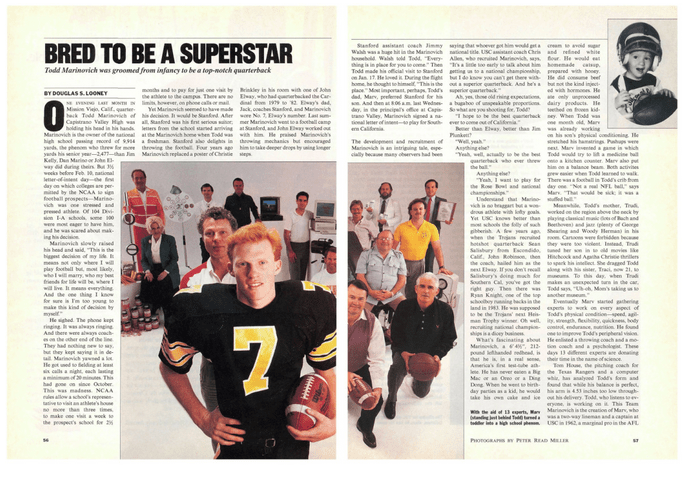
Rosenberg’s launching point was actually a purposeful revisit of that 1988 Sports Illustrated spread Doug Looney laid out titled “Bred to be a Superstar” that likely started the whole social science shebang on judging the Marinovich Parental Method and its doomed-to-fail, real-world predictions.

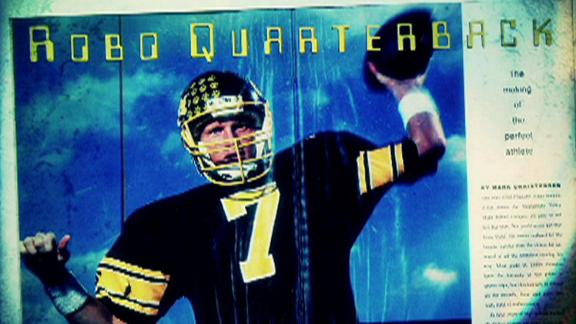
Before that piece, California magazine dropped one with the headline “Robo QB: The Making of the Perfect Athlete.” Then came a People magazine profile in 1987.

That was the fragile framework created for Todd Marinovich, no matter where he went from there. The poor kid, readers could easily conclude. Talented, kind-hearted, fun-loving, well mannered. Able bodied.

Call Child Protective Services.

We seem to have the idea that one who is abused and manipulated as a kid is set up to abuse himself later in life and continue a genetic pattern of human frailty. Unless that person figures things out with help, counseling and avoiding some sort of tragic ending.

Maybe the “worst sports father” adjective just won’t go away years later. Even if his father literally went away.

But Todd Marinovich can explain better how it happened with him as a willing participant, trying to navigate the life of a high school kid in full media spotlight, and how it really turned out.

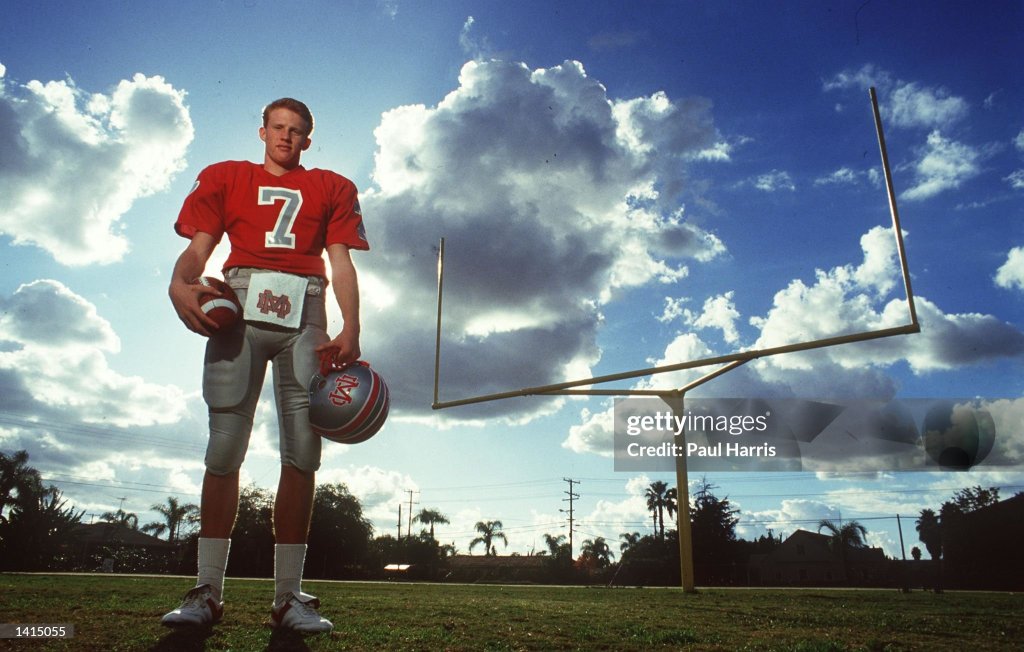
Todd Marinovich as a Mater Dei High School quarterback in 1986 in San Juan Capistrano. (Paul Harris/Getty Images)

That Todd Marinovich was born on the Fourth of July in 1969 may have added to the storyline that started with him on a All-American pathway.

He played a lot of sports, perhaps exceeding most in basketball, but football would be the real test. First were the years at Mater Dei High in Santa Ana, a football factory that had produced Heisman Trophy winners before and after Marinovich’s brief appearance there. That was followed by a surprise transfer to Capistrano Valley in Mission Viejo.

The switch to Capo Valley by his father Marv would be one of things listed on his parents’ separation filing in the courts. Todd has no say in it. He would live with his dad an an in-law quarters at the house of head coach Dick Enright, likely a CIF violation.

While wearing No. 7, Marinovich went up against rival quarterback Bret Johnson in 1987 when ESPN televised its first-ever high school game, between Capo Valley and El Toro.

Continue reading “No. 7: Todd Marinovich”

No. 35: Petros Papadakis

This is the latest post for an ongoing media project — SoCal Sports History 101: The Prime Numbers from 00 to 99 that Uniformly, Uniquely and Unapologetically Reveal The Narrative of Our Region’s Athletic Heritage.  Pick a number and highlight an athlete — person, place or thing — most obviously connected to it by fame and fortune, someone who isn’t so obvious, and then take a deeper dive into the most interesting story tied to it. It’s a combination of star power, achievement, longevity, notoriety, and, above all, what makes that athlete so Southern California. Quirkiness and notoriety factor in. And it should open itself to more discussion and debate — which is what sports is best at doing.

The most obvious choices for No. 35:

= Sidney Wicks, UCLA basketball
= Bob Welch, Los Angeles Dodgers
= Cody Bellinger, Los Angeles Dodgers
= Jean-Sebastien Giguere, Anaheim Mighty Ducks
= Christian Okoye, Azusa Pacific College football

The not-so-obvious choices for No. 35:

= Tank Younger, Los Angeles Rams
= Loy Vaught, Los Angeles Clippers
= Rudy LaRusso, Los Angeles Lakers
= Ron Settles, Long Beach State football

The most interesting story for No. 35:
Petros Papadakis, USC football tailback (1996  to 2000)
Southern California map pinpoints:
San Pedro, Palos Verdes, Hollywood, Los Angeles (Coliseum, Sports Arena)


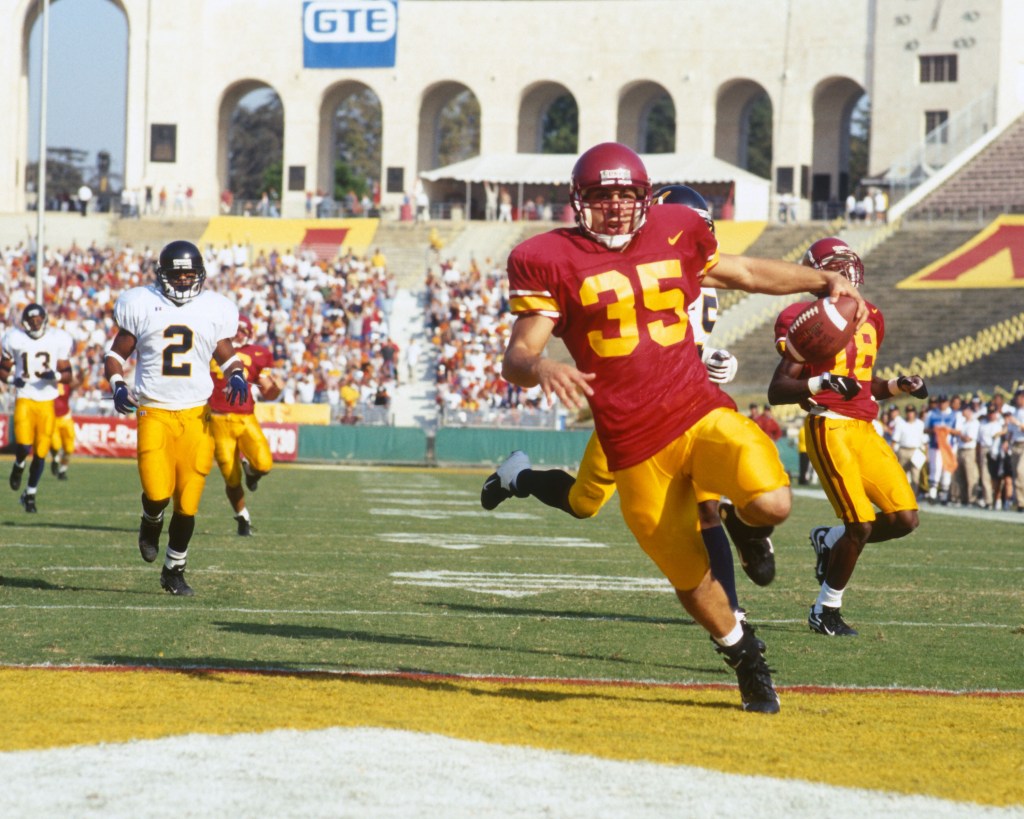
Oct. 15, 1998: On USC’s third play from scrimmage in the first quarter, Trojans junior tailback Petros Papadakis finishes off a 65-yard touchdown run against Cal at the Coliseum (top, and below). Papadakis had 13 carries for 158 yards in his greatest statistical performance of his USC career in a 32-31 Week 6 loss. (Photos by Jon Soohoo/USC)

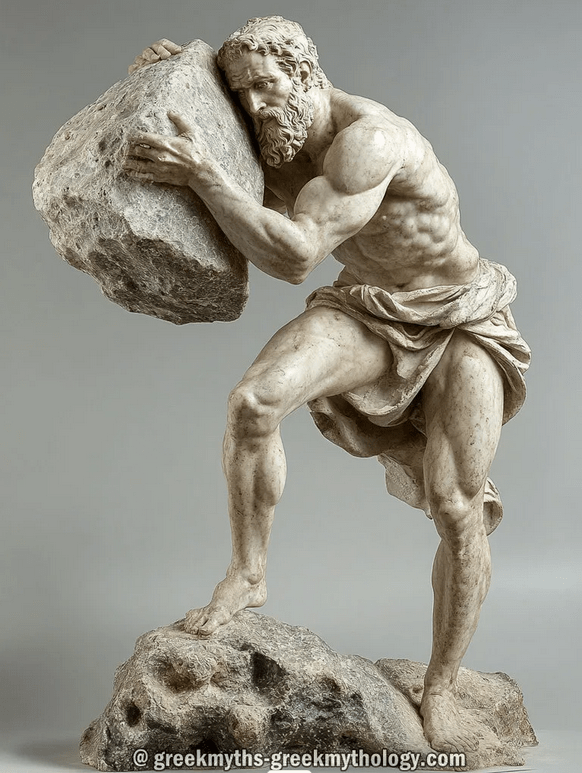
Any sort of perfunctory profile of Petros Papadakis becomes the proverbial Sisyphean pursuit. Hopefully we don’t have to Greek-splain too much here.

Sisyphus, the first king of Ephyra, found his eternal fate in Hades rolling a huge boulder endlessly up a hill, only to see it come back down at him. Every time he made progress and got on a roll, it reversed on him like a Looney Tunes cartoon. The whole thing seemed so Kafkaesque that French philosopher Albert Camus, writing “The Myth of Sisyphus” in 1942, elevated him to some absurd hero status in Greek mythology.

Something that Papadakis might find relatable.

When Papadakis gets on his own a roll, cutting it up on KLAC-AM (570)’s afternoon sports-talk drive-time “Petros and Money Show,” there is far less sports and much more drive to just being a voice for “la raza.” It’s a focus on a feeling of being in “la ciudad” with Papadakis, as familiar as he is bombastic, just the person in the passenger seat making observational conversation to it real.

He is part of USC football legacy, a linage of Cardinal and Gold athletes whose performance has been documented in Los Angeles’ grand Coliseum. Papadakis’ work ethic formed at his family’s famously iconic San Pedro Taverna, as he went from dishwasher to waiter to spending all his earnings for the night back on his guests to make sure they went home happy.

Maybe Papadakis became an accidental broadcaster, but it’s a career that likely defines him as much if not more than anything else. Once a Trojan workhorse in the USC backfield, he is the sometimes-hoarse former Trojan on the dashboard radio. A Red Bull in a china shop of hot topics. The connoisseurs of SoCal sports who enjoy conquering as much as consuming any kind of history lesson are better for it.

Fox Sports’ Petros Papadakis, left, with USC head football coach Lane Kiffin in 2011.

Back to the profile: Papadakis has provided quips along the way to make his story even more cohesive:

Continue reading “No. 35: Petros Papadakis”

No. 37: Tom Seaver

This is the latest post for an ongoing media project — SoCal Sports History 101: The Prime Numbers from 00 to 99 that Uniformly, Uniquely and Unapologetically Reveal The Narrative of Our Region’s Athletic Heritage.  Pick a number and highlight an athlete — person, place or thing — most obviously connected to it by fame and fortune, someone who isn’t so obvious, and then take a deeper dive into the most interesting story tied to it. It’s a combination of star power, achievement, longevity, notoriety, and, above all, what makes that athlete so Southern California. Quirkiness and notoriety factor in. And it should open itself to more discussion and debate — which is what sports is best at doing.

The most obvious choices for No. 37:

= Donnie Moore: California Angels
= Lester Hayes: Los Angeles Raiders
= Ron Artest/Metta World Peace: Los Angeles Lakers

The not-so-obvious choices for No. 37:

= Kermit Johnson, UCLA football
= Bobby Castillo: Los Angeles Dodgers
= Ron Washington: Los Angeles Angels manager
= Tom Seaver: USC baseball

The most interesting story for No. 37:
Tom Seaver: USC baseball pitcher (1965)
Southern California map pinpoints:
Los Angeles (USC), Manhattan Beach, Twentynine Palms


Tom Seaver was a stellar bridge player.

Bridge can be a tricky game. The trick is to gather the least the number of tricks bid by the partnership at the four-person table. The rules seem simple, but mastering the strategy and complexity of it all takes time and practice. Intelligence and patience are rewarded.

During his brief time as a USC student — a pre-denistry major, because he sensed he might need a fallback career — Seaver sometimes could be found with friends hanging out at the 901 Club on Jefferson Blvd., famous for its hamburgers and beer.

And bridge building, when he was there.

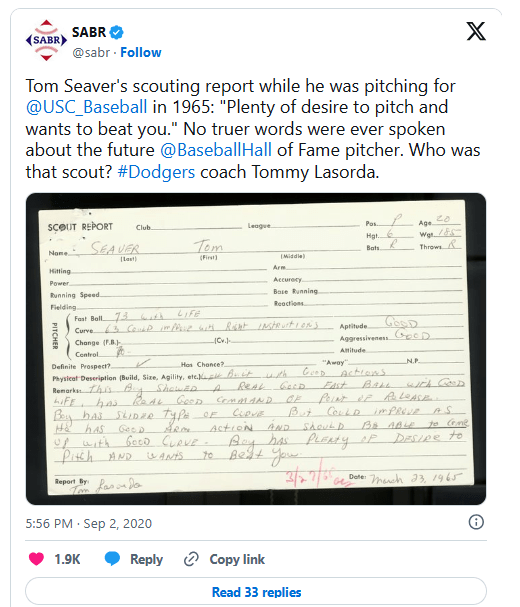
In the abridged version of how Seaver went from college baseball to a pro career, there should have been a simple bridge there for him to cross from USC to the Los Angeles Dodgers’ stellar starting rotation of the 1960s.

Instead, there was a toll to pay, and the Dodgers balked.

That’s where Seaver’s poker face came into play. A fantastic 2020 book by acclaimed author and former minor leaguer Pat Jordan revealed how deep a Seaver was. But when it came to his MLB future, Seaver wasn’t bluffing on contract demands. Eventually, both the Dodges and USC lost out.

As the Vietnam War started in 1962, Seaver wasn’t keen on being drafted out of Fresno High, where he just finished his senior baseball season with a 6-5 record but made the Fresno Bee All-City team. Still, he had no pro offers, nor any college interest.

So Seaver enlisted in the U.S. Marine Corps Reserves in 1962 and ’63, with bootcamp at Twentynine Palms. He realized eventually the extra weight and strength he gained in that training allowed him to eventually throw a more effective fastball and slider.

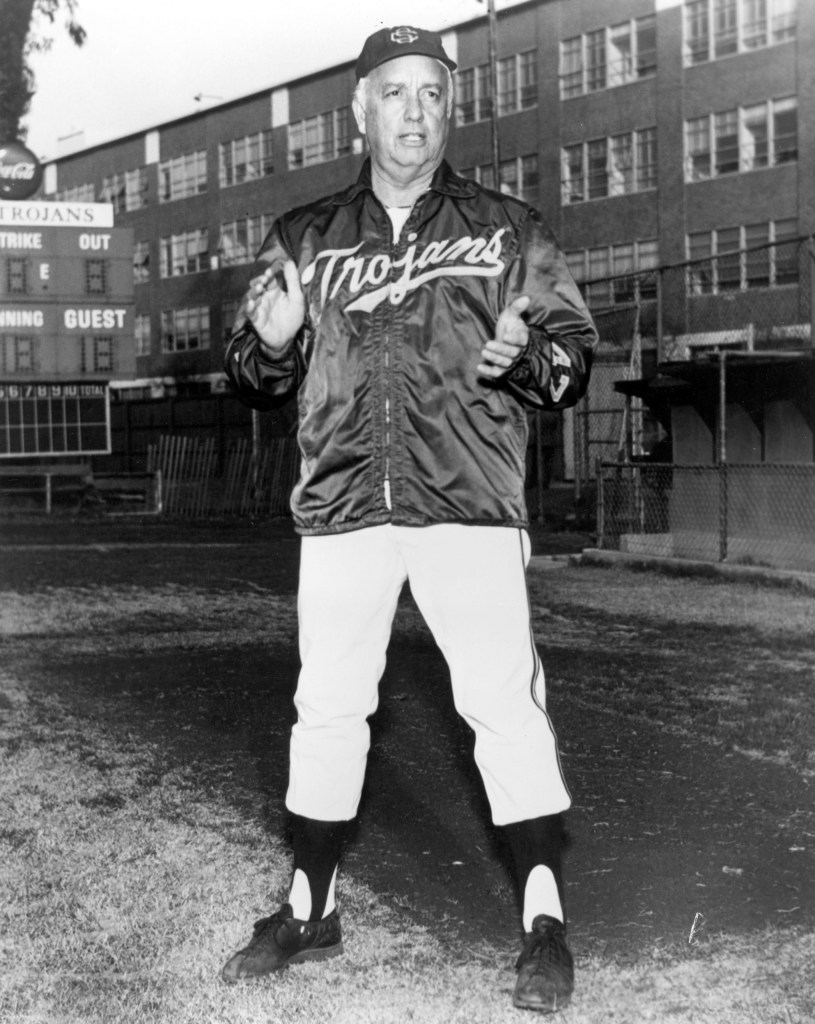
His roadmap to the bigs started with one season at Fresno City College as a freshman, then earning a scholarship to play at USC, the perennial NCAA title team under coach Rod Dedeaux (see SoCal Sports History 101 bio for No. 1).

After Seaver posted an 11-2 mark at Fresno City, the Dodgers were interested. But not more than $2,000 interested. Maybe it was $3,000. That was their reportedly their offer in 1964, the last time MLB teams would have the freedom to sign whomever they wanted before the draft kicked in.

Seaver declined the Dodgers’ gesture and went panning for gold elsewhere.

Dedeaux, who called Seaver the “phee-nom from San Joaquin,” agreed to give him one of his five USC baseball full scholarships — if Seaver first played in Alaska summer ball in ’64. Dedeaux worked out a deal for Seaver to pitch for the Alaska Goldpanners of the Alaska Baseball League, which showcased college talent. The 19-year-old experienced his first Midnight Sun Game in Anchorage — the 10:30 p.m. start on June 21 for the summer solstice that has become part of baseball lore.

In 19 games, starting five, Seaver was 6-2 with a save and 4.70 ERA to go with 70 strike outs in 58 2/3 innings. Later that summer, playing in an National Baseball Congress World Series in Wichita, Kansas, Seaver, now with the Wichita Glassmen, hit a grand slam in a game where he had been called in as a relief pitcher. Seaver would say that was one of his career highlights.

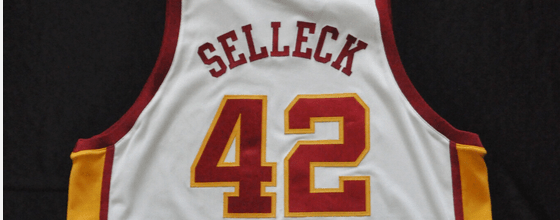
At USC, Dedeaux slotted Seaver as the Trojans’ No. 3 starter – also on the staff was junior Bob Selleck, the 6-foot-6 older brother of eventual USC basketball, baseball and volleyball player and actor Tom Selleck.

Continue reading “No. 37: Tom Seaver”

Nos. 68 and 86: Mike and Marlin McKeever

This is the latest post for an ongoing media project — SoCal Sports History 101: The Prime Numbers from 00 to 99 that Uniformly, Uniquely and Unapologetically Reveal The Narrative of Our Region’s Athletic Heritage.  Pick a number and highlight an athlete — person, place or thing — most obviously connected to it by fame and fortune, someone who isn’t so obvious, and then take a deeper dive into the most interesting story tied to it. It’s a combination of star power, achievement, longevity, notoriety, and, above all, what makes that athlete so Southern California. Quirkiness and notoriety factor in. And it should open itself to more discussion and debate — which is what sports is best at doing.

The most obvious choices for No. 68:
= Keith Van Horn, USC football
= Mike McKeever, USC football
= Frank Cornish, UCLA football
= Ross Stripling, Los Angeles Dodgers

The most obvious choices for No. 86:
= Marlin McKeever, USC football, Los Angeles Rams
= Jack Bighead, Pepperdine football; Los Angeles Rams


The most interesting story for No. 68 and No. 86:
= Mike McKeever, USC football offensive and defensive guard (1957 to 1960)
= Marlin McKeever, USC football offensive and defensive end / fullback / punter (1957 to 1960); Los Angeles Rams tight end / linebacker (1961 to 1966, 1971 to 1972).

Southern California map pinpoints:
South Los Angeles, the Coliseum, Montebello, Long Beach


You betcha, the way Marlin and Mike McKeever’s lives started made for a nifty ice breaker when Groucho Marx had them on his TV show in March of 1961.

So it was during a blizzard on New Year’s Day 1940, on the plains in Cheyenne, Wyoming, when Marlin arrived first. Mike followed 10 minutes later.

The thing is, their parents were told by the doctor to only expect a girl. Just one at that.

“They already named her — Mary Ann I believe,” Mike told Groucho with a chuckle as he and Marlin, along with their new brides, Judy and Susie, made to NBC Studios in Hollywood for a filming of what was then called “The Groucho Show,” an offshoot of the more famous title “You Bet Your Life.”

Their days as USC All-American football giants had just ended. When the 1960 season ended, they had a double wedding ceremony at St. Vincent de Paul Catholic Church in L.A., just blocks away from the USC campus. Later that month, they were drafted by the Los Angeles Rams.

Groucho Marx took a puff of his cigar, sized up the pair of crew-cut, 6-foot-1 and 225-pounders, and remarked: “Imagine getting all set for a baby girl named Mary Ann and suddenly these two show up.”

Groucho was fascinated with how their parents distinguished the two. Marlin said it was by writing their names in Mercurochrome on their stomachs.

“How do you know they weren’t confused?” Groucho asked. “How do you know they didn’t paint the wrong name?”

Mike spoke up: “I’ve thought about that — it’s pretty depressing so I don’t think about it too much.”

Added Marlin: “He can’t think too much, that’s the problem.”

Suddenly, they were the Smothers Brothers.

As Marlin’s wife Susie listed all the twins’ list of achievements at USC, Groucho had to ask: “Well how do you know all this?”

“I kept a scrapbook,” she replied.

A stuffed duck looking like Grouch dropped down from the ceiling to fanfare. She had said the secret word — book. When George Fenneman doled $50 each to the men, to split the $100 prize, they handed it over to their wives.

They were, after all, Academic All-Americans too.

The background

From a Life magazine 1959 profile on the McKeever twins at USC.

The McKeevers were most definitely the biggest men on campus at Mount Carmel High in South L.A. from 1953 to ’57.

The all-boys Catholic school took over 70th Street between Hoover and Vermont, just 20 years old at the time. The Carmelite Order that would later found Crespi High in Encino made sports an integral part of its curriculum to attract students.

Continue reading “Nos. 68 and 86: Mike and Marlin McKeever”