

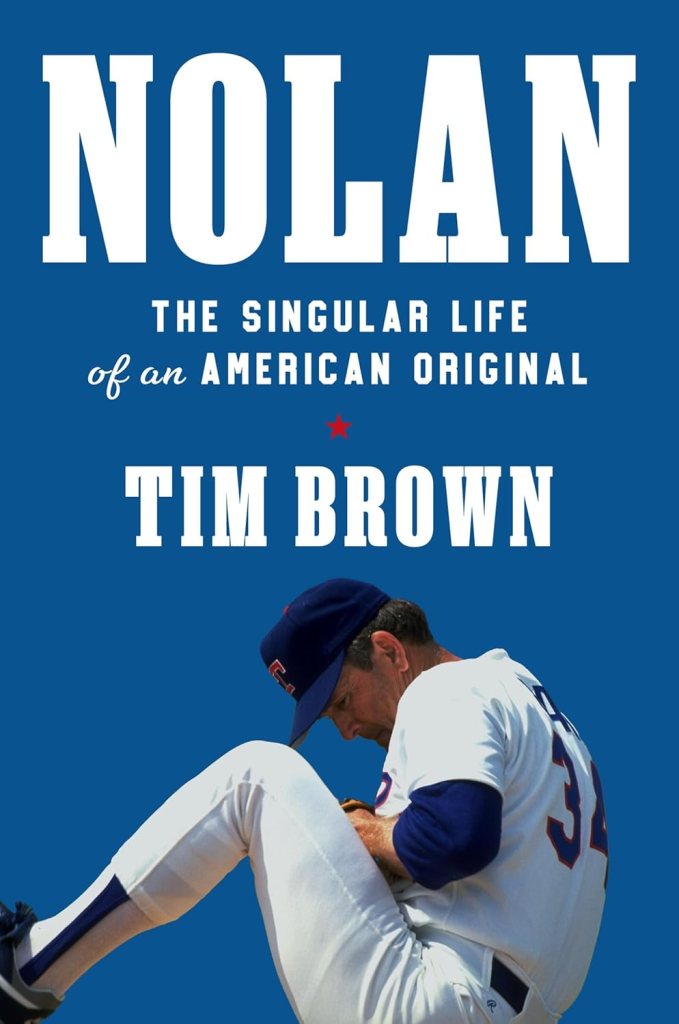
“Nolan: The Singular Life
of an American Original”
The author: Tim Brown
The details: Grand Central Publishing/Hachette, 352 pages, $30, released May 19, ’26
The links: The publisher, the author, Bookshop.org
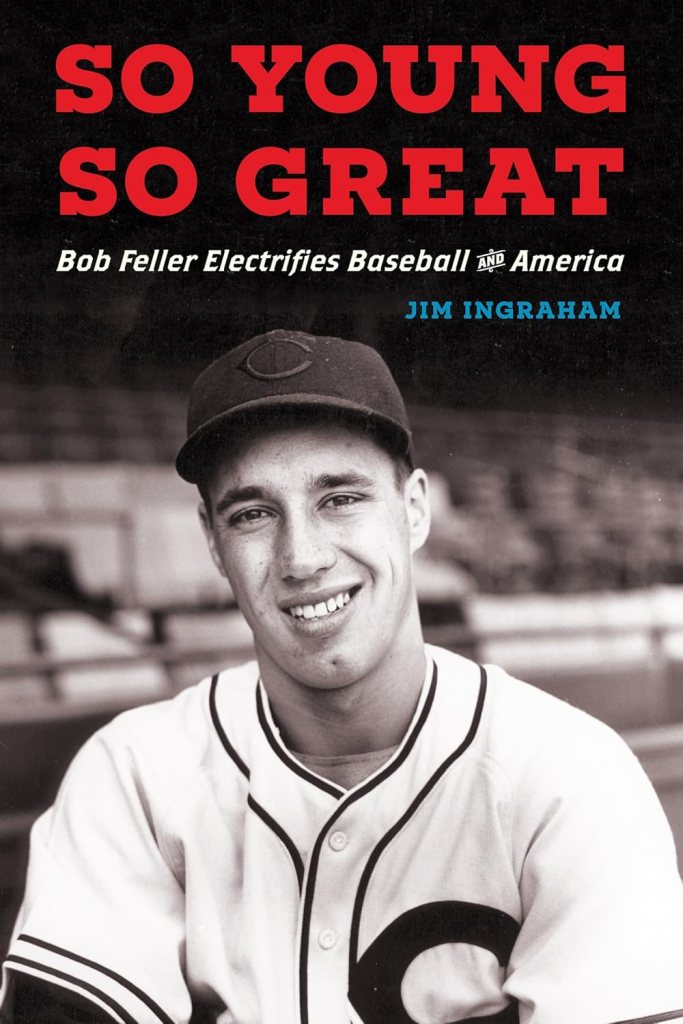
“So Young, So Great:
Bob Feller Electrifies
Baseball and America”
The author: Jim Ingraham
The details: University of Nebraska Press, 280 pages, $36.95, due for release June 1, ’26
The links: The publisher, the author, Bookshop.org
A review in 90 feet or less:
Jacob Misiorowski, so young and so … worrisome.
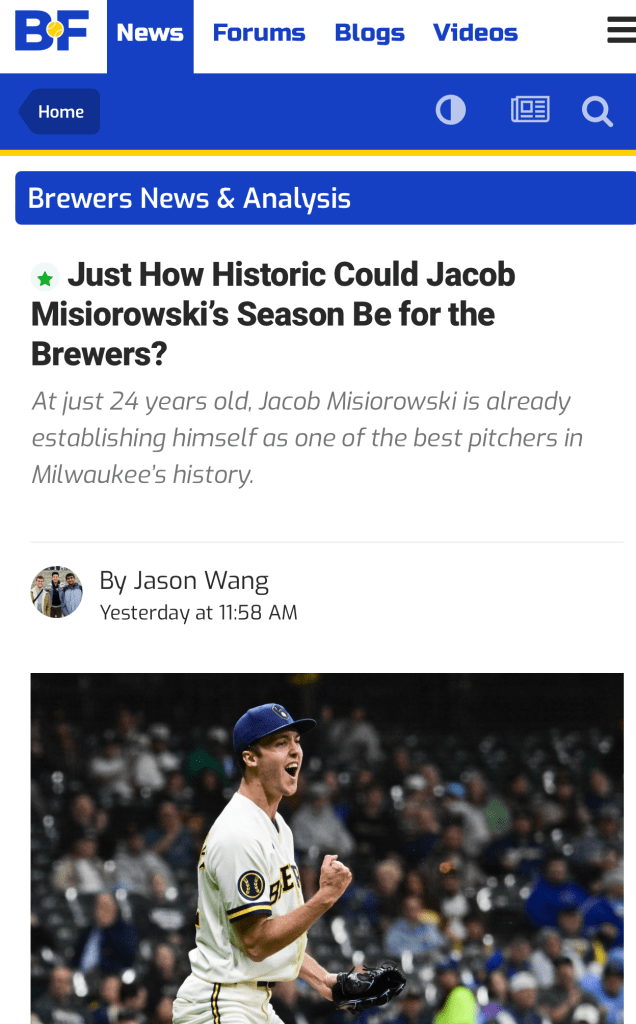
The Milwaukee Brewers’ 24-year-old seems to be on a fast-track for success just months into his second full season. We thought things were rushed a bit when they included him on the National League All Star team in July when he’d just made a few starts and started moving the needle on social media.
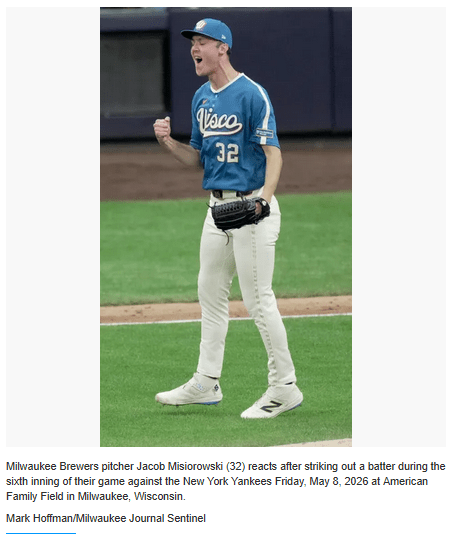
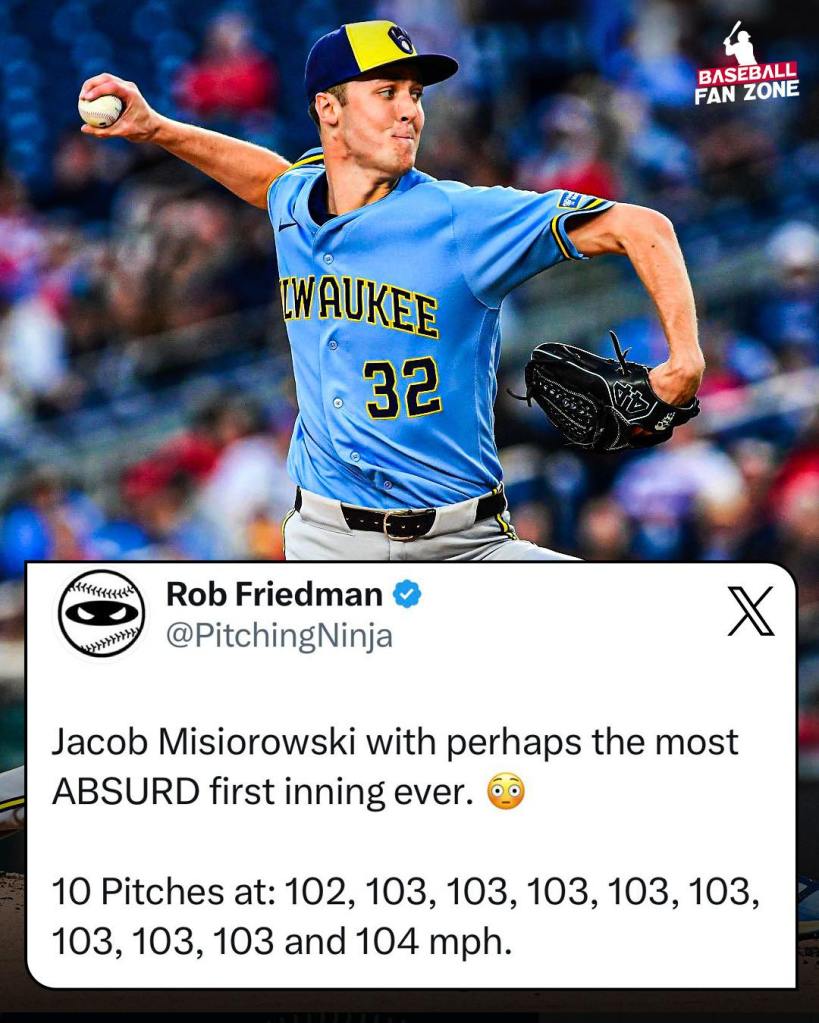
Let the record show that on May 8, 2026, the 6-foot-7 right-hander threw the seven fastest pitches ever recorded by a starting pitcher.
Some, in the same inning.
Taken out after 95 pitches, going long enough to be credited for the win in a 6-0 blanking of the New York Yankees, Misiorowski hit the 103 mile-per-hour mark 10 times. He topped out at 103.6 with the last pitch of the first inning — getting Aaron Judge to fly out to right, before striking him out twice in subsequent matchups).
“The Miz” did this all wearing a cringe-worthy, weird-blue “Wisco” Nike City Connect jersey that years from now will cause MLB historians, as well as Brewers fans, to be horrified.
According to data collected in the Statcast era that began in 2008, a starting pitcher in an MLB game had thrown a fastball clocked at 103 mph or greater just four times prior to that day. Included in that 18-year span was one previously delivered by Misiorowski — just seven days earlier. It came as he was in amidst throwing a no hitter, and had to come out after 5 1/3 innings against Washington because of a hamstring cramp.
Misiorowski, at this moment, has thrown 11 of the fastest 14 pitches ever by a starter. That’s a line of demarcation when compared to hired-gun relievers such as Aroldis Chapman (105.8 mph in 2010 for Cincinnati, 105.7 mph in 2016 for the Yankees), Ben Joyce (105.5 mph in 2024 for the Angels) and Mason Miller (104.5 mph in the 2025 post-season for San Diego).
In throwing his fastball about two-thirds of the time, Misiorowski has what’s also called a “perceived velocity” of more than 105 mph. His extra-large frame and long arms drive down off the mound and toward the batter with a release point much closer to what they are used to seeing. “A gangly stick of dynamite who is exploding past previous notions of what is possible for starting pitchers,” is how one writer sized him up.
Misiorowski is just the latest unique metronome, keeping his own time, tempo and rhythm. He also has the cool, somewhat mythological back story. Pronounced miz-uh-ROW-skee, he went to of Grain Valley High just outside Kansas City. During the 2002 June MLB draft that took place at L.A. Live during the MLB All-Star festivities, Milwaukee took him at No. 63. Twenty-six pitchers were taken ahead of him. The Angels (taking shortstop Zach Neto at No. 13) and the Dodgers (taking catcher Dalton Rushing at No. 40) had their sights on other targets.
Misiorowski may have been stashed away at Crowder Junior College in Neosho, Missouri, about three hours south of K.C. — where Interstates 44 and 49 merge near by the Arkansas/Oklahoma/Kansas border on the western edge of the Ozarks — but the Brewers knew.
When some try to handicap the early markers of the 2026 NL Cy Young race, it’s easy to be marveled at how Misiorowski, who struck out a team-record 11 for an Opening Day appearance, has launched almost as many fastballs at 100 mph or swifter just in his last four starts (143) as every other starter in MLB combined has thrown all season (144). He is also on pace to roll up the greatest strikeout ratio (14.1 strikeouts per nine innings) of any starter in history.
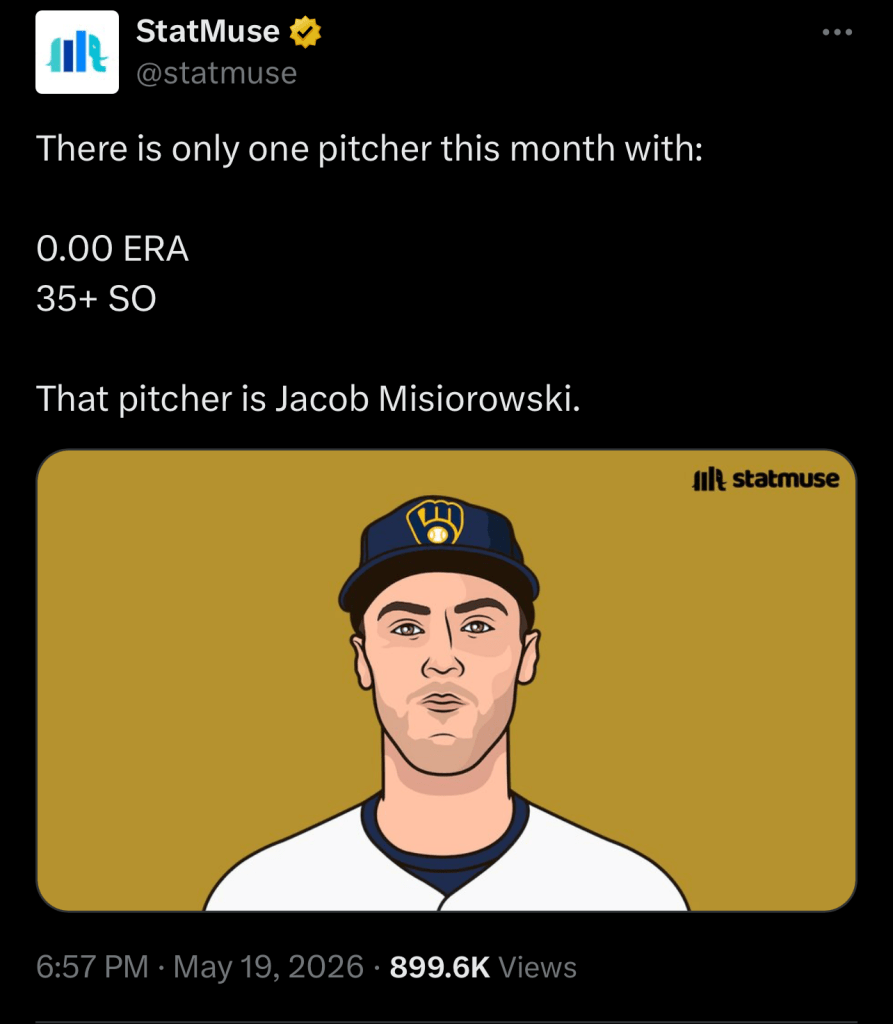
Assuming he makes it to enough innings.
Milwaukee Brewers manager Pat Murphy has compared Misiorowski to “a young prizefighter finding his way.” Others see him in line with contemporaries Paul Skenes or Hunter Greene. His age-to-production ratio so far is like Felix Hernandez.
Maybe, someday, the names Feller and Ryan will come into the conversation. As long as he isn’t a Mark Fidrych, Kerry Wood, Mark Pryor. Or Steve Dalkowski.
Joe Posnanski wrote in a May 15 Substack post:
I watch Jacob Misiorowski’s impossible feats of strength with anxiety and worry. … I want to enjoy (his accomplishments) the way I enjoyed watching Nolan Ryan or Rob Dibble or Justin Verlander throwing blazing pitches.
Alas, when I watch Misiorowski pitch, I can’t help but see the “Misiorowski Feels Elbow Discomfort; Will Skip Next Start” headline, followed by, “Brewers Optimistic That Miz Will Not Need Surgery,” followed by “Misiorowski Hope For Quick Recovery from Tommy John.”
But what can you do? Ask The Miz to throw slower? I mean, that’s not viable.
I sometimes wonder: Would baseball be a better game if teams were allowed to use only two pitchers on any given day? This is not a serious suggestion — it’s obviously not going to happen — but more like a thought experiment. … Pitchers used to maxing out for five innings would find it hard to adjust to their new reality.
But what would happen long term? I imagine … velocity would drop, pitchers would develop more secondary pitches, the knuckleball would return into the game, star pitchers who could throw 250 or 300 great innings would become the most valuable commodity in the game. I think, in time, pitchers would adjust because they’d have no choice but to adjust.
I’m not saying that’s a better brand of baseball — in many ways, it’s not — but for people my age, it’s a more familiar game.
Because we have reams of history to reference in this case.
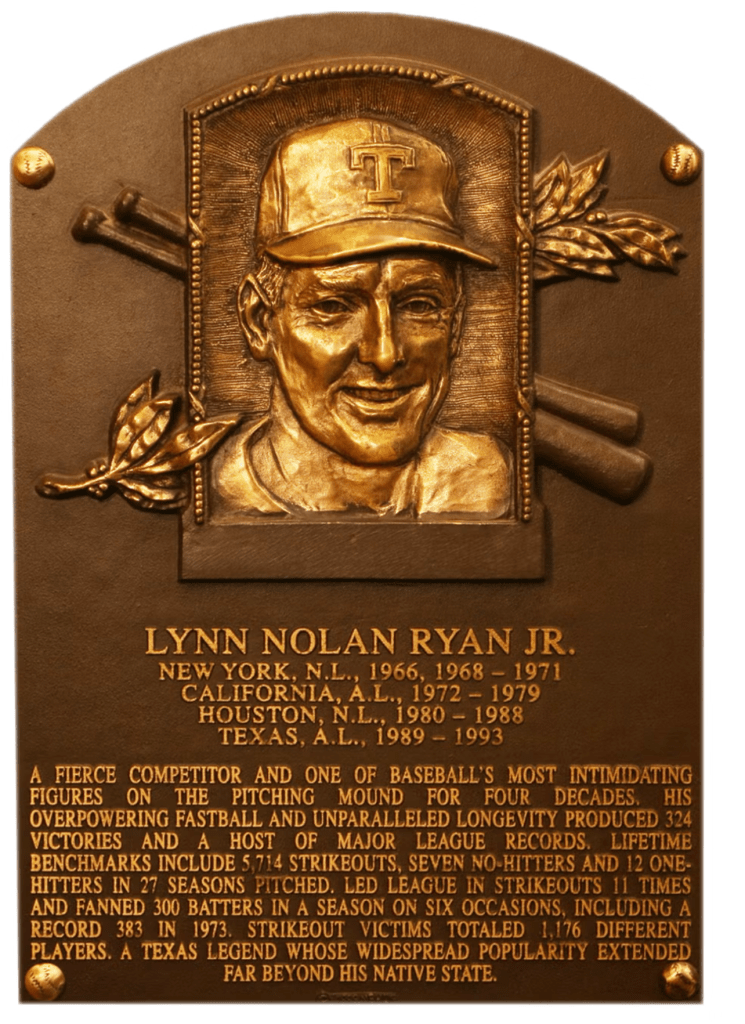
What was Nolan Ryan doing at age 24?
He had been with the New York Mets’ organization for six seasons, and was a 10-game winner at that point. But also a 14-game loser. With three complete games in 26 starts over 150-plus innings. The Mets didn’t really know what to do with him, so after that 1971 season, they shipped him to the California Angels. The eight-time All Star wasn’t done until 1993 when he was 46 — almost twice Misiorwoski’s current age.
When Bob Feller reached his 24rd birthday, he was a full-grown man wearing a U.S. Navy coveralls as a chief petty officer aboard the USS Alabama during the height of World War II. He had enlisted the day after the Pearl Harbor attacked in 1941.
By that point, it felt as if Feller had already has a lifetime of experiences in Major League Baseball. From 1936 to 1941, from the age 17 through 22, Feller had 117 complete games in 175 starts for the Cleveland Indians. He was top three in the AL MVP voting three times. At age 19 — the number he eventually wore on his jersey — he made his first of four All Star games in a row. He would have likely won four Cy Young Awards during that run had that had been a thing at that time.
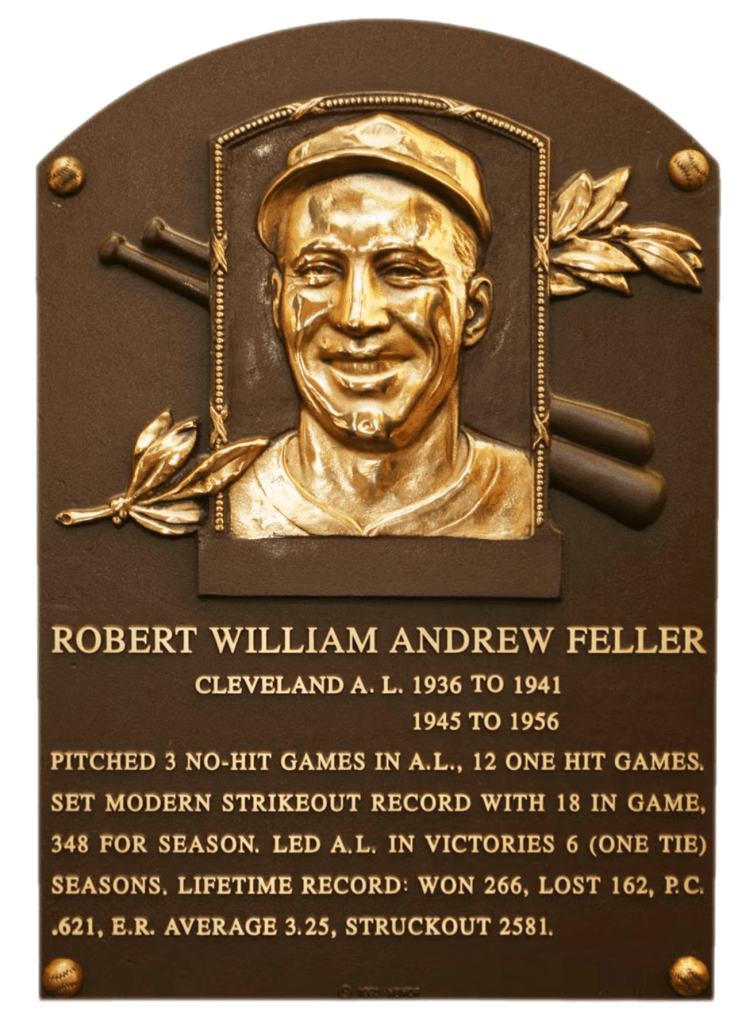
When awesome baseball records are set, there’s a strong temptation to believe that they will never be broken. And some probably never will be broken … I’m sure that when Bob Feller was elected to the Hall of Fame in 1962, nobody could imagine the great records on his plaque being surpassed. But then a guy named Nolan Ryan came along.”
Can’t recall anyone asking Ryan or Feller to throw slower and preserve their health. Different times, different mindsets.
Connecting Misiorowski to Ryan to Feller isn’t a fair real linear exercise at this moment. Nor will it really be years from now. But the way history will document any of this makes it all the more intriguing. Because the one thing we know they all shared: They all threw a baseball pretty damn fast. By whatever measurements were best available at the time, and whatever medium (radio, TV, social media) were best at conveying those stories.
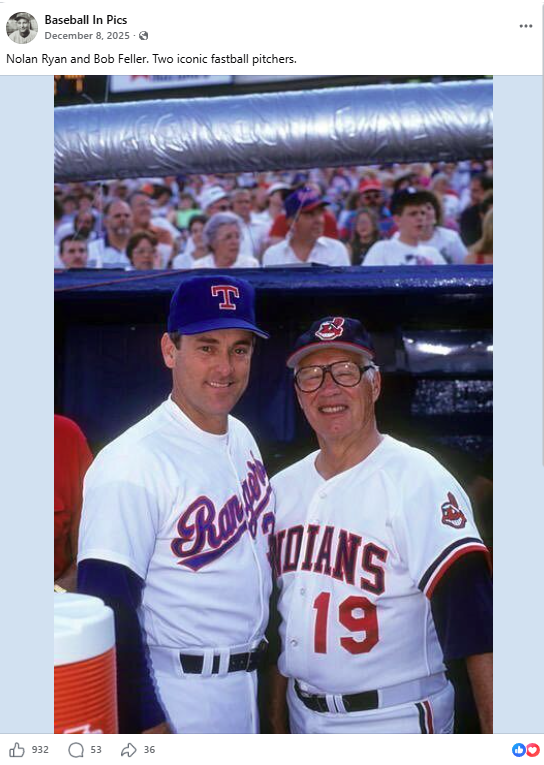
New York Newsday columnist Steve Jacobson started a piece in August of 1989 this way:
Every time the smoke of another of those showcase gems by Nolan Ryan, the baffling Old Man of fastball pitchers, reaches Cleveland, Bob Feller feels a twinge. Perhaps it can be interpreted as a twinge of jealousy; it’s a definite twinge.
Feller was the Strikeout King of the early days when radio and then television told us about the romance of the fastball. Feller accepts compliments as comfortably as he accepts paid autograph sessions. He won 266 games from 1936 to 1956 and missed almost all of four seasons during World War II. He won 25 the year before he left and 26 the full year he returned, so he might have won another 80 or 100 games. …
“Ryan has us on longevity,” Feller said. “My wife says his arm must have been built on a Wednesday. I still say (Walter) Johnson must have been the fastest.”
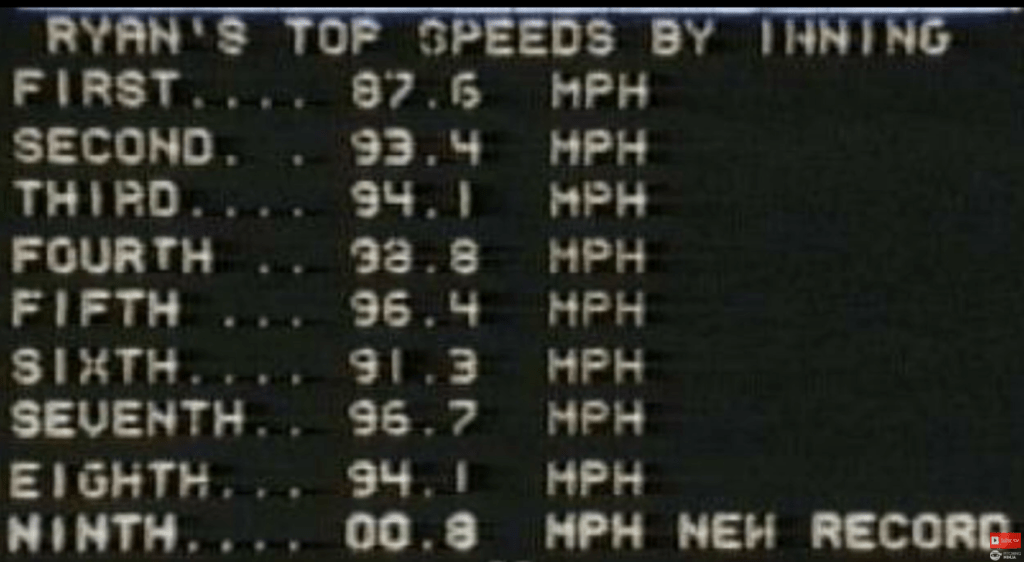
Feller still owns the record for the fastest fastball in the semi-official clockings listed by the Hall of Fame. Ryan’s best is 100.8 mph. Feller’s was 107.9. He’ll stand up to defend that mark.
The strikeout records are subject to interpretation. When Ryan struck out 383 in 1973, it was during the era of the designated hitter and he didn’t get to throw to a single pitcher. But when Feller struck out 348 in 1946, a strikeout was still a strikeout.
If these are the hairs you choose to split, consider that on April 26, 1990, Ryan, at age 43, tied Feller for career one-hitters with 12, a masterful effort over the visiting Chicago White Sox in a 1-0 complete-game triumph. When Feller was 43, he had been retired for six seasons.
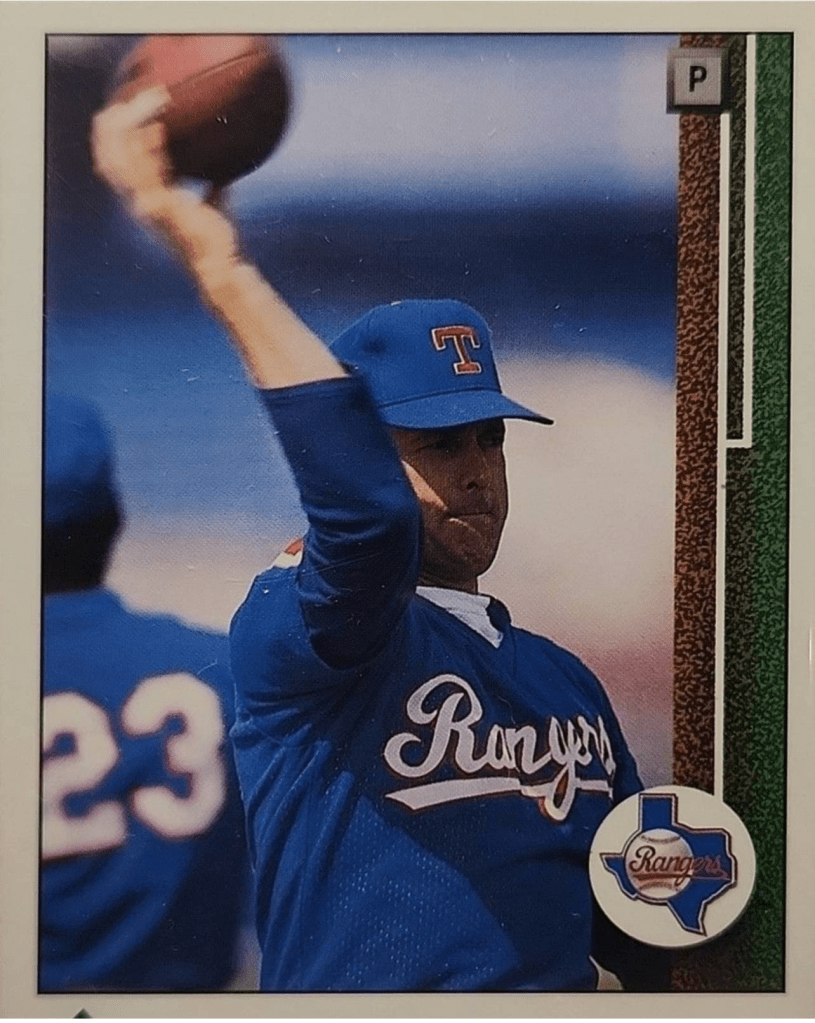
When Ryan threw his record-extending seventh no-hitter in 1991, he was 44, the oldest to achieve such a feat and the first to do it in three different decades. Of Feller’s three no-hitters, the most remarkable is the one on Opening Day 1940. He was just 21.
At some point during that 1990 season, the 71-year-old Feller chimed in again for the record:
“Ryan’s a good pitcher. He’s learned how to pace himself. He’s learned how to pitch. But he’s mad at me because I’ve said that I could throw harder than he can. I don’t know why that bothers him. When Walter Johnson said he could throw ‘a mite harder’ than me back when I was just coming up, it never bothered me.
“My fastball was once timed at 98.6 miles per hour by photo-electric cells at home plate, but by then it was losing speed, maybe as much as 15 miles per hour. That was long before the radar gun they use now. The radar gun gives you the average speed of a pitch from the mound to the plate. On a radar gun, I would’ve averaged 105 to 107 miles per hour.”
When Feller died in 2010 at age 92 of leukemia, columnist Joe Posnanski, a Cleveland native, wrote:
Bob Feller … had three qualities that made him so utterly quotable: 1. He saw the world in distinct and pronounced ways — Bob Feller was not much for shades of gray. 2. He did not mind telling you what he thought. 3. He did not seem to care care much if people liked it. … Feller would later say that Koufax and Ryan didn’t throw as hard as he did. Maybe that’s age speaking. Maybe when you get older, you sometimes want to protect what you believe is yours. … Bob Feller, I suspect, always believed that he threw the fastest pitch in baseball history. … “Yes, I do think I threw a baseball harder than any man ever,” he told me once as we walked on a dirt field in Georgia. “A man should always believe in himself.”
In Posnanski’s project for The Athletic, which became a book called “The Baseball 100,” Ryan is ranked No. 50, Feller is slotted at No. 48. But he had Walter Johnson at No. 6.
We’re at a moment in time, again, where there’s value revisiting narratives that have been documented and cultivated over the years about Ryan and Feller. Writers Tim Brown and Jim Ingraham have different methods in traversing their mythologies for present-day measurements, based on who and what is available.
Brown, a former Los Angeles Daily News colleague who spent 13 years as a national baseball beat writer for Yahoo Sports, following eight years at the Los Angeles Times, has a rich author resume focused on three compelling and important baseball bios: “The Tao of the Backup Catcher” in 2023 came following “The Phenomenon” on Rick Anikel in 2017, and “Imperfect; An Improbable Life” on Jim Abbott in 2012.
In this introduction to “Nolan,” Brown explains why he pointed his car in the direction of Alvin, Tex., just outside Houston, to do some quote cultivation.
He tells someone he’s doing a Ryan book.
“Another book?” says a graying woman looking up from her bingo card.
Yep, there have been a few. Nearly one per decade.
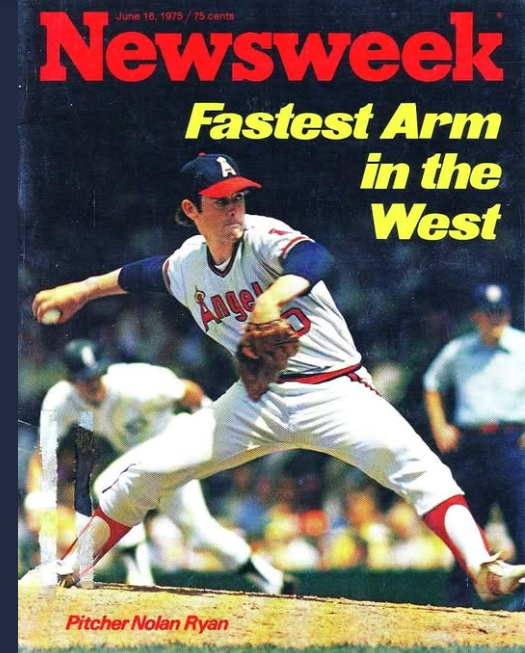
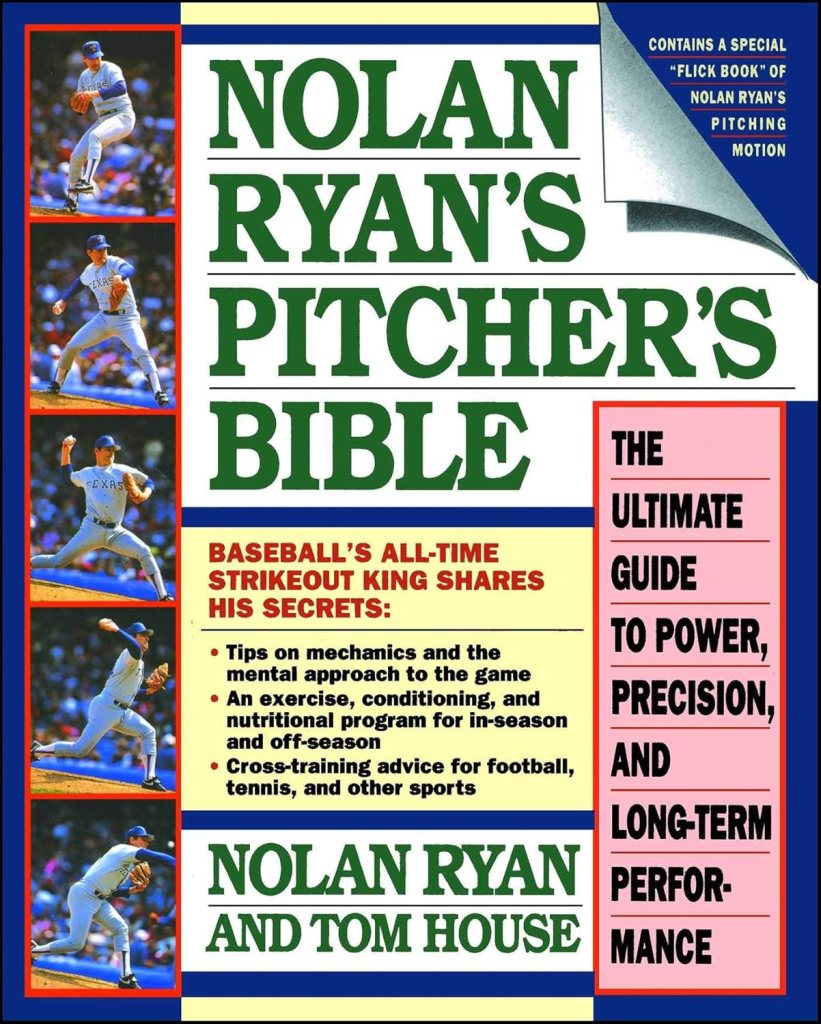
“Nolan Ryan: The Making of a Pitcher” from 2014 by Rob Goldman (Triumph Books) created what was subtitled: “The Definitive Biography.” In 2004, there was “Miracle Man: Nolan Ryan, An Autobiography” (with Jerry Jenkins, Thomas Nelson), which is also found in faith-based book searches. “Nolan Ryan’s Pitchers Bible: The Ultimate Guide to Power, Precision and Long-Term Performance” was done in coordination with successful pitching coach Tom House in 1991 (Touchstone Publishing) at a point when others were trying to harness Ryan’s secrets to success. Randy Johnson, for what it’s worth, likely owns his own Hall of Fame success to Ryan’s mentorship.
“Throwing Heat: The Autobiography of Nolan Ryan” goes back to 1988 (with Harvey Frommer, Doubleday publishing). We can even bake into this the 2014 book “Nolan Ryan Beef & Barbecue Cookbook: Recipes from a Texas Kitchen” (with chef Cristobal Vazquez; Little, Brown and Company). The highlight is what goes into Ruth Ryan’s Special Occasion Carrot Cake.
As Ryan is approaching his 80th birthday, and has been married for more than 60 years to Ruth, and seems content to be a retired rancher, Brown saw his origin story had really not been well fleshed out.
“Thing is, I think the essence of Nolan Ryan is here, in Alvin,” Brown writes on page 9 about how he sold this to a group of potential interview subjects. “I think the essence of Alvin is in him, from folks like you. These are the towns that make the men like him. What Alvin was then, when he was biking to dusty ballgames along narrow roads and coming his hair for Sunday morning church and treating his future wife to a cola at Dairyland when they were still in high school, Nolan is. Still. Today. Even after million-dollar contracts and no-hitters and strikeouts and TV commercials. Even after he moved away, some twenty years before. He’s the sort of man, the sort of ideal, that runs through a community for generations. And it, perhaps, through him. … So any story about Nolan Ryan is a story about Alvin.”
Brown then launches into what might feel like a Wild West cattle call. He finds examples of how Ryan’s John Wayne demeanor — reflected as much in how Ryan even walked off the mound after each inning — spoke with quiet power and force.
Brown embraces Ryan’s barbed-wire edge as well as his reflective home-spun humility.
“Nolan Ryan to me is what a lot of Texans want to be and too many people they think they already are,” says one resident. “That make any sense to you?”
Yup. We do now after soaking this story into our souls.
Author Q&A:
From our exchange with Tim Brown on his book, “Nolan”:
Q: What I come away with from the book is a far better feeling for and understanding of the human Ryan rather than another try to size up the superhero Ryan we would see on the mound every time wondering if this was another no-hitter in the making. Previous books may have focused on the latter. Even his autobiography-shaped efforts. Was your intent to find the soul of Alvin and make him more relatable as a person who mirrored his surroundings?

A: Anybody could call up Nolan Ryan’s baseball-reference page and have a decent idea of what he accomplished across nearly three decades. The records he set are also easily found. What I wanted was an explanation for why it happened. What drove him? And where did that come from? What I wanted was stories, anecdotes, and personal and witness accounts. I figured the best place to start is where he started. That was in Alvin, all these years later, where I found parts of Nolan still exist, just like parts of Alvin remain in Nolan.
Q: Did you read any of the other Ryan books, use them for some reference points or try to set them aside when you painted your own Ryan portrait to avoid any influence on what you did?
A: Only a fellow writer would ask that question. Yes, I feared being swayed by previous efforts to capture Nolan’s career and life, that I’d be knocked off course by someone else’s observations. I read closely Nolan’s memoir, “Miracle Man,” which was written more than 30 years ago, and his wife, Ruth’s, called “Covering Home: My Life with Nolan Ryan.” Everything else I merely browsed. I did find many well-written newspaper and magazine pieces, which helped me to capture moments along the way and provided ideas for other avenues to follow.
Q: Imagine Ryan pitching today — how would he have been handled in the “asset management” we see now with Ohtani and others? Would he have pushed back?
A: I think we both know that yesterday’s Nolan would have resisted all efforts to limit what he prepared for and believed he was capable of. In today’s game, however, he’d never have been given the chance to be him. His innings and pitches would have been limited in high school, in the minor leagues and early in the big leagues. Risk averse front offices likely would have handled an arm like his with special care. And that’s a fair reaction to the trail of broken young pitchers that would have come before him.
One of the book’s premises is that there will never be another Nolan Ryan because the game won’t allow it. While I have no solution for that, I would suggest that those who impose the restrictions also devise methods to identify the pitchers who might be able to handle more.
It’s a little sad that another potential Nolan could come along and he’ll never have the chance to become him.
Q: What do you sense was his secret of durability?
A: All of baseball balances on an inch-long piece of elbow ligament. That’s where the success is. And the longevity. And the money. His body held up, even the parts that are so fragile on nearly all other pitchers. I don’t know how to explain that and he probably doesn’t either.
That said, I believe Nolan did what he did because he wanted to. That seems easy enough, right? Doesn’t everybody want it? Nolan demanded more of himself. He worked harder. He expected more.
A key element in the Nolan story is the notion of his arm as a gift, as he saw it. He spent his career not riding that gift, but honoring it. Being accountable to it. Showing up for it.
Maybe that’s the secret.
Q: How do you see Ryan’s sons carry on his legacy?
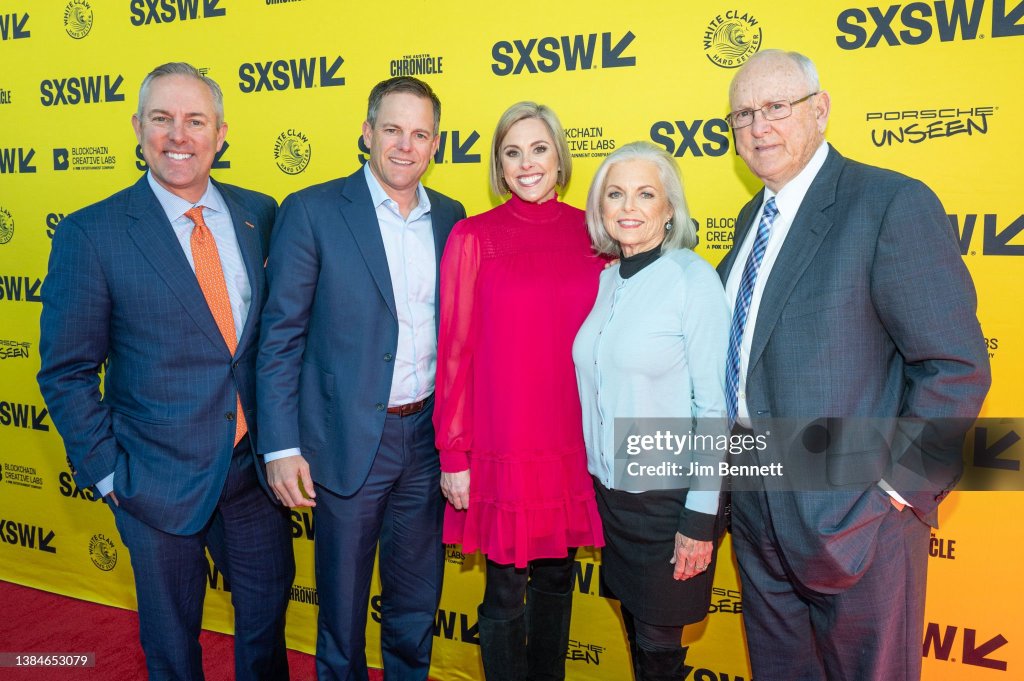
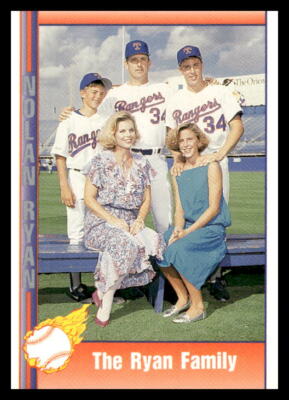
A: For years, on baseball fields, Reid and Reese wore the RYAN on their backs with humility and pride. (So, too, did Wendy, on softball fields and basketball courts.) It wasn’t always easy, though I didn’t get the sense they’d have changed it. When they were finished playing, they found their own ways, but never strayed too far from baseball and the Ryan name. Being a Ryan remains a family business and a calling.
Q: What do you make of Angels owner Gene Autry trying to coax Ryan back to Anaheim to finish his career instead of Ryan’s gravitation back to Texas? Was that a pivotal lifestyle move toward retirement and contentment?
A: Nolan played for four teams. The three that traded him or let him get away – Mets, Angels, Astros – regretted it until the day he retired. Gene Autry realized that mistake maybe before Buzzie Bavasi did. In the end, Nolan was always going to be drawn toward Texas, back home, near his family, near his ranches, around people he felt comfortable with. He also, I think, felt a responsibility to Texas, its people and its baseball.
Q: Was this a book you would or or could have done without Ryan’s approval?
A: I was going to do the book either way. It was better with the Ryans’ cooperation, for sure. I actually spent the first year or more of writing and reporting not sure if I’d have a chance to talk to the family, which was unnerving but also drove me to seek more voices, more small details and more on-the-ground reporting opportunities. I think in that way, believing I would not be able to lean on the Ryans, it made for a more comprehensive book.
Q: We can find plenty of times when a Bob Feller sized himself up against Ryan. Did you find anything where Ryan’s ego allowed him to talk about Feller or comparing himself to others?
A: Not really. I didn’t get the sense Nolan dwelled on the opinions of others. For instance, the New York press at times was tough on him when he was a younger player. It annoyed Ruth more than it did him. And Nolan remained approachable throughout his career. I’d suggest Nolan’s success (and fastball velocity) bothered Feller more than Feller’s sniping bothered Nolan.
Q: From the process you’ve honed in writing, for your baseball books about Jim Abbott and Rick Anikel and backup catchers, what have you enjoyed and how has the Ryan book continued that?
A: The reason I’m selective about the sports biographies I read is because they tend to lean on statistics, play-by-play, stuff you could write by lining up boxscores one after another. I didn’t want to do that. I wanted to tell stories. My challenge with a Nolan Ryan biography was to offer something new. What could I tell people about him that they didn’t already know? How can I think about this? In what context could I frame his career? His life?
In the end, this is a story about the way baseball used to be played and a man who played it. I guess I wanted to remind people that those two things existed once.
Jim Ingraham has, for starters, a decent number of few well-known Bob Feller books in circulation available to liberally cull for this project. Many, from Feller’s cooperation and participation.
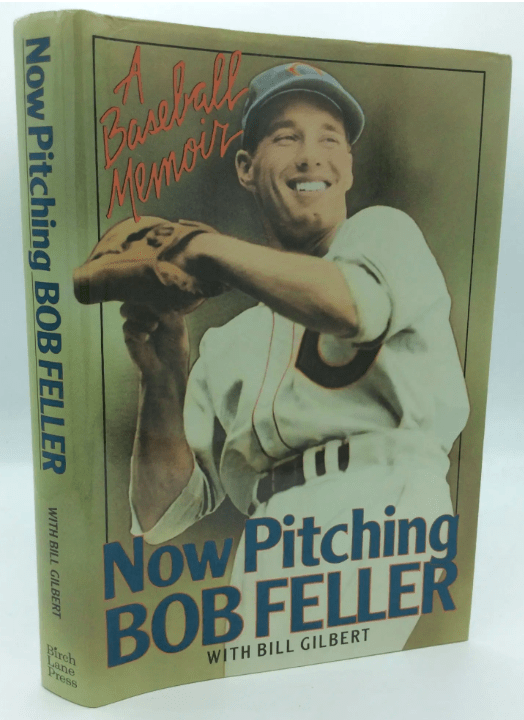
With co-author Bill Gilbert, Feller served up “Now Pitching: Bob Feller — A Baseball Memoir” in 1990 (Birch Lane Press, released in paperback a year later by Harper-Perennial, reissued in 2002 by Citadel and again in 2014 by Sports Publishing).
This was framed as a “warts and all” account of Feller talking about himself and others as he was apt to do.
It was 40 years earlier when “Bob Feller’s Strikeout Story: From Sand Lot to Big Leagues” was released in 1947 for A.S. Barnes and Company. He dedicated it to “the memory of my Father.” Feller was 28 at the time, back from the war and restarting his career without missing a beat. He had won 26 games with a 2.18 ERA, striking out a record 348 with 42 compete games in 371 1/3 innings in ’46. He was only sixth in the MVP voting. He would retire in 1956 at age 37.
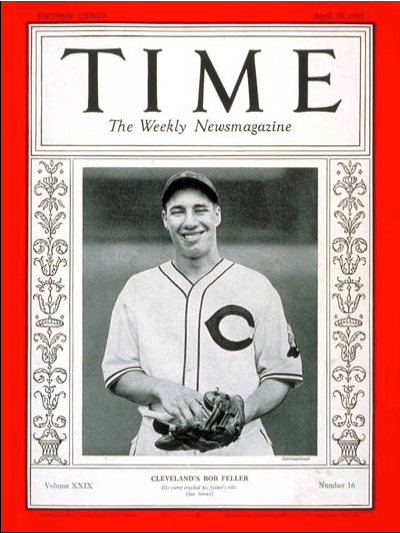
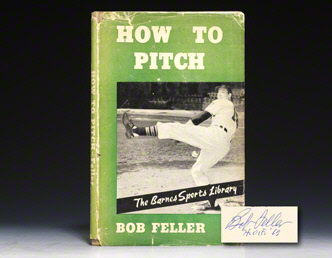
In 1948, Feller also had what amounted to his own pitching bible — “How To Pitch — The Barnes Sports Library” by The Ronald Press Company, which emphasized the mechanics his father taught him.
In 2001, Feller was amenable to be part of “Bob Feller’s Little Black Book of Baseball Wisdom” with sportswriter Burton Rocks (McGraw-Hill) that culled his “quick wit” and allowed him to namedrop with “a treasure trove of down-to-earth advice.”
The most academic approach to his career, John Sickels’ “Bob Feller: Ace of the Greatest Generation” (University of Nebraska Press), arrived in 2005 had more time and space to take clear look at everything — convenient or not that Feller was still alive to see it.
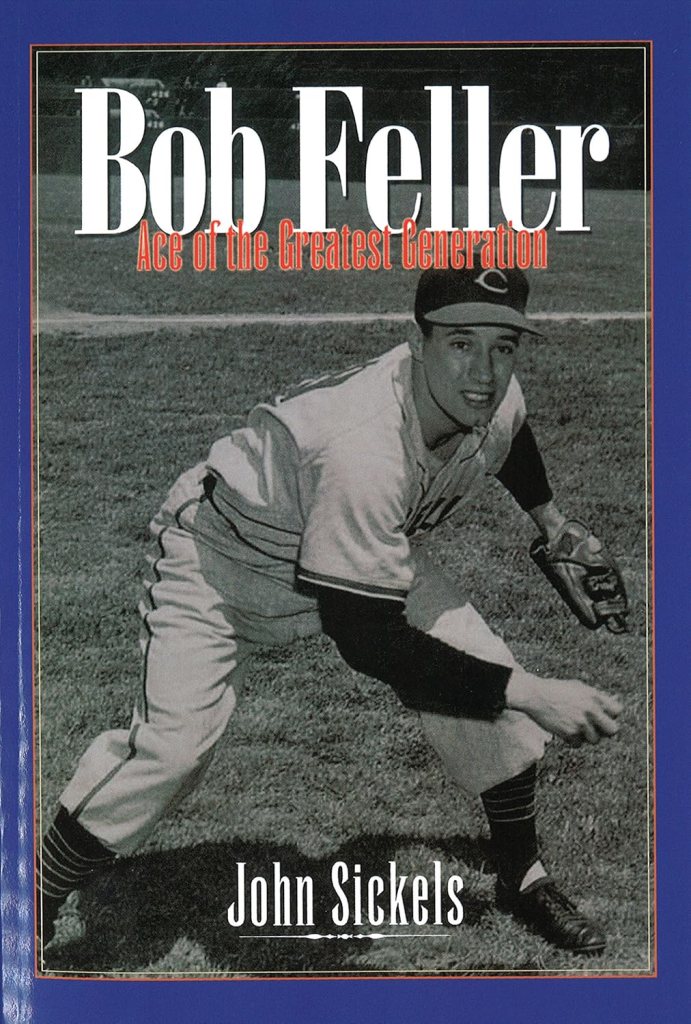
When Feller died at 92 in ‘10, Sickels was recruited to do a reflection piece for ESPN, and laid out how somewhat volatile it was to get him on board with his project.
“There were plenty of people who loved Feller, and plenty of people who hated him. The book laid out in great detail all the reasons why this was so, and I had no idea how he would react. When I presented the manuscript to him, he turned immediately to the conclusion, and read the following: ‘His personality is more complex than either the purely positive or the abjectly negative myths imply. The all-American athlete image contains a great deal of truth that his detractors ignore, while the negative image pouts out the flaws in his personality that the all-American image papers over. Ultimately, Feller is far more interesting when considered as a whole human being … There is much to admire in Bob Feller, and much of what he takes criticism for is unfair. There are also things that we can rightfully criticize about him, though this is true of any of us who fall short of divinity.’ He read it, thought for a moment, looked up at me with a firm look in his eye, and said, ‘That’s fair.’”
What might not be so fair with Ingraham’s approach is that there isn’t anyone left to talk with some authority about what it was like watching Feller pitch during his six-year comet burst that happened more than 80 years ago.
Ingraham, who wrote “Mike Hargrove and the Cleveland Indians: A Baseball Life” in 2019 and is currently the sports columnist for the Elyria Chronicle-Telegram and Medina Gazette, can only do modern-day deep dives into archives that become more and more accessible to capture as it was being written in the first draft.
There are some interesting stories from the Saturday Evening Post and Colliers put out there on a national stage in 1937. A few more pieces by Grantland Rice (including a snappy poem used to near the title page). Most of what Ingraham recovers are columns produced by Gordin Cobbledick, a J. G. Taylor Spink Award winner for the Cleveland Plain Dealer. There are also more stories that writer Ed Bang did for The Sporting News. Ingraham’s main source of unbias context comes from Donald Honig’s “Baseball When the Grass Was Real” first published in 1975.
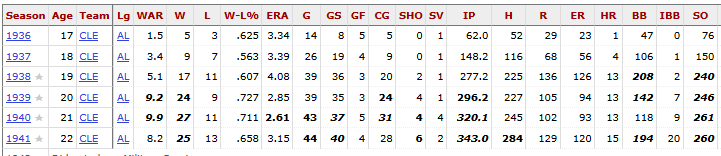
Ingraham, for better or worse, has fallen in love with the phrase “so young, so great” that can seem repetitive. The context doesn’t really come until the end. He points out that Feller might have won 105 games by age 22, and Dwight Gooden’s 73 wins put him at a distant second, but maybe that’s all relative. Gooden’s first five seasons with the New York Mets were, exceptional. Gooden was an MLB pick out of high school but, unlike Feller, grew up during two years in the minors. Considering that Gooden won 10 games with three teams over rookie ball and Single-A as a 17-year-old, and was then 19-4 in the Single-A Carolina League as an 18-year-old, his ledger shows he had 102 wins pitching professionally by 23.
Gooden, as the 1984 Rookie of the Year and Cy Young winner in ’85, was a four-time NL All Star his first five years. Yes, he was fortunate to make it to age 35 pitching in 2000 for Houston, Tampa Bay and the New York Yankees, and that is also where Feller has an a more remarkable career arch, coming back from WWII.

Ingraham tries to quantify Feller’s achievements by noting he had a higher WAR than those who won the AL MVP Awards in 1939 and ’40. Finishing third in the voting in ’39, ahead of Feller was Joe DiMaggio (.381 average, 30 HR, 126 RBI) and Jimmy Foxx (.360 average, 35 HR, 105 RBI). A spot behind Feller was Ted Williams (.327, 31 HR, 145 RBI). When Feller was second in ’40, he was a spot behind Hank Greenberg (.340, 41 HR, 150 RBI) and slotted ahead of DiMaggio (.352, 31 HR, 133 RBI).
What’s moot, of course, and maybe ironic in how we pronounce this stat: WAR wasn’t a factor in sizing up anyone playing baseball at that point in time. Feller actually had his greatest WAR year of 10.0 in 1946 (26-15 for a team that was 68-86-2 and sixth in the league, with a record 348 strikeouts, 36 complete games in 42 starts with 10 shutouts and even four saves). He was sixth that year in AL MVP voting.
Feller was also third in the 1941 AL MVP — the year DiMaggio (.357, 30 HR, 125 RBI) had the 56-game hitting streak to edge out Williams (.406, 37 HR, 120 RBI).
Still, no arguments: He knew how to pitch. And the value of what he did pre-WWII are remarkable no matter what words or numbers are used.
How it goes in the scorebook:
Publishers Weekly is spot-on in its review when it calls Brown’s Ryan book “a cinematic biography … The narrative moves slowly and deliberately, but Brown’s smart writing and reverent tone result in a rewarding and memorable tribute to a pitcher whose durability feels increasingly rare in the modern game.”

Either books are suitable for turning either into a dramatic film project.
In Brown’s case, we sense any film company would be wise to have him translate his book to a script. Brown’s engaging, thoughtful style always finds its way to tell the story amidst the data-driven game we’re often asked to consume these days.
Ingraham has a for more challenging project, but one that’s focused from the start on letting those columnists he found in his research lay down the superlatives. All Ingraham has to do effectively is present and get out of the way. Mission accomplished.
The chase of a story that makes sense and appeals to our senses is like that “Citizen Kane” approach to finding someone’s Rosebud. Brown has found Ryan’s — it’s Alvin, Texas. Ingraham has found it in the sportswriters’ syntax lifted out of that time capsule.
More to followup:
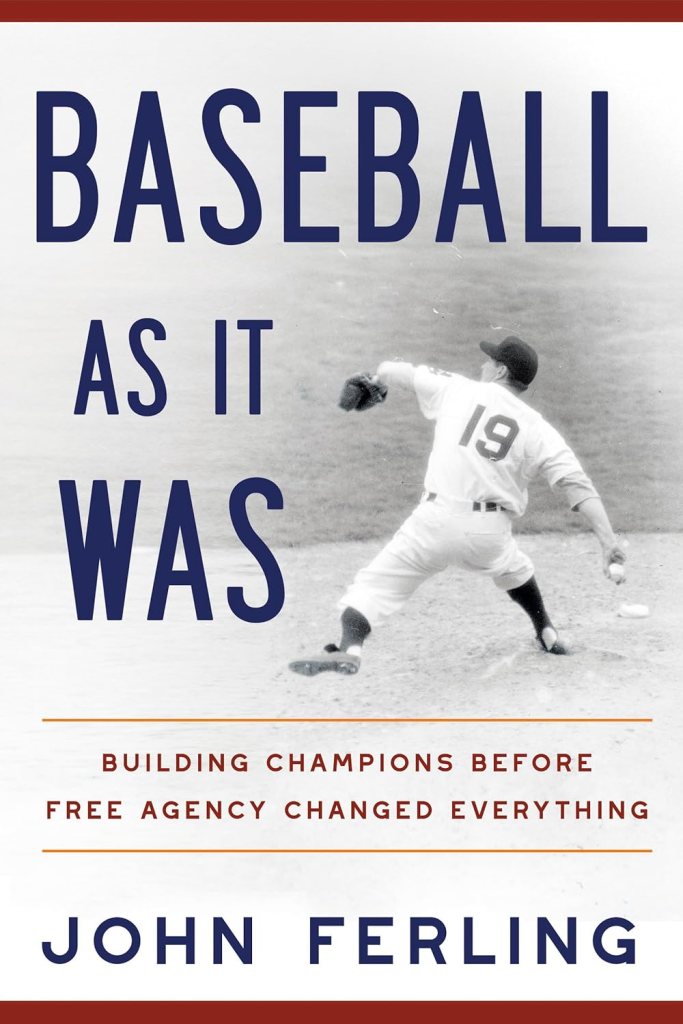
== “Baseball As It Was: Building Champions Before Free Agency Changed Everything,” by John Ferling (Tatra Press, 381 pages, released April 26, ’26; $32) decided one way to draw a reader into this subject was to share a photo of Bob Feller on the mound. Ferling, a leading historian on the American Revolution, Colonial America and U.S. military history, carves out the baseball life in the post-WWII era of 1946 to 1957, and uses the Cleveland Indians and Boston/Milwaukee Braves as case studies into how some teams built themselves into title contenders with the players who were available, including, of course, those who benefited from integration.
We haven’t had a chance to get a hold of a review copy. We can pass on these blurbs that seem to give it some credible reason to pick it up if this may be of interest — and apparently, beware of the pull of nostalgia:
“Nostalgia has been called ‘the rust of memory,’ and John Ferling properly avoids it in this informative and entertaining stroll through baseball’s tumultuous first post-1945 decades. He shows that the game’s path to the present began with problems of competitive imbalance, and the pluck and gallantry of teams that surmounted them.” — George Will, The Washington Post
“In ‘Baseball As It Was,’ a prolific American historian recounts the efforts of two perennial losing teams to rise to top of their leagues in the sport’s glory days when baseball dominated popular culture. A nostalgic tour de force by a baseball fan for baseball fans.” — Edward J. Larson, Pulitzer Prize-winning author of Declaring Independence: Why 1776 Matters
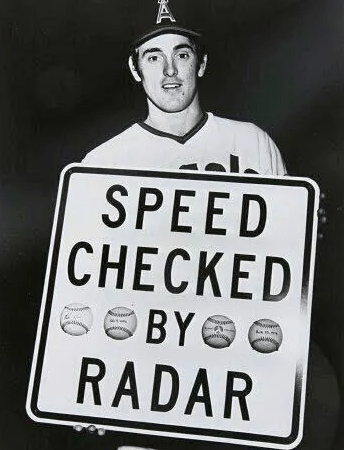
== Bay Area writer Michael Weinreb has a marvelous post about Brown’s Ryan book and the ramifications of the 100-mph pitch on his “Throwbacks” Substack platform titled “Nolan Ryan and the Last True Fastball,” which sounds like the great name for a film on him.
From Weinreb: “Ryan may or may not have been the greatest pitcher in modern baseball history, but he was unquestionably the most enjoyable to watch. ….
“By the time his career ended—by the time he finally, actually did throw out his arm— Nolan Ryan had transformed into a living, breathing American myth. How much was that myth grounded in reality? It’s hard to say, though in Brown’s book, the legendary Dallas broadcaster Dale Hansen calls Ryan one of the last bastions of the classic Texas archetype. ‘Strong, but quiet,’ he says. ‘At least that’s the way we used to be until the Ted Cruzes of the world came along.’ ”
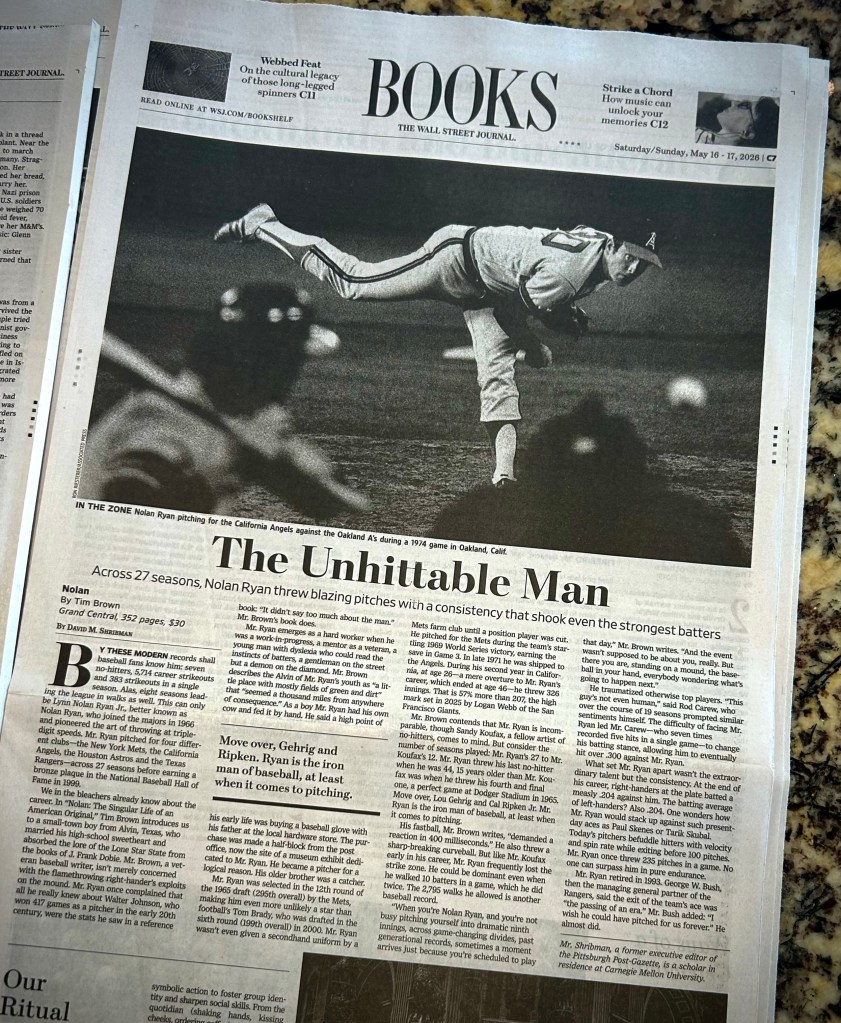
== Another “Nolan” review in the Wall Street Journal hits on another key to the book’s relevance: “Mr. Brown, a veteran baseball writer, isn’t merely concerned with the flamethrowing right-hander’s exploits on the mound. Mr. Ryan once complained that all he really knew about Walter Johnson, who won 417 games as a pitcher in the early 20th century, were the stats he saw in a reference book: ‘It didn’t say too much about the man.’ Mr. Brown’s book does.”
== A review on “Nolan” for Ron Kaplan’s Baseball Bookshelf includes: “As is the case in many of these types of sports biographies, Brown interviewed teammates and opponents to get a sense of Ryan not only as an all-time great hurler, but as a man. You find nothing but praise for his work ethic and dedication to his craft.”
== Brown posted on his Substack account about the first time “I saw Nolan Ryan for who he was” in the summer of 1991 — as he took a no-hitter against the visiting Angels into the eighth inning, then Dave Winfield broke it up with a ground-ball single to center field. Ryan left in the ninth with 14 strike outs, one walk, throwing 110 pitches in 96-degree heat at age 44.
== Brown says in a Local News Pasadena piece: “I’ve told my wife that my gravestone – and I don’t really want a gravestone – should read, ‘He showed up.’ So much of the job, like life, is showing up. I wasn’t a great writer, but enjoyed trying. I liked chasing and breaking news, but soon found the Twitter-inspired, 24-second news cycle to be distasteful and counterproductive. What never changed was my responsibility to readers, to whoever I was working for, to my family and to myself. That is, to show up. Do the job. Be accountable. The end product – the story that’s in the paper the next day – might not be perfect. I might have missed something. And the only antidote to that is to show up again. To keep going.”
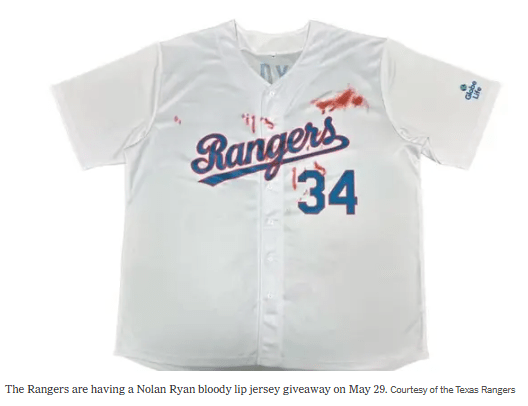
== The Rangers have a Nolan Ryan bloody jersey giveaway to fans on May 29. For the record, it wasn’t from the August 4, 1993 game when 46-year-old Ryan pummeled 26-year-old Robin Ventura. It was a September 8, 1990 game when the Kansas City Royals’ Bo Jackson hit a grounder back at Ryan that popped up and hit him in the lip, drawing blood, but Ryan found the ball and threw Jackson out a first to end the inning.
== From The Athletic in 2024: “How fast could a human being throw a fastball? 106 mph, 110 mph — even 125 mph?” It begins: “There is some debate about what the fastest fastball to date has been. In the documentary Fastball, filmmakers looked at a few key moments from the past. Bob Feller threw a ball faster than an 86 mph motorcycle. Nolan Ryan was clocked at 100.8 mph by a radar gun in 1974. If you convert Ryan’s number to the out-of-the-hand methodology used to measure pitch speed today, you get 108 mph. For some, that counts as the fastest pitch on record.”
== Pitching Ninja posts a video asking “Did Nolan Ryan throw 108 mph?”
== The Retrosheet box score of the Sept. 7, 1974 game when Ryan’s fastball was measured at 100.8 mph — in the ninth inning, no less — of a 3-1 win at Anaheim Stadium over Chicago where Ryan threw a complete game with nine strikeouts and seven talks to improve to 18-15.
== The game that Ryan admits to Brown was the one he felt most dominant: A 3-0 win over Boston at Anaheim Stadium on a Sunday night, July 9, 1972. Ryan walked leadoff man Tommy Harper. After a strikeout, Carl Yastrzemski rolled a single to right field that eluded second baseman Sandy Alomar. Ryan then struck out the next two hitters to end the inning, struck out three each in the second and third to record eight in a row, and finished with 16 strikeouts to go up against that first-inning walk and hit, facing 29 batters. Carlton Fisk also struck out three games in that game. It came the day after the Angels won a four-hour, 16-inning contest against Boston.
== Gotta beef with Nolan Ryan? Go to Nolan Ryan Beef and settle up.

== Ryan’s SABR bio by Talmage Boston includes this in the second paragraph: His longevity — winning a strikeout crown and throwing a no-hitter while being the oldest player in the game at the age of 43 — makes him the stuff of legend. And on one day in 1971, Ryan’s change of coasts became the best trade the California Angels ever made and the worst deal in New York Mets history. He may have walked more batters and thrown more wild pitches than anyone else in the game’s history, but that just proved he was human. Feller’s SABR bio by C. Paul Rogers III is less dramatic.
== In 2000, SABR posted “The 10,000 Careers of Nolan Ryan: A Computer Simulation Clarifies His Long Career” and includes: “The most remarkable part of Ryan’s W-L record isn’t just that it’s mediocre, but that his mediocrity is mediocre. Not once in twenty-seven seasons did Ryan post a record at least seven games over .500. … One excuse given for Ryan’s unimpressive winning percentage is that he pitched for poor teams. This argument must be rejected. … So why does Ryan get so much more adulation than Niekro, Perry, and Sutton, in whose class he belongs (I would rank him behind Perry, but ahead of Niekro and Sutton), and even more than Seaver, Carlton, and Jim Palmer, direct and far superior contemporaries? I think it may be that every time he pitched, fans and sportwriters anticipated something special.”
== “Is Nolan Ryan Overrated by FIP?” asks Brad Oremland in a 2014 post on FanGraphs Community, referring to the sabermetric stat of Fielding Independent Pitching that measures a pitcher’s effectiveness based solely on events he controls — home runs, walks, hit-by-pitches and strikeouts, and removing all balls put into play to try to get a “true” gage of what he does to project a better ERA. Oremland’s eventual conclusion: “Yes, clearly. … But is he underrated by ERA? By wins and losses? My answer has changed while writing this post, and that answer now is: no, I don’t think Ryan is underrated by ERA. His FIP is much better than his ERA, but it’s not because of bad fielding or bad luck. The gap between those two statistics is entirely or almost entirely of Ryan’s own making, deficiencies in his own game. Even ERA probably overrates him a touch, because earned run average makes allowances for some of Ryan’s weaknesses. You can’t use context-neutral stats to evaluate Ryan, because his own performance was highly context-dependent. I think Ryan’s won-loss record is a fair representation of his career.” 324 wins. 292 losses. A .526 percentage. And he still holds more than 50 MLB records, including fewest hits allowed per nine innings (6.56).
== Joe Posnanski writes for MLB.com in 2018 the two “unbreakable records” Ryan has are career strikeouts and career walks.
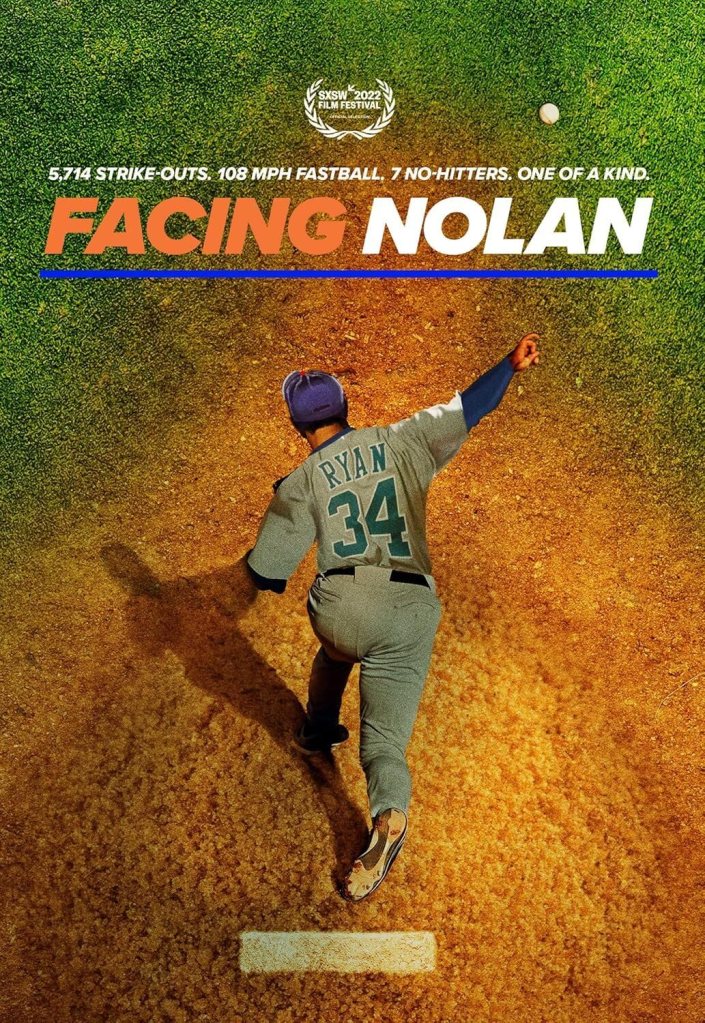
== If you’re curious about the 2022 documentary “Facing Nolan” available on various streaming services.
From RogerEbert.com giving it 3 ½ of 4 stars: “Facing Nolan” is a heartfelt documentary shows how even a sports god is still a man. Former President George W. Bush sums up the film best when he says, “Ultimately, in life, you can have success on the field—but really what matters, in the long term, is a good set of values.”
== The bio for Nolan Ryan under the White House official documents during President George W. Bush’s term is headline “Nolan Ryan, the Alvin Express.”
== Bob Feller’s Hall of Fame bio noting his induction in 1962, his first year of eligibility, along with Jackie Robinson. Although they played in different leagues, in 1945, before joining the Brooklyn Dodgers, Robinson faced Feller during off-season games and recorded two hits.
== Nolan Ryan’s Hall of Fame bio noting his induction in 1999, his first year of eligibility, along with George Brett and Robin Yount. In 115 plate appearances against Ryan, Brett was 29-for-101 (.287) with no homers, striking out 18 times. The 29 hits are the most by any MLB hitter against Ryan. Yount was 16 for 69 against Ryan (.232) with two homers and 16 strikeouts. Yount started hitting against Ryan as an 18-year-old in 1974 and hit a two-run homer off him in April of 1991.


2 thoughts on “Day 16 of 2026 baseball books: Fast, furious and fearless folklore, backed up by the facts”