"Everything comes to him who hustles while he waits." — Tommy Edison
Author: fartheroffthewall
Tom Hoffarth is a sports journalist in Los Angeles, born and raised (reared is the correct phrase, but it just sounds wrong) and specializing in the sports media business. A USC graduate from the School of Journalism (it still exists, somewhat) in 1984, he is also available for service at https://www.linkedin.com/in/tomhoffarth/
This is the latest post for an ongoing media project — SoCal Sports History 101: The Prime Numbers from 00 to 99 that Uniformly, Uniquely and Unapologetically Reveal The Narrative of Our Region’s Athletic Heritage. Pick a number and highlight an athlete — person, place or thing — most obviously connected to it by fame and fortune, someone who isn’t so obvious, and then take a deeper dive into the most interesting story tied to it. It’s a combination of star power, achievement, longevity, notoriety, and, above all, what makes that athlete so Southern California. Quirkiness and notoriety factor in. And it should open itself to more discussion and debate — which is what sports is best at doing.
The most obvious choices for No. 82:
= Mike Sherrard, UCLA football = Greg Hopkins, Los Angeles Avengers
The not-so-obvious choices for No. 82:
= Rommie Loudd, UCLA football = Red Phillips, Los Angeles Rams
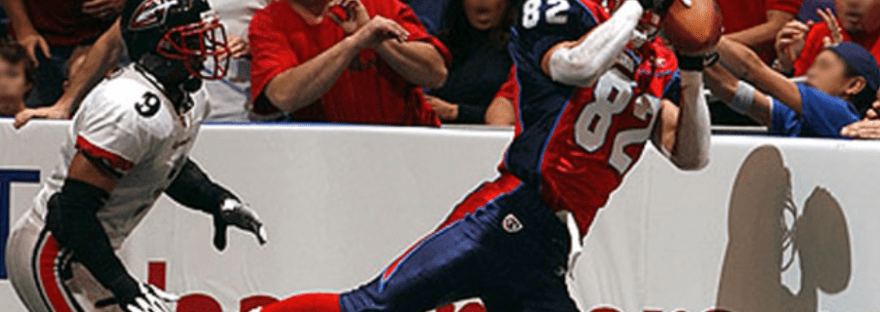
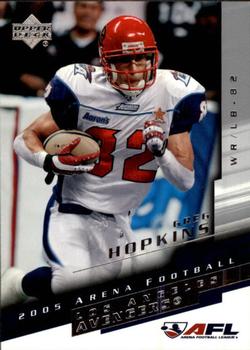
The most interesting story for No. 82: Greg Hopkins, Los Angeles Avengers wide receiver/linebacker (2002 to 2006) Southern California map pinpoints: Los Angeles (Staples Center)
Before Robert Downey Jr. had a chance to do it, Greg Hopkins stepped into the role of Hollywood’s version of Ironman.
And a marvelous one at that.
Versatility was a virtuous trait for anyone involved in the Arena Football League, and, as a offensive and defensive standout with the Los Angeles Avengers, Hopkins was nimble enough to add value to a kid’s meal deal.
A league and team vying for attention in an entertainment-saturated town obsessed with the latest and greatest meant Hopkins could be a marquee action figure in a Southern California area Carl’s Jr. giveaway.
The quote bubble read:
Greg Hopkins — “Hollywood” Grizzled Veteran in his 11th AFL season is crafty on both sides of the football, comes from the small town of Nineva, Pa. (Population 88) but becomes “Hollywood” during the season … “Movie Star” good looks allow him to do modeling on the side!”
But he still picked No. 82, instead of No. 88. He was that modest.
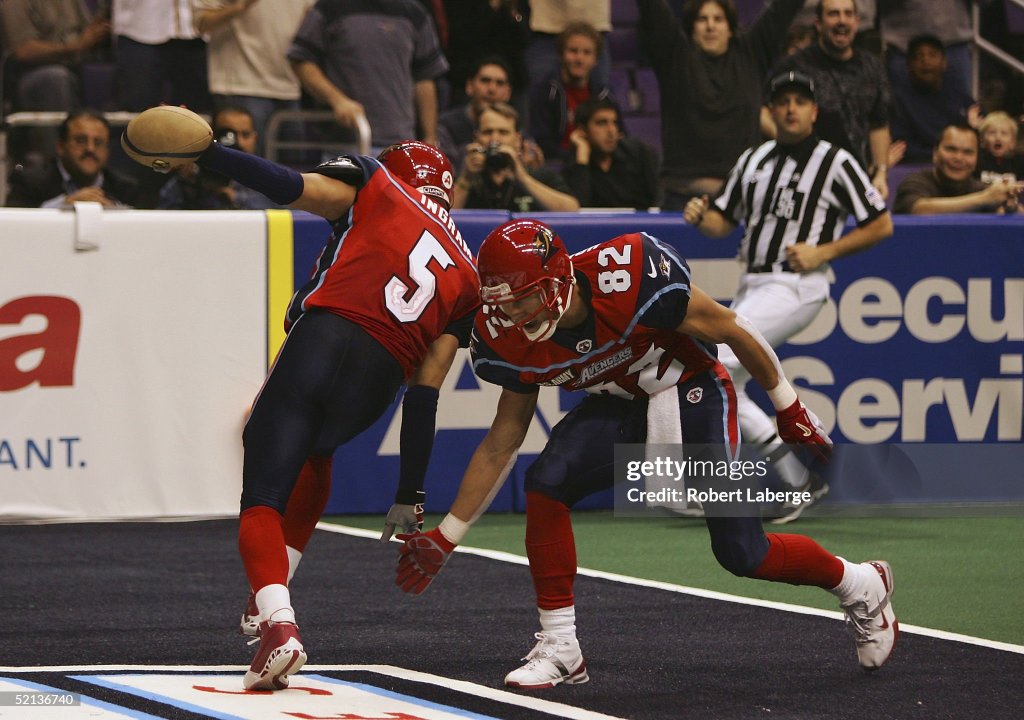
The Avengers’ Greg Hopkins (82) celebrates with teammate Kevin Ingram (5) after a touchdown against Georgia in a 2005 game at Staples Center. (Photo by Robert Laberge/Getty Images)
It only took one season playing for the Avengers that Hopkins, a mild-mannered graduate of Slippery Rock University from deep in steel-country Pennsylvania, transformed into the 2002 AFL “Ironman of the Year” honor, a super-hero status in the realm of indoor gridiron gladiators.
The 6-foot-2, 205-pound receiver on offense, linebacker on defense, was always looking for angles on an green rug field just 50 yards long (with eight-yard end zones), and not even 30 yards wide, wedged into a hockey rink complete with sideboards, netting and extra-loud speakers. The scoreboard, however, produced numbers closer to a college basketball finish.
During that ’02 All-Arena season, Hopkins caught 102 passes for 1,185 yards (11.6 per catch) and scored 29 touchdowns as an offensive threat. He also had 38.5 tackles and five interceptions, three returned for touchdowns, six pass breakups, a forced fumble and two fumble recoveries.
By the time he finished as an Arena participant in ’06, Hopkins was part of the league’s “20 Greatest Players” list to honor its first 20 years of existence.
He was eventually inducted into the AFL Hall of Fame in 2013.
In his 11 AFL seasons, starting in 1996 with the Albany Firebirds, Hopkins career stats read: 833 receptions for 10,206 receiving yards (only five players in AFL history had gone five digits at that point), 196 touchdown catches, 24 carries for six touchdowns; 312 tackles, 42 pass deflections, 26 interceptions, 10 picks returned for touchdowns (to set an all time league mark), 17 fumble recoveries, 13 forced fumbles and 5.5 quarterback sacks.
This is the latest post for an ongoing media project — SoCal Sports History 101: The Prime Numbers from 00 to 99 that Uniformly, Uniquely and Unapologetically Reveal The Narrative of Our Region’s Athletic Heritage. Pick a number and highlight an athlete — person, place or thing — most obviously connected to it by fame and fortune, someone who isn’t so obvious, and then take a deeper dive into the most interesting story tied to it. It’s a combination of star power, achievement, longevity, notoriety, and, above all, what makes that athlete so Southern California. Quirkiness and notoriety factor in. And it should open itself to more discussion and debate — which is what sports is best at doing.
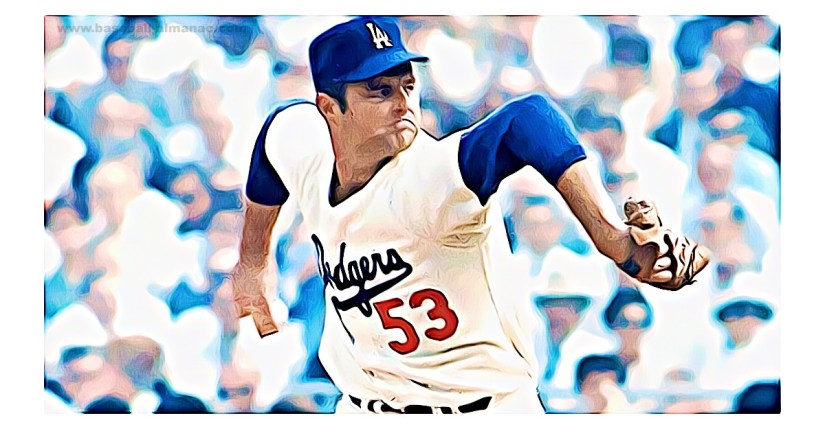
The most obvious choices for No. 53: = Don Drysdale, Los Angeles Dodgers = Keith Erickson, UCLA basketball = Rod Martin, Los Angeles Raiders
The not-so-obvious choices for No. 53: = Jim Youngblood, Los Angeles Rams = Lynn Shackleford, UCLA basketball
The most interesting story for No. 53: Don Drysdale, Los Angeles Dodgers pitcher (1958 to 1969), California Angels broadcaster (1973 to 1981), Los Angeles Rams broadcaster (1973 to 1976), Los Angeles Dodgers broadcaster (1988 to 1993)
Southern California map pinpoints: Van Nuys, Bakersfield, Hollywood, Los Angeles (Coliseum, Dodger Stadium), Anaheim
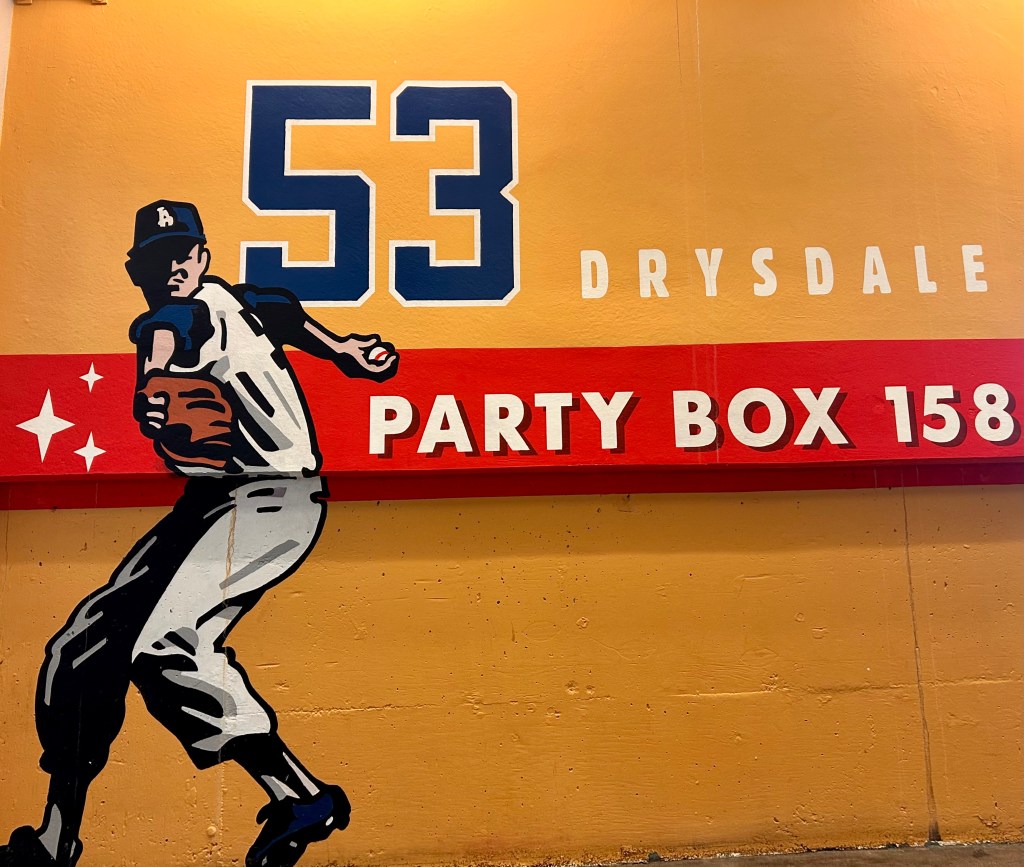
A mural at Dodger Stadium down the first base line for an exclusive section of field-level seats.
The dogma of Don Drysdale presents itself as an expanded truth-or-double-dog-dare discussion of the “Big D” legacy.
No question it covers Southern California culture, as well as pop culture, and the culture of a Hall of Fame athletic and broadcast career.
There are bigger-than-life discoveries about the 6-foot-6 right-handed sidewinder, a San Fernando Valley-grown kid who spent all 14 years of his big-league career with the Dodgers organization and circled back for his final six years on the planet broadcasting their games:
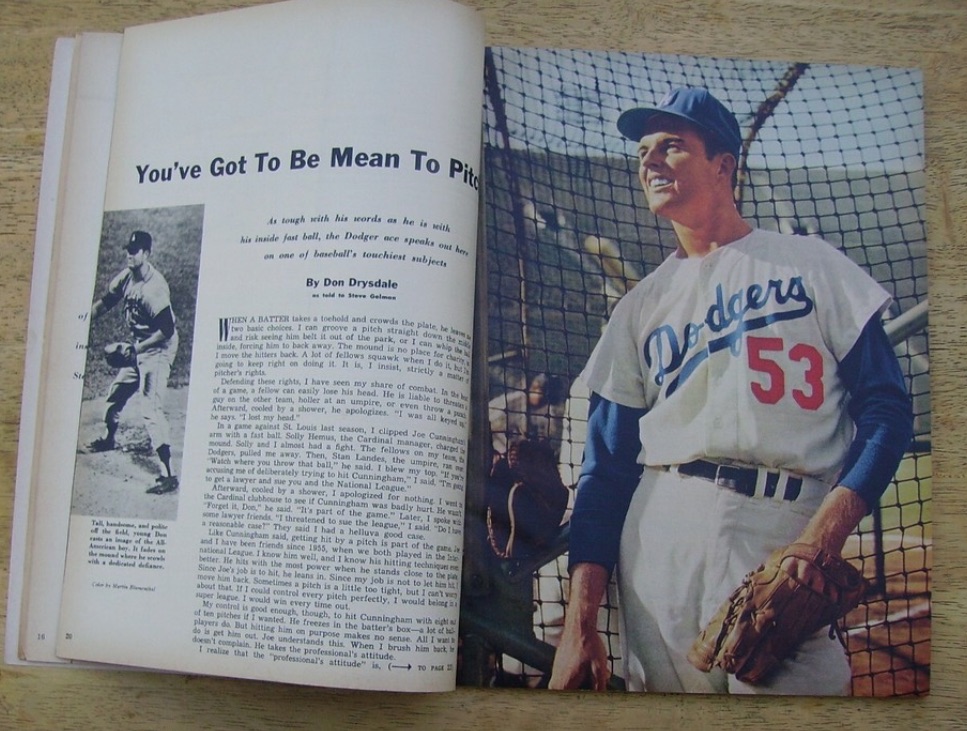
From the 1960 issue of Sport magazine, the self-authored story: “You’ve Got to Be Mean to Pitch”
Truth that’s been told: Don Drysdale led the league in putting the “mean” in what constituted a meaningful pitch.
Dare to discover: The dastardly stat was never kept, but if some SABR-cat researcher was compelled to go back and confirm, we’d suspect there was enough evidence to confirm he threw more brushback/purpose pitches during his 14-year career, all with the Dodgers, the last dozen in Los Angeles, than anyone else in his era.
He did hit 154 opponents, which breaks down into leading the majors for four seasons and the National League a fifth time. That can be interpreted from what Drysdale put out as his stated philosophy: You knock down/hit one of my guys, I knock down/hit two of yours.
The footnote to that: Why waste four pitches on an intentional walk with one pitch to the ribs will do? That line attributed to Drysdale may not take into the fact he did issue 123 IBB in his career.
Further research from Fangraphs on the essence of the “Two For One Special,” aka the “Drysdale Revenge Factor,’ shows of 18 times in his career where he hit two or more batters in a game. But deconstructing relative facts and figures from previous games and what else was happening is far more difficult to document. That mindset, however, leans into learning the art of intimidation by former veteran Brooklyn teammate Sal “The Barber” Maglie. Properly stated, it puts the idea in a batter’s mind that things could go south quick if you decided you owned the half of the 17-inch home plate that Drysdale decided was his for a particular at-bat.
“Batting against him is the same as making a date with the dentist,” Pittsburgh’s Dick Groat once said.
In a 1979 interview with the New York Times’ Dave Anderson, Drysdale said delivering the inside pitch was a “lost art” 10 years after his retirement.
“I just feel,” he was saying now, his right forefinger swirling the ice in his Scotch, “that when you’re pitching, part of the plate has to be yours. … The pitcher has to find out if the hitter is timid. And if the hitter is timid, he has to remind the hitter he’s timid.”
This is the latest post for an ongoing media project — SoCal Sports History 101: The Prime Numbers from 00 to 99 that Uniformly, Uniquely and Unapologetically Reveal The Narrative of Our Region’s Athletic Heritage. Pick a number and highlight an athlete — person, place or thing — most obviously connected to it by fame and fortune, someone who isn’t so obvious, and then take a deeper dive into the most interesting story tied to it. It’s a combination of star power, achievement, longevity, notoriety, and, above all, what makes that athlete so Southern California. Quirkiness and notoriety factor in. And it should open itself to more discussion and debate — which is what sports is best at doing.
The most obvious choices for No. 93: = Ndamukong Suh, Los Angeles Rams = Greg Townsend, Los Angeles Raiders
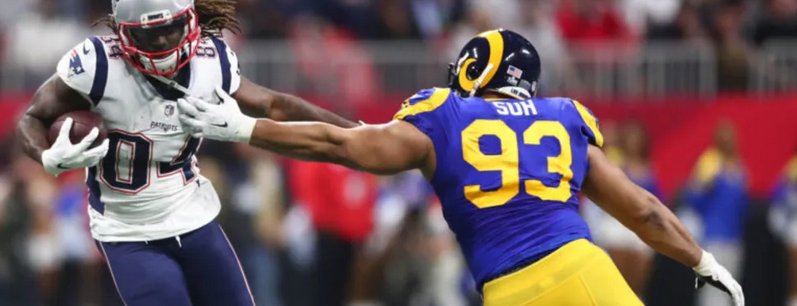
The most interesting story for No. 93: Ndamukong Suh, Los Angeles Rams nose tackle (2018) Southern California map pinpoints: Inglewood (SoFi Stadium)
For all the unnecessary roughness during a 13-year NFL career — the down-low, scandalized way he treated opposing players — Ndamukong Suh never got sued.
Maybe the league’s witness protection program wasn’t all that great. Or, maybe because, deep down, he was really a super nice guy whose actions off the field spoke louder than his red-flag existence on the gridiron of employment?
In nearly 200 regular season games, including three Super Bowls, another handful of playoff appearances, five times added to a Pro Bowl squad, and a handful of exhibition games where rules still applied, the 6-foot-4, 313-pound Suh leveraged his abilities to earn about $163 million in salary. That included $14 million that the Los Angeles Rams gave him to join their organization in 2018, a strategic move to free up the often double-teamed All Pro defensive end Aaron Donald.
Now subtract more than $400,000 for all the fines and lost pay checks Suh incurred.
“Some may say (his penalty payments were) a bargain to pay in light of what he had earned — all the intimidation that came from his reputation,” USA Today columnist Mike Freeman wrote when Suh, in a rather poignant social media post, announced in July of 2025 he was officially retired from the NFL at age 38.
Much of the explanation of force-feeding yourself to avoid starvation or anything worse is how to be more grateful and graceful when trying to sooth the soul as it encounters bouts of depression, some of it brought up just be being alive these days battling spiritual warfare from within.
One of the author’s quick-fix meals is something she said her and her husband call “The Super Bowl.” It means giving yourself the OK to just tear into a bowl of dip for dinner. And count it as a meal. Because it does.
Put together a plate of whatever you have in your fridge, like carrot sticks, pita chips, lettuce cups or tater tots, and serve with any dip: baba ganoush, chicken salad, hummus or sour cream and onion dip. Like you’d have on a Sunday in February when there’s nothing else that gives you much comfort and you’re at a friends’ house trying to stay social while an over-hyped NFL contest on the TV is far from fulfilling the psyche.
The book is something I should have applied to the last few months to pull together the latest edition of my annual series.
It’s one I could have easily labeled: “You Gotta Digest Another Baseball Book: Real-Life Strategies for Reading When Turning Another Page Feels Impossible.”
Because, in the process of feeding my brain with baseball prose, I corrupt my palate with too many odds and ends — canned bean salad mixed/shoveled with Doritos, for one — which never amount to anything healthy and only exacerbate likely own angst. There is feeding some depression, much of which is brought upon by the United States we currently live in, and the baseball books only brought a modicum of escapism.
It is with some regret that, maybe a bit too early — but better than too late — we’ve decided it’s best to cut off the book reviews after these now-established 22 posts, which cover almost three dozen titles, and focus on what we could get in between March and May of 2025. I can’t deal with any more. Besides, I got a really nice samples of some great writing so far and I’m very fulfilled at this point.
More interesting titles are expected later this summer and fall, but the point here is: What was new when the baseball season starts? What can we recommend for a day at the ballpark, beach or backyard BBQ? Or while waiting in line for the Union Station bus to take you past the parking lots to the Dodger Stadium drop off spot?
At some point, you can’t wait for more.
Thus, we have collected these posts amidst a ton of crumbs left in the La-Z-Boy recliner:
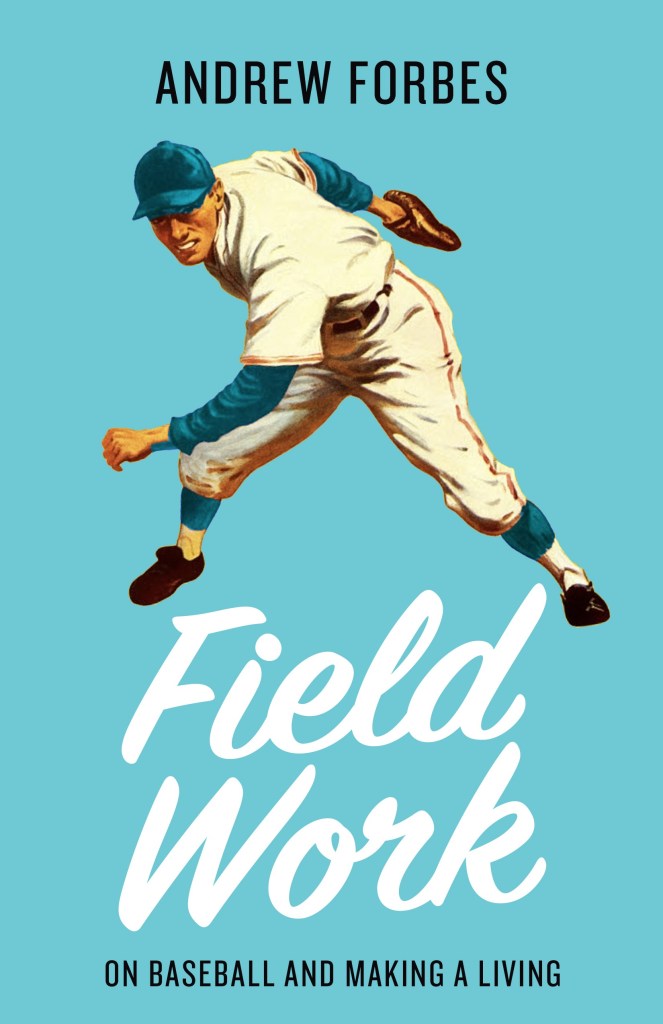
What did we learn: Forbes is the most valued, top-notch writer on the game today.This only confirms it. Find this and all else he has done prior for further proof. We saved the best for the last in this series.
= Day 21:“The House Divided: The Story of the First Congressional Baseball Game” by J.B. Manheim.
What did we learn:In the process of researching his sixth book of “The Deadball Files” fiction series, Manheim steamrolls into more interesting history he couldn’t help but better document as a non-fiction work for our enjoyment. It’s its own 1909 crime thriller.
= Day 20:“Baseball Like It Oughta Be: How a Shoe Salesman’s Madison MallardsAnd His Renegade Staff Ignited aSummer Collegiate Baseball Revolution”,” by Tom Alesia.
What did we learn: Comparing the Savannah Bananas to the Madison Mallards is like apples to oranges. You can enjoy them independently or in one big fruit salad. But for our appreciation of local history, bank on the Mallards for long-term success.
= Day 19:“Big Loosh: The Unruly Life of Umpire Ron Luciano” by Jim Leeke.
What did we learn:Unlucky Luciano just wanted to make everyone around him happy, when he was completely miserable. It caught up with him.We wish he could have got the role of Coach on “Cheers” now that we knew how much it might have meant to him.
=Day 18: “Dangerous Danny Gardella: Baseball’s Neglected Trailblazer for Today’s Millionaire Athletes” by Robert Elias.
What did we learn:Curt Flood took the baton from Danny Gardella, who had more nicknames than anyone deserved for having played in just two seasons with the New York Giants (and one token at bat with St. Louis when it was too late).
= Day 17: “Mets Stories I Only Tell My Friends” by Art Shamsky and Matthew Silverman; “Get Your Tokens Ready:The Late 1990s Road to the Subway Series” by Chris Donnelly; “Out of the Mouth of Babe:Babe Ruth on Life: Pitching, Hitting,Striking Out, and Coming Back Swinging” by Kelly Bennett; “Yankees, Typewriters, Scandalsand Cooperstown: A Baseball Memoir” by Bill Madden.
What did we learn: If it’s 256 pages and can sell for $30, it’ll get done if it involves pinstripes or anything amazin’.
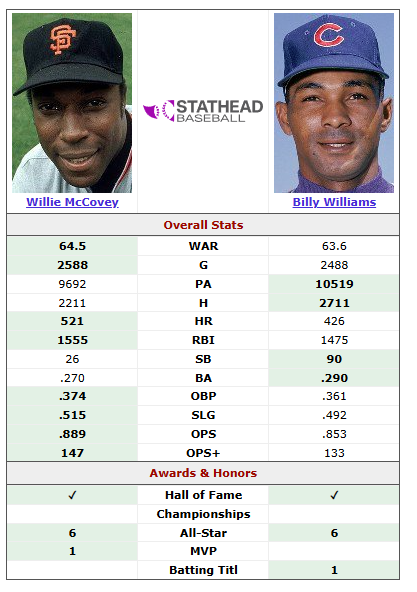
=Day 16:“A Time for Reflection:The Parallel Legacies of Baseball IconsWillie McCovey and Billy Williams” by Jason Cannon; “A Giant Among Giants:The Baseball Life of Willie McCovey” by Chris Haft.
What did we learn:It’s hardly a stretch to size up Willie and Billy, two Alabama gentlemen born weeks apart, Hall of Famers in so many ways.
= Day 15:“3,000: Baseballs Elite Clubsfor Hits and Strikeouts” by Douglas J. Jordan.
What did we learn:Clayton Kershaw is far more comparable to Pedro Martinez than Carsten Charles (C.C.) Sabathia according to the data. And, on our pallet, far more Bob Ross than Stan Ross if he wants the title of “Mr. 3,000.”
= Day 14:“Selling Baseball: How SuperstarsGeorge Wright and Albert SpaldingImpacted Sports in America” by Jeffrey Orens; “Baseball’s First Superstar:The Lost Life Story of Christy Mathewson” by Alan D. Gaff.
What did we learn: A “superstar” can fit a definition, but … can he really?
= Day 13:“Baseball before We Knew It:A Search for the Roots of the Game” by David Block.
What did we learn:Twenty years after it first came out, there’s more to know that we didn’t know we knew. Comeback Book of the Year.
= Day 12:“Skipper: Why Baseball ManagersMatter and Always Will” by Scott Miller; “The Last Manager:How Earl Weaver Tricked, Tormented& Reinvented Baseball” by John W. Miller.
What did we learn:We never will complain about a manager’s decision again. Because, honestly, we don’t know who made the decision. Times have changed. Also included on this post: “Hurdle-isms: Wit and Wisdom from a Lifetime in Baseball,” by Clint Hurdle; “The Dad Coach: How to Lead Kids to Succeed On and Off the Baseball Field,” by Mike Matheny with Jerry Jenkins; “The Lineup Card: An Illustrated History of the Baseball Collectible,” by Tom O’Reilly.
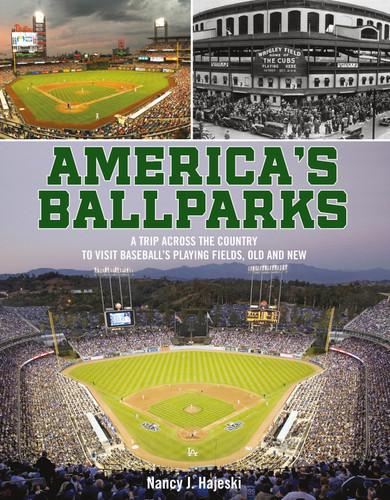
=Day 11:“The Baseball Stadium Guide” by Ian McArthur; “The Modern Baseball:History of MLB Through theArt of the Logoball” by Tyler Burton; “Movies With Balls:The Greatest Sports Filmsof All Time, Analyzed and Illustrated” by Rick Bryson and Kyle Bandujo; “Movies and the Churchof Baseball: Religion in theCinema of the National Pastime” by Jonathan Plummer.
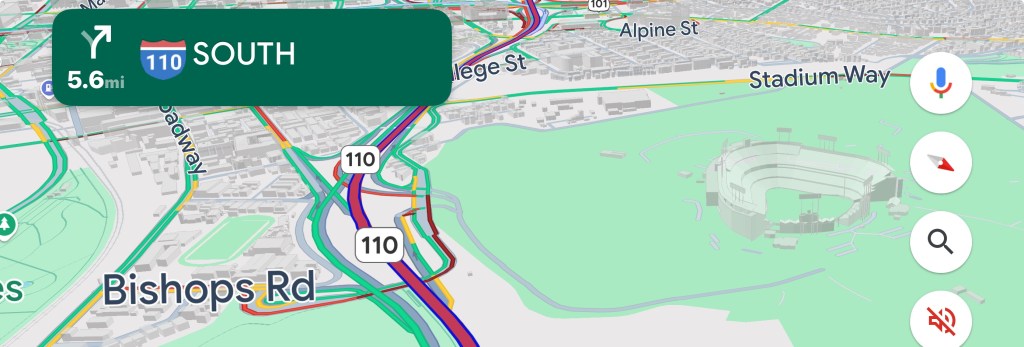
What did we learn: Art may be in the eye of the beholder, but we really thought it was interesting when we pulled up our GPS app and found something even more arty. Also included on this post: “The Art of Baseball: The Watercolors of James Fiorentino” by James Fiorentino with John Molari; “Black Baseball’s Heyday: Capturing an Era in Art and Words,” by Anthony High and Denny Dressman.
= Day 10:“Homestand: Small Town Baseballand the Fight for the Soul of America” by Will Bardenwerper.
What did we learn:We miss the Lancaster JetHawks more than we realize. And thanks, Will, for alluding to the 100th anniversary of “The Great Gatsby.” Also included in this post: “When Minor League Baseball Almost Went Bust: 1946-1963,” edited by George Pawlush; “Extra Innings: A Memoir of Fathers, Sons, Fandom and Fate,” by Jeff Benjamin.
= Day 9:“Here Comes The Pizzer:The Found Poetry of Baseball Announcers” by Eric Poulin; “The Ancient Wisdom of Baseball: Lessons for Life fromHomer’s Odyssey to the World Series” by Christian Sheppard.
What did we learn: Allow yourself the grace to take in these two books when your brain is still and the spirit isn’t agitated. Goes well with Richard Rohr’s new book, “Falling Upward: The Spirituality For the Two Halves of Life,” and you may understand this better. Or just listen to Vin Scully call a game on a YouTube.com. You’ll find poetry in motion.
= Day 8:“Jim Gilliam: The Forgotten Dodger” by Steve Dittmore; “They Changed the Game: 50 Storiesand Illustrations Celebrating Creativity in Sports” by Matthew and Ariana Broerman; “Dream Merchant of the Perfect Game:The Life and Legacy of Frank ‘Doc’ Sykes” by Bernard McKenna; “Play Harder: The Triumph ofBlack Baseball in America” by Gerald Early.
What did we learn: DEI in this ERA may bring us a new WAR. Is this what Jack Robinson fought for? On the 2025 Jack Robinson Day, we have to wonder just what the hell is going on.We have the longest pre-amble before the reviews come of these four books because it’s necessary to properly clear our throats and our minds about what’s happening— and also didn’t happen with the Dodgers decided to visit the White House.
Also included on this post: “Opening the Door for Jackie: The Untold Story of Baseball’s Integration,” by Keith Evan Crook; “Brooklyn Dodgers Transactions, 1890–1957 — A History and Analysis,” by Lyle Spatz; “A Baseball Book of Days: Thirty-One Moments that Transformed the Game,” by Phil Coffin; “Race and Resistence in Boston: A Contested Sports History,” edited by Robert Cvornyek and Douglas Stark; Justice Batted Last: Ernie Banks, Minnie Miñoso, and the Unheralded Players Who Integrated Chicago’s Major League Teams,” by Don Zminda.
= Day 7: “All The Way: The Life ofBaseball Trailblazer Maybelle Blair” by Kat D. Williams.
What did we learn:Maybelle Blair didn’t quite make our final ballot for the Baseball Reliquary’s Shrine of the Eternals. There will certainly be more opportunities for her to claim fame elsewhere.
= Day 6:“My Baseball Story:The Game’s Influence on America” by Nick Del Calzo.
What did we learn:Americans love to explain how they fell in love with baseball. Add photos if necessary.
Also included on this post: “Hey Mom, Wanna Have a Catch?: A Collection of Baseball Stories … Honoring Moms and Dads who Taught us to Love America’s National Pastime,” by Rob Sheinkopf; “9 Innings To Living Your Best Life: Achieve Success When You S.M.I.L.E.” by Jay Jackson.
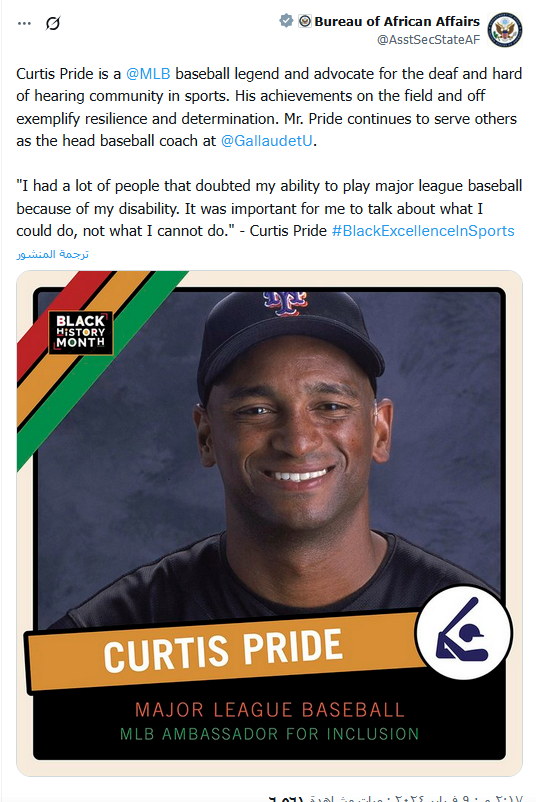
= Day 5:“I Felt the Cheers:The Remarkable Silent Life ofCurtis Pride” by Curtis Pride and Doug Ward.
What did we learn:The idea, as well as the fact, that Curtis Pride is still proudly identified these days as an MLB Ambassador for Inclusion since 2015 is worth mentioning right out of the batters’ box. “I am a man of faith, and Pride is one of the seven deadly sins, but I never really cared for that definition. I prefer Webster’s: ‘The quality or state of being proud.’ That was me. I was nothing if not proud—proud of my name, my family, and the circumstances I had to overcome.”
= Day 4: “L.A. Story: Shohei Ohtani, The Los Angeles Dodgers, And A Season for the Ages“ by Bill Plunkett.
What did we learn: If Ohtani never pitches again, the Dodgers will be fine with it. If he does, Dodger Stadium will surpass Tokyo Disneyland more than it already has become.
= Day 3:“Don Drysdale: Up and InThe Life of a Dodgers Legend” by Mark Whicker.
What did we learn: A bit of randomness as nearly 40 voices suddenly became part of the chorus that, in this manuscript, form less of a linear biographical recount but more of a round-table appreciation/tribute/eulogy.Big D’s legend could still use a full research project.
= Day 2: “Baseball’s Best (and Worst) Teams:The Top (and Bottom) Clubs Since 1903” by G. Scott Thomas.
What did we learn:If you though the ’27 Yankees were the greatest team in MLB history, the data doesn’t prove it. Look at it this way: The San Diego Padres’ only two trips to the World Series came in 1984 and 1996. They lost to the No. 1 and No. 2 greatest teams ever assembled as far as Thomas’ research shows.
Also included on this post: “One More for the White Rat: The 1987 St. Louis Cardinals Chase the Pennant,” by Doug Feldmann; “1960: When the Pittsburgh Pirates Had Them All The Way,” by Wayne Stewart; “White Sox Redemption: The Road to World Series Victory in 2005,” by Dan Helpinstine; “The Whiz Kids: How the 1950 Phillies Took the Pennant, Lost the World Series and Changed Philadelphia Baseball Forever,” by Dennis Snelling; “The Boys of ’62: Inspiring Story of the San Pedro Little League Champs,” by Tim Urish.
= Day 1: “JapanBall: Travel Guide to Japanese Baseball” by Gabe Lerman; “A Baseball Gaijin: Chasing A Dream to Japan and Back” by Aaron Fischman; “Makeshift Fields: Chasing Baseball AcrossIreland, Scotland, England and Wales” by Dale Jacobs.
What did we learn: Where else can the Dodgers open a season to plant more seeds? Having already been to Australia, South Korea and Japan, it seems Great Britain should be next on the list. Or maybe Alaska.
Among the books we waited, and waited, and waited for, didn’t see coming out and decided to at least mention them for future pursuits:
== “Dodgers to Damascus: David Lesch’s Journey from Baseball to the Middle East,” by Catherine Nixon Cooke (Trinity University Press, $39.95, 284 pages, due in October). The Dodgers drafted Lesch, a 6-foot-3 right-handed pitcher from Central Arizona College in the first round of the January regular-phase. At age 20, he spent one season at the team’s Pioneer League affiliate in Alberta, Canada, posting a 1-0 record in five games and was done with a shoulder injury. Only four players, none really of note, made it to the MLB level. Lesch became a distinguished professor of Middle East studies and was soon tapped by the United Nations, the U.S. State Department, and policy centers and governments internationally.
== “Make Me Commissioner: I Know What’s Wrong with Baseball and How to Fix It,” by Jane Leavy (Grand Central Publishing/Hatchette, 384 pages, $32.50, due in September). From the no-nonsense biographer of Mickey Mantle, Sandy Koufax and Babe Ruth, Leavy does her homework by probing such figures as Dave Roberts, Joe Torre, Jim Palmer and Dusty Baker.
This was to be a mashup post to celebrate baseball and music but we couldn’t fine tune it in time. La te da. Of the three, Krell’s book has been out awhile. It is the third installment of a rather one-note idea where he picks a year and attaches pop culture references to it on a monthly basis, already doing much with 1962 (published in 2021) and 1966 (out in 2023). His next one is on 1986. These have been called “workmanlike,” which is a nicer way of saying template-filling with little connecting of dots or providing some post-experience enlightenment. Krell describes his book in a March 3, 2025 post on UNP, so there you go. He’s found a way to keep on telling stories.
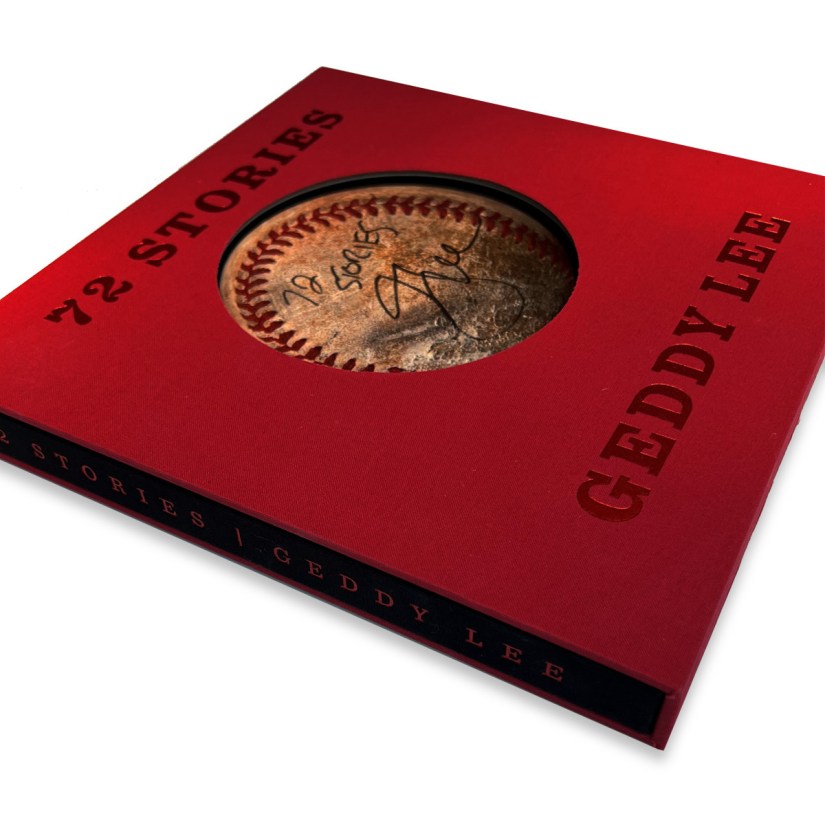
The $50 coffee-table sized extravaganza by Geddy Lee Weinrib, best known as Geddy Lee, Toronto-born lead vocalist, bassist and keyboards for Rush since he joined in 1968, will have its niche audience as he relieves this odd collection of baseballs he’s pulled together over the years. Listen, they still start each game singing the National Anthem. Why again? Maybe to some, singing “Tom Sawyer” makes more sense. We maybe got the gist of this when Lee creepily walked Dan Rather through the collection for an AXS TV interview show. The Harper Collins book is a scaled down version of the one sold earlier on the Rush website to hard-core collectors.
== “Bo Belinsky: The Rise, Fall and Rebound of a Playboy Pitcher,” by David Krell (McFarland Books, $29.95, perhaps coming out in the summer). This seems to be an extension of what Krell came upon on Belinsky in his books covering 1962 and ’66 and thought it was worth doing a deeper dive. In our ongoing series “SoCal Sports History 101,” we cover Belinsky for wearing No. 36 for the Angels from ’62 to ’64 before he was traded after slugging a local sportswriter. Belinsky did his own book, “Pitching and Wooing” in 1973 at the height of Jim Bouton’s “Ball Four.” Maybe too little and too late for Bo, who died in 2001 at age 64.
== “White Sox Redemption: The Road to World Series Victory in 2005,” by Dan Helpinstine (McFarland Books, $29.95, perhaps coming out in July). Already briefly mentioned in the Day 2 books focused on particular teams, we’re guessing that based on the recent news from Rome and Pope Leo XIV, this book should already have been pulled for a rewrite and had the word “redemption” changed to “miracle.”
== “Baseball in the Roaring Twenties: The Yankees, the Cardinals, and the Captivating 1926 Season” by Thomas Wolf (University of Nebraska Publishing, $36.95, 256 pages, due in September). Wolf wrote “The Called Shot: Babe Ruth, the Chicago Cubs, and the Unforgettable Major League Baseball Season of 1932” for UNP in 2020, and it was a finalist for the Seymour Medal from the Society for American Baseball Research).
== “Attorneys in the Baseball Hall of Fame,” edited by Louis H. Schiff and Robert M. Jarvis (McFarland Books, $45, due in July). Get to know three players (Hughie Jennings, Jim O’Rourke and Monte Ward), two managers (Miller Huggins and Tony La Russa), three executives (Larry MacPhail, Walter O’Malley and Branch Rickey) as told to by law professor and a retired Florida county court judge.
== “Stan Musial,” edited by Bill Nowlin and Glen Sparks with Len Levin and Carl Riechers (SABR, 160 pages, $34.95, released in June). Brooklyn Dodgers gave Musial his nickname – “The Man” – in 1946. Here, 34 SABR members contribute essays and research on his career.
== “The New Baseball Bible: Notes, Nuggets, Lists, and Legends from Our National Pastime — Third Edition,” by Dan Schlossberg (Sports Publishing/Skyhorse, 488 pages, $29.99, due out in June). First published as The Baseball Catalog in 1980, we reviewed the 2020 update (at 465 pages) that came out during the COVID shutdown in June of that year and found it a great way to pass the time. The update found a way to get Shohei Ohtani on the cover to show it is truly an update from previous editions. Schlossberg is the former Associated Press sports editor from New Jersey, a regular writer for Street & Smith’s Official Baseball Yearbook, Sports Collectors Digest, The Sporting News and official World Series programs. His resume includes more than three dozen books.
Post script: I’ve got a hunch that Doug Glanville, who in 2010 came out with “The Game from Where I Stand: A Ballplayer’s Inside View,” will have to bind a collection the best-of essays he’s been posting on his Substack account, “Welcome to Glanville,” one of the most insightful things about the game and life that’s apt to be unlocked and fall into your in-box during the week. I’ve been a Glanville fan since we talked for a 2019 post about Jackie Robinson Day that led to an L.A. Times media column, and the experience he revealed about discrimination he had during a visit to LAX in 2015. Glanville once taught a class at his alma mater, Penn, called “Communications, Sports and Social Justice” that focused on how sports messages were crafted to effect change on society.
Workshop this idea in a press box near you: The job of anyone writing about the game of baseball today is to make sure the contest below remains imperfectly perfect.
Baseball’s imperfections are what makes it most relatable to its fan base. It’s all a work of failures and resolutions, a work in progress. Yet we seem to define progress oddly in a time of mandated pitch clocks, video reviews by detached persons in New York and the potential of robotic ball-strike calls from a digital platform, all of which looks like a video game, trying to size up an imprecise boundary idea of a strike zone because we aim to get things as right as possible.
Baseball doesn’t even get the definition right of a perfect game.
For years, it’s assumed a contest in which the pitcher (or in today’s game, a bullpen strung along like Christmas lights) gets 27 straight outs without allow a batter to reach base by any sort of feat or accident. I’ve told the story before about being at a game in the ballpark, and a young couple sitting behind me was reduced to boyfriend-splaining.
The guy pointed out to his gal pal that, at the moment, the pitcher had no-hitter going.
“Too bad it’s not a perfect game,” he added.
“What’s that?” she replied.
“A perfect game,” he started, hesitated, and continued, “is when the pitcher strikes everyone out on three pitches.”
I pondered turning around to perhaps tighten up that response, but I resisted because, upon further review in my frontal lobe, he was more right than wrong. Someone in a press box likely called the first one of these things “perfect” — a “perfecto” if they were of another language enabler — and it stuck.
Even then, if someone actually achieved a perfect game as this lad described it, someone would modify the feat and raise the bar to defining it as an Immaculate Game, and then we’d get all the religious zealots involved in hijacking their bibles.
Where does all this brain-wave baseball philosophy come from?
For me, it’s from reading another Andrew Forbes book. And not possible able to match his output but only try to keep pace.














 Tom Hoffarth's The Drill: More Farther Off the Wall