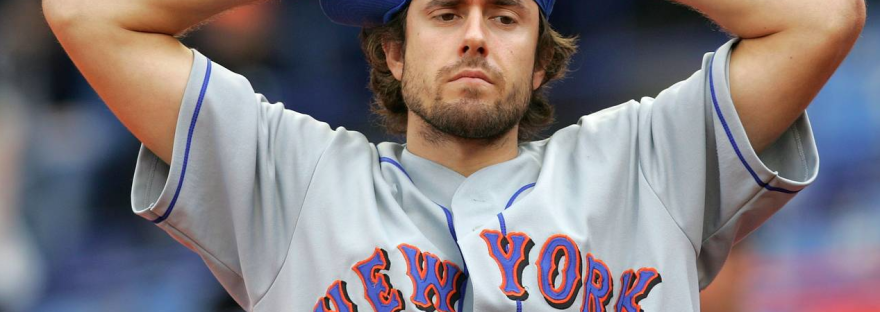
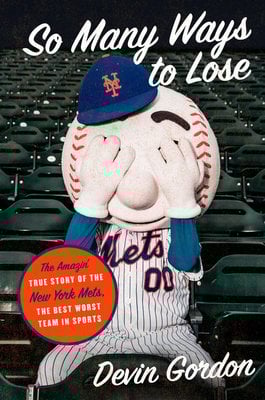
Embrace the disgraced general concept of enshittification as it pertains specifically to the New York Mets and, by geographic circumstances, also to the New York Yankees.
As pent-up anger and frustration ruins the way we wade through an existing world of A.I. slop, we learn that the Enshittocene — a noun coined by author Cory Doctorow and then fleshed out in his 2025 book about “Why Everything Suddenly Got Worse and What to do About it” — expanding the definition beyond soul-crushing Big Tech stalwarts can be a healthy exercise for those who need a way to explain their grief and lack of relief.
If the Amazin’ Mets are an Amazon-Meta mashup, and the Yankees, way more than Waymo or Yahoo in their Oracle world, continue to reflect as the IBM of baseball, you Reddit right that it all happens under what locals call the Big Apple, but really it’s acting on algorithms engineered by the gigabytes of Tim Cook’s Apple Inc.
No wonder the Mets and Yankees start this new week having each lost on five consecutive days for the first time in history, according to Sportradar.
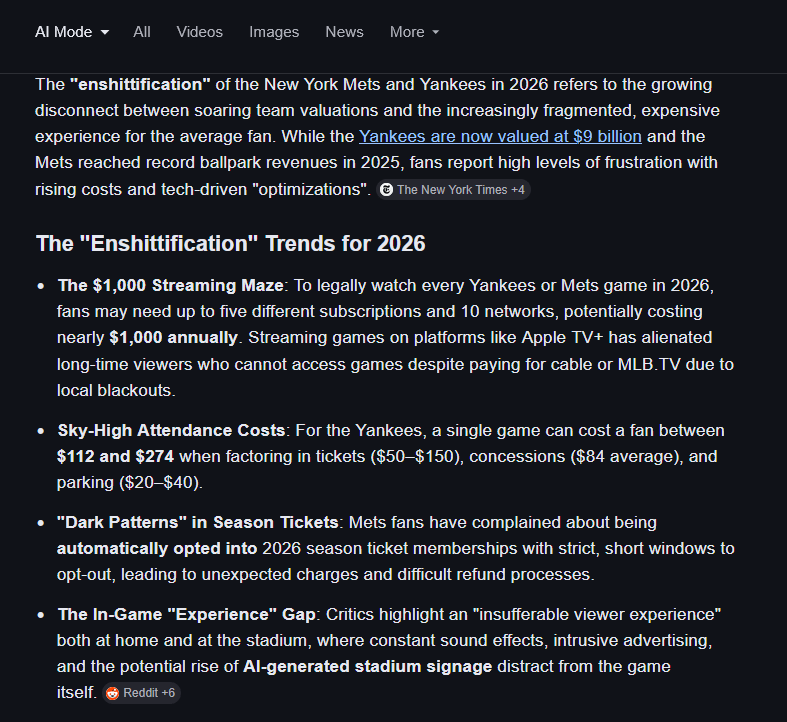
An AI query about how any of this might Venn diagram itself on the circles of despair looks like this:
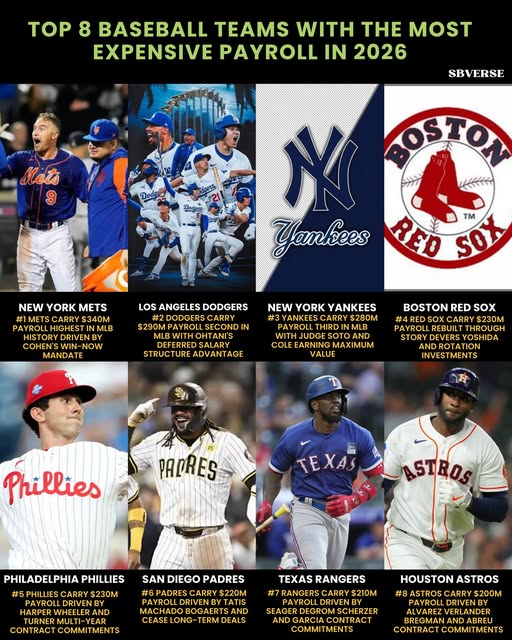
Plenty of other sources that explain how Steven Cohen, who in 2020 bought the Mets for $2.4 billion from his hedge-fund stash that wasn’t penalized for insider trading, has granted the team a MLB-top $352 million payroll for the 2026. The Mets have under contract the highest-paid player in outfielder Juan Soto, averaging $61.9 million in salary. He is currently injured.
The Dodgers circumvent much of this by deferring payments that otherwise would boost their ’26 payroll to $395 million. They also are on tap to pay the highest tax rate on the Competitive Balance Tax payroll for exceeding MLB’s $244 million threshold. The Mets and Yankees are second and third on that list.
For all the lamentations that the Dodgers are ruining baseball with their ownership spending … why is it every July 1 that we’re all reminded that it is the Mets who continue to give 1999 retiree Bobby Bonilla a $1.193,240.20 paycheck and will do so through 2035 for its example of how defer payments continue to haunt a fanbase looking for excuses to be even more disheveled?
ESPN already has already crunched the numbers to deduct that this Mets-Dodgers matchup is on the hook for more than $1 billion in salary liability. Last year’s meeting between the Mets and Dodgers was the previous most expensive series at $764 million in combined payroll — $36 million in total payroll behind this year’s matchup. When you add in their tax bills, the total jumps to over $1.07 billion, surpassing last year’s record of $1.025 billion. The Dodgers and Mets have ranked first and second (in some order) in total payroll four times since 2022. 2023, when the Mets ranked first and the Dodgers fourth, is the only exception during that stretch.
Aside from cash flow, there’s the Zeitgeist/ethos comparison that can also provide more entertainment.
His riff was about how the franchise that continues to provide him with comedic fodder had to be somewhat dismantled over the last offseason because of political ideology that was contaminating the clubhouse vibe. Note: That was Brandon Nimmo batting leadoff for the Texas Rangers during last Dodgers’ homestand instead of what we’ve been used to seeing the Mets as they come into town this week.
As with most NYT stories, some of the best material is buried in the reader responses. Such as:
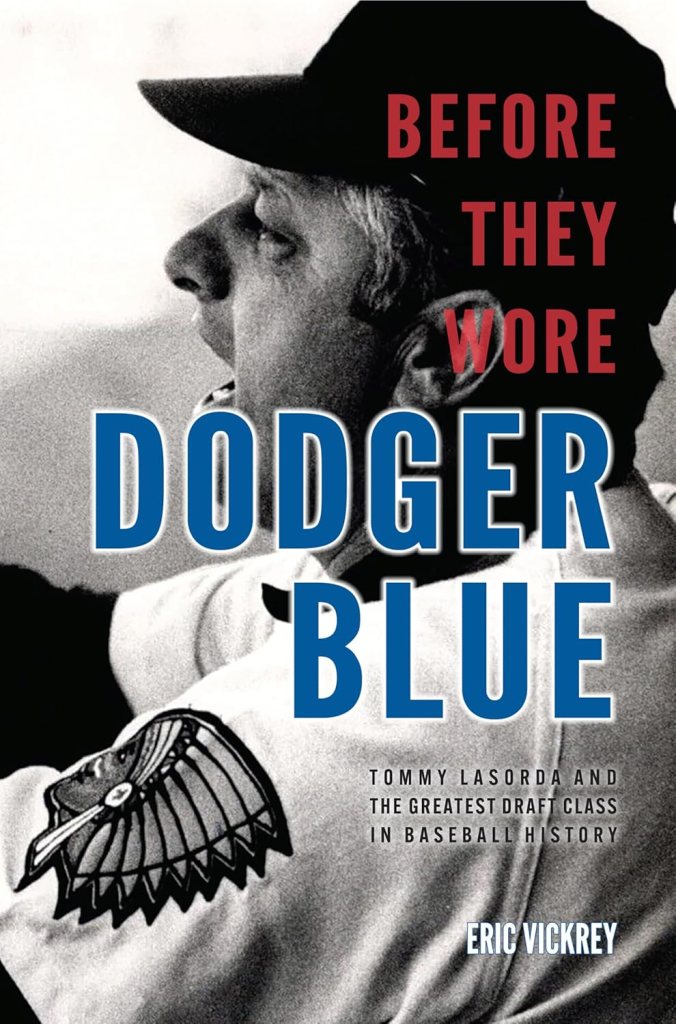
“Before They Wore Dodger Blue: Tommy Lasorda And the Greatest Draft Class in Baseball History”
The author: Eric Vickrey The details: August Publications, 348 pages, $24.95; released Dec. 7, ’25 The links:Author site, publisher site, Bookshop.org
A review in 90 feet or less:
The time capsule that Sports Illustrated has become, in the musky scent of its recent emasculation, can still be a bit jarring.
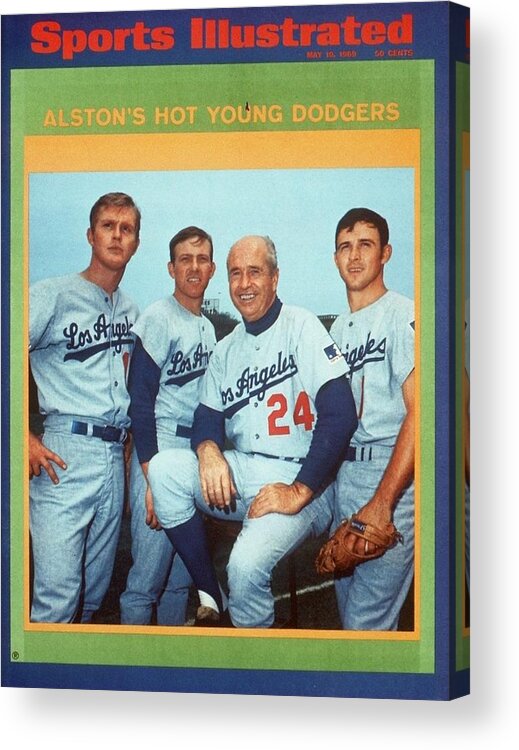
When the SI issue of May 19, 1969 arrived at our house, proclaiming a group of “hot young” Dodgers were about come to the rescue of a franchise still trying to find its footing from a 95-win team getting swept in the ’66 World Series, then watching Sandy Koufax retire, and now braced for Don Drysdale heading in that direction, there was some reason for optimism for all the kids in my neighborhood. The magazine’s 40-cent cover price our parents paid was also worth an investment in seeing the future as predicted by our wise elders.
Manager Walter Alston, as we were shown, had Bill Sudakis, Ted Sizemore and Billy Grabarkewitz all ready for the reboot. Tell Danny Goodman to start cranking out World Series trinkets.
Given that those ’69 Dodgers would finish 85-77, fourth-best and just eight-games out in the newly created National League West, it was a bit of an illusion, but much easier to compartmentalize after taking in a 76-86 showing in ’68 (seventh in the elongated NL, 21 games back) and a 73-89 free-fall from ’67 (eighth place, 28 1/2 games back).
Yet, these three Musketeers fresh out of the Mickey Mouse Club would bring it back to glory.
With mixed results.
Sudakis, a catcher and third baseman who signed as a free agent in 1964 a year before the MLB Draft began, hit .234 that ’69 season in 132 games, age 23. Sudsy, as was his nickname, seemed to be all but washed up by ’72 when the Dodgers waived him. The Angels kicked the tires on him before the ’75 season, then released him mid-way through after he hit .121 in 30 games.
Sizemore, a 15th round draft pick in 1966, somehow won the ’69 NL Rookie of the Year Award following Johnny Bench (in ’68) and Tom Seaver (in ’67) in an otherwise so-so year for up-and-coming talent. Starting at second base, Sizemore would have a career-best 4.2 WAR, hitting .271 in 159 games, age 24. After upping that to .306 in ’70, the Dodgers capitalized on his value, sending him to St. Louis with backup catcher Bob Stinson for Dick Allen (which didn’t end up so well). Sizemore came back to the Dodgers in ’76 via a trade for Willie Crawford, but by ’79, the Dodgers were done with him again, sending him this time to Philadelphia.
Grabarkewitz, taken in the 12th round of the ’66 Draft, was bestowed jersey No. 1 when he came up for 34 games that ’69 season, going 6 for 65 (.092). But the next year, he was on the NL All-Star team, hitting .289 in 156 games with a team-leading 17 homers, 92 runs scored, 84 RBIs and 19 stolen bases.
Then, poof.
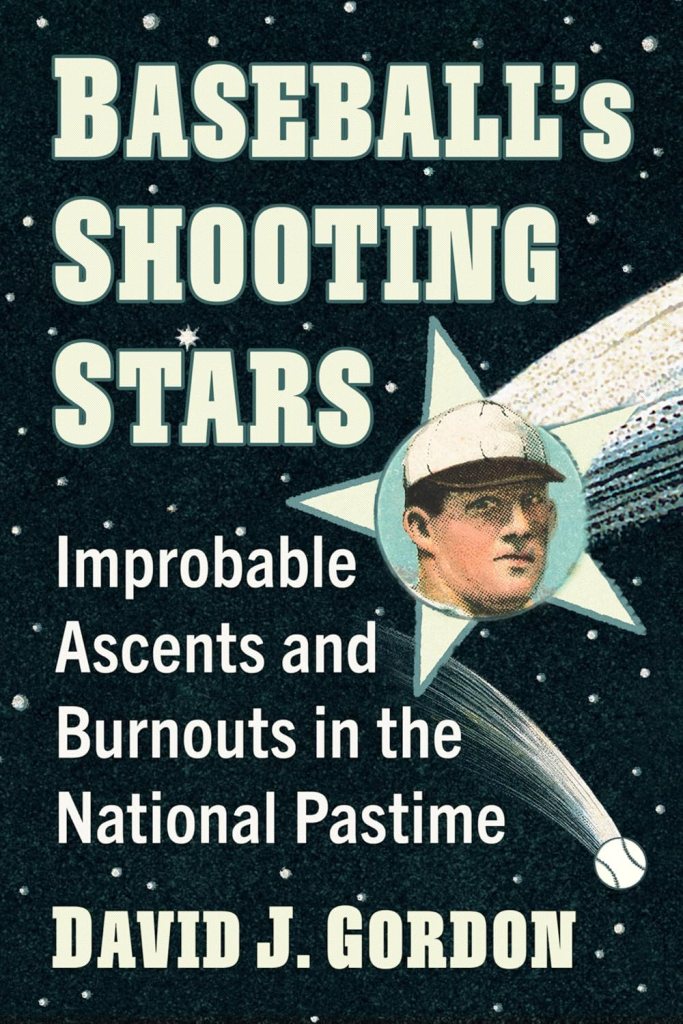
In the 2024 book “Baseball’s Shooting Stars: Improbable Ascents and Burnouts in the National Pastime,” author David J. Gordon devotes a special chapter to Grabarkewitz, the man “who led the league in consonants” but was “stymied by badly timed injuries.” His 6.5 WAR in his career year in 1970 — a stat that didn’t even exist at the time but often used in modern times to measure former players in a new light — wasn’t that remarkable, but in the aftermath, Gordon write that Grabarkewitz “may have been the most extreme one-year wonder of any non-pitcher in MLB history … I can find no other historical example of a position player with a career lasting at least five years who posted a > or = 6.5 WAR in one season but played at or below replacement level for the remainder of his career.” Why he was out of the game by age 29, after a brief time with the Angels, can be baffling to some, but Gordon has a thought on that:
“My reflexive take on one-year wonders like Grabarkewitz is their career years were flukes and the law of averages caught up with them. But Grabarkewitz is something else. Nothing about his sterling 1970 season seems lucky or flukish. A combination of lesser injuries and an overloaded Dodgers farm system — not regression to the mean — conspired to prevent him from becoming the player everyone thought he would be for more than one season. I view Grabarkewitz mainly as a very unlucky player who might very well have achieved long-term success on a different team and under more favorable circumstances.”
Gordon allusion to “an overloaded Dodgers farm system” goes to why Vickrey’s book gives a greater context to how and why the team’s 1968 MLB draft remains, by consensus still today, the greatest haul of talent in the game’s history.
Dialing back to that ‘69 season, there was a brief glimpse of a 20-year-old Steve Garvey (1-for-3), 19-year-old Bobby Valentine (five pinch-running appearances) and 19-year-old Bill Buckner (0-for-1).
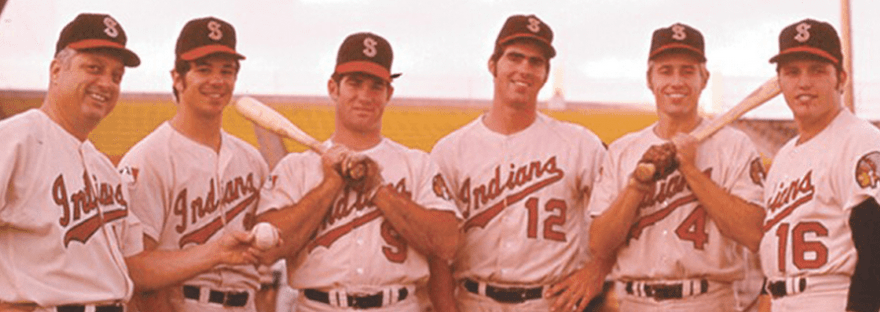
Valentine, Buckner and Garvey were prized pieces of a collection that included Ron Cey, Davey Lopes, Tom Paciorek, Doyle Alexander, Joe Ferguson and Geoff Zahn. Adding in Bill Russell, Charlie Hough and Tommy Hutton, the Dodgers’ foundation had been laid and would last more than a decade — let’s call it the 1981 World Series, after they team decided to let their prized infield break into pieces.
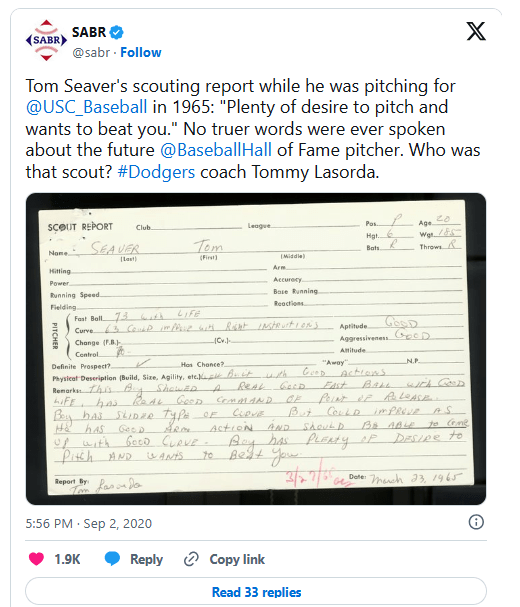
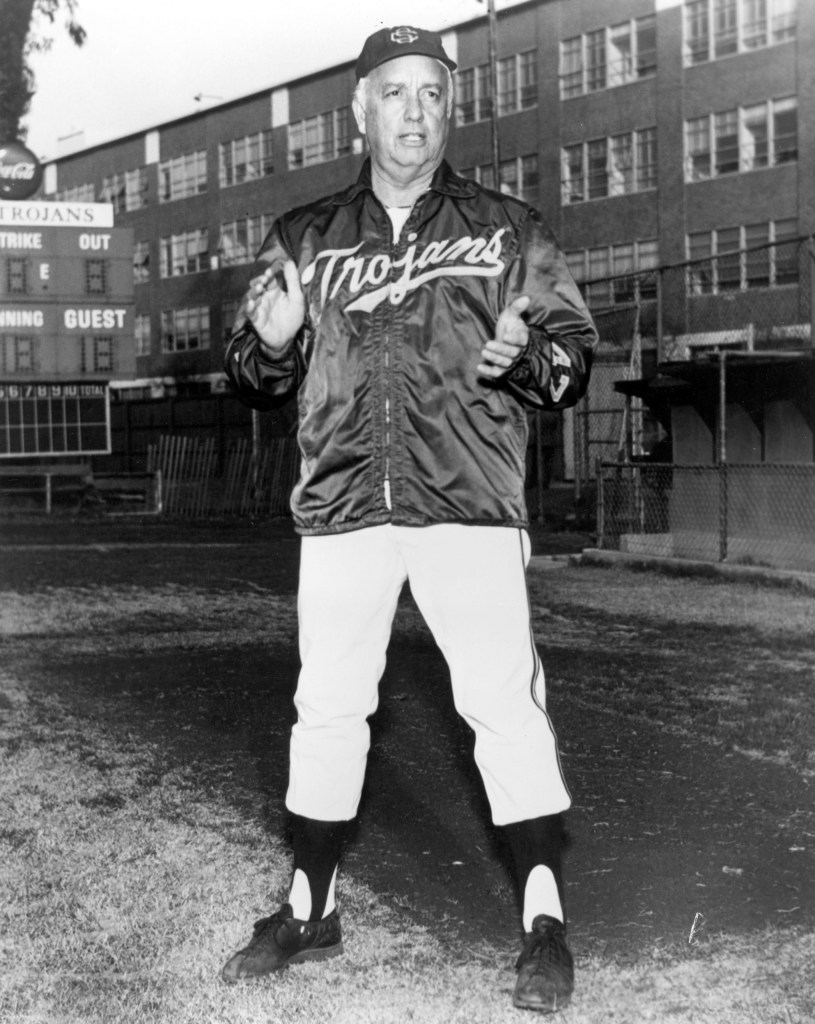
The link to all of them is Tommy Lasorda. As Vickrey details, it was Lasorda, that scout, who was a key figure in the Dodgers’ acquisition of talent before the instution of the 1965 MLB Draft — the first pick of that draft was Rick Monday, an outfielder from Santa Monica High who had gone to Arizona State and was all but signed as Dodgers home-town talent before the Kansas City A’s were allowed to take him. Just prior to that, Lasorda was the important figure in the Dodgers signing local talent Willie Crawford from Freemont High in L.A., one of the last of the “bonus baby” players who had to spend time on the major-league roster likely before they were ready.
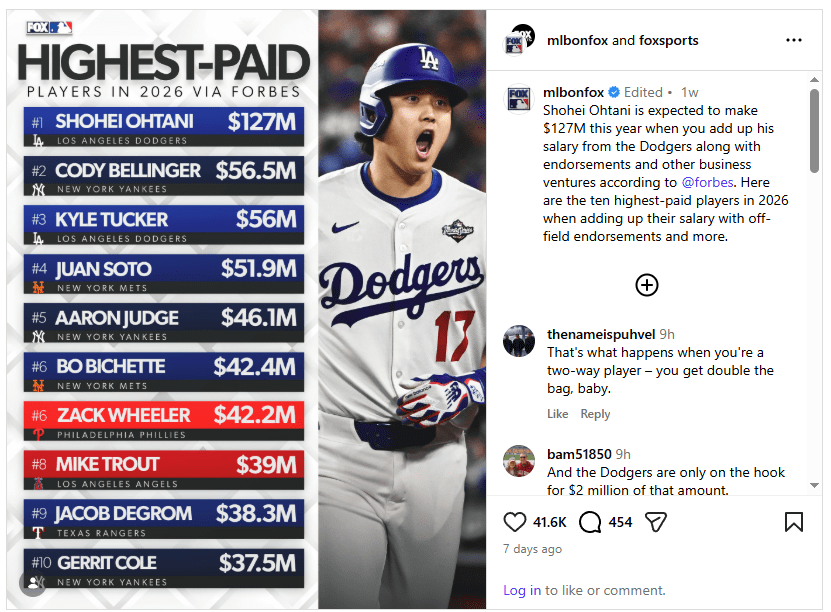
An AI overview collection of words and symbols generated from a search engine ask specifically about “Shohei Ohtani insane endorsement income” quickly will engineer this kind of answer-nugget:
“Shohei Ohtani is projected to earn an estimated $125 million in endorsement income for 2026, with nearly 20 global brand partners, making him the highest-paid athlete in the world from endorsements alone, according to Sportico data via Boardroom. This follows an estimated $100 million in marketing revenue earned during 2025, on top of a $2 million salary with the Dodgers — a threshold only previously reached by legends like Tiger Woods, Roger Federer, and Stephen Curry”
We believe this to be true, because the AI primary source for that information seems to spitting out an Instragram post made by MLB on Fox and Fox Sports. Those numbers had been regurgitated many times over by other media platforms, including the Los Angeles Times, when, in the headline “Why $100 million in endorsements says Shohei Ohtani is the global face of sport,” the writer went on to deduce: “In Ohtani, whose face appears on everything from airplanes to skin care products, baseball at long last has its Michael Jordan: the superstar that has transcended sports and ascended to the status of global pop culture icon.”
He can hit. He can pitch.
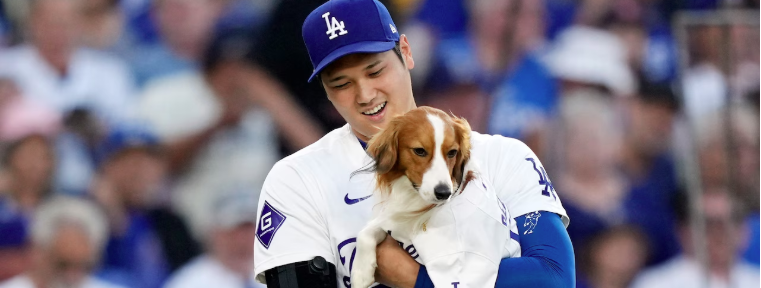
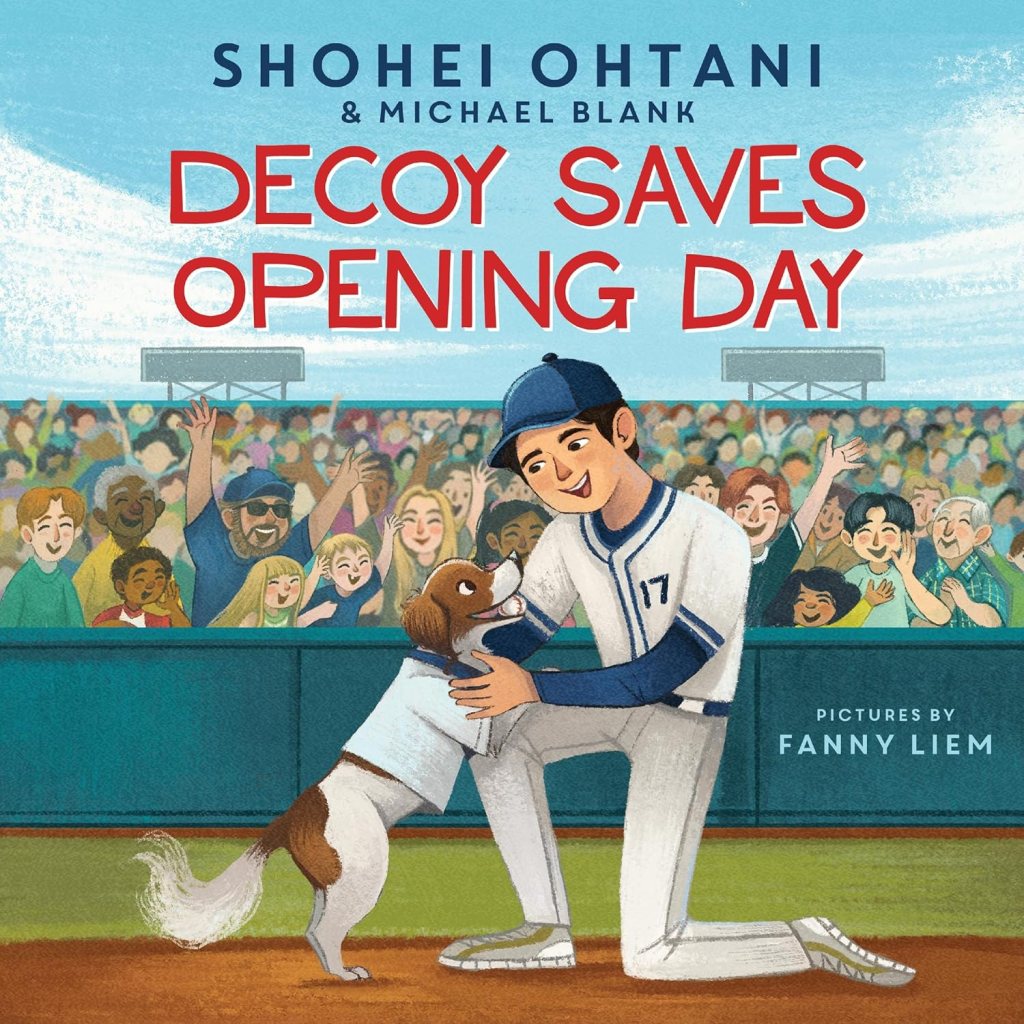
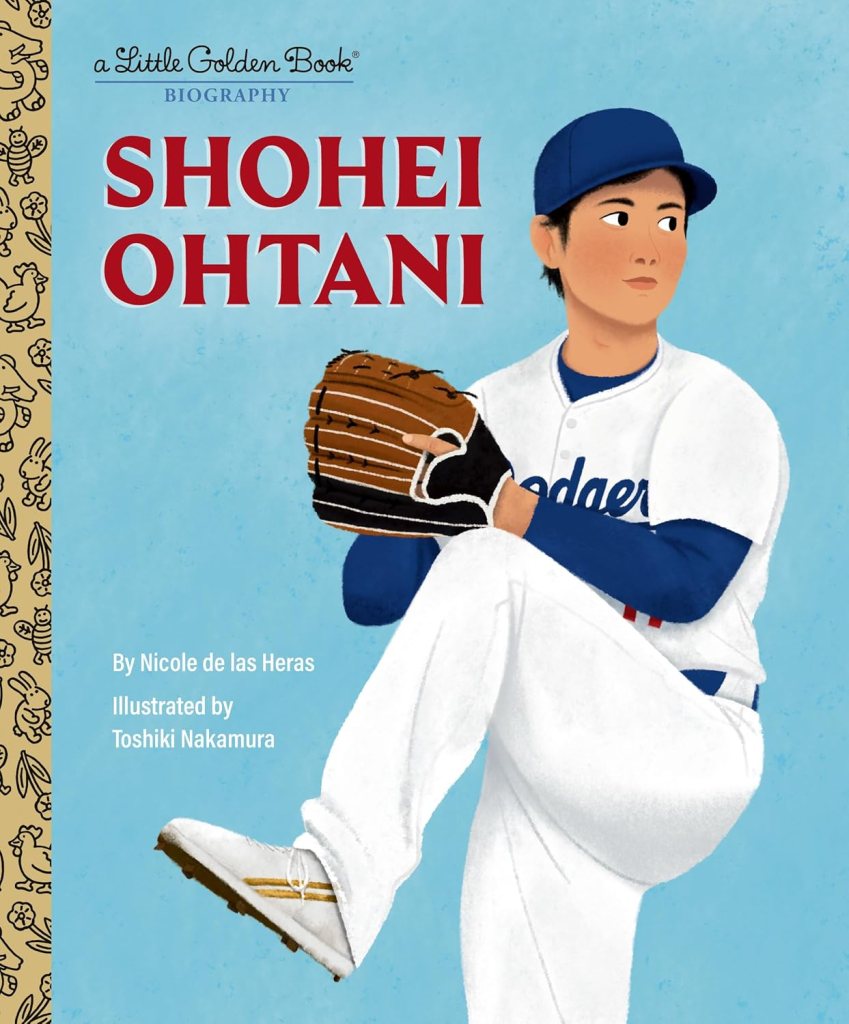
He can write a book. Not one of those “as told to” mass-market, ghost-written, give-us-the-gossip type of sordid tale.
No new dirt here on Ippei here. It’s about a different dog.
Ohtani’s handlers must be painfully aware there is no money to be made in the book publishing business.
James Worthy, Los Angeles Lakers Ronnie Lott, USC football Ricky Bell, USC football Walt Hazzard, UCLA basketball Don MacLean, UCLA basketball
The not-so-obvious choices for No. 42:
Connie Hawkins, Los Angeles Lakers Kevin Love, UCLA basketball Lucius Allen, UCLA basketball and Los Angeles Lakers CR Roberts, USC football
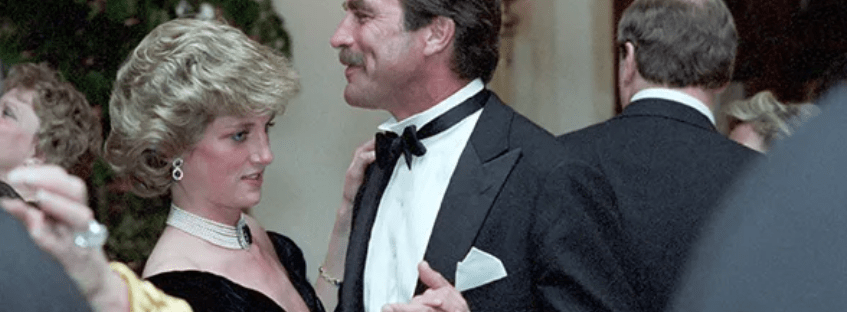
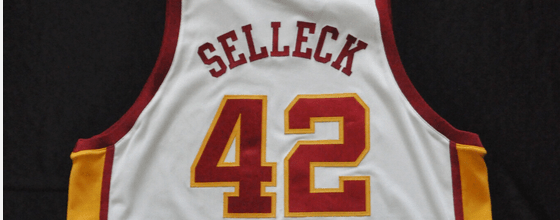
The most interesting story for No. 42: Tom Selleck, USC basketball forward (1965-66 to 1966-67) via Grant High of Van Nuys and L.A. Valley College Southern California map pinpoints: Sherman Oaks, Van Nuys, Los Angeles (Sports Arena), Hollywood
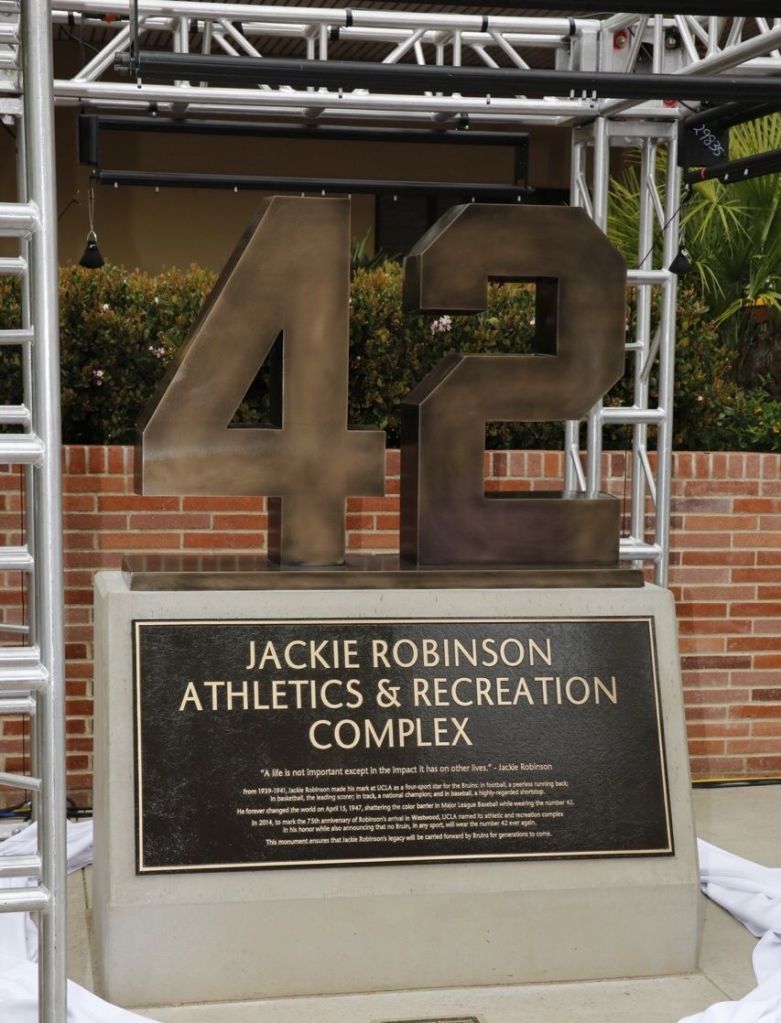
UCLA unveiled a Jackie Robinson monument on campus on March 5, 2016.
In November of 2014, UCLA announced it would retire the No. 42 across all its men’s and women’s sports teams. It was following up what Major League Baseball did 17 years earlier, this time to honor one of its most noteworthy alums, Jack Robinson.
UCLA may have also been nudged by another local university for the concept of this kind of number retirement. In February of ’14, Cal State Northridge’s athletic department retired the No. 58 among all its sports programs to mark the year — 1958 — when the school opened.
Conveniently, the timing for UCLA’s declaration marked the 75th anniversary of Robinson’s arrival as a student-athlete on the campus.
After two years at Pasadena City College, Robinson, out of Muir Technical High, went to Westwood in February of 1939 on an athletic scholarship. He departed in the spring of 1941, a few units short of a degree and with no graduation. The story goes that Robinson needed to make some income to help his family in Pasadena. He would soon go into the military.
But Robinson sure did put a spotlight on the university. He was the first four-sport letterman in UCLA history – football (1939 and 1940), basketball (1940 and 1941), track and field (1940) and even a little baseball (1940).
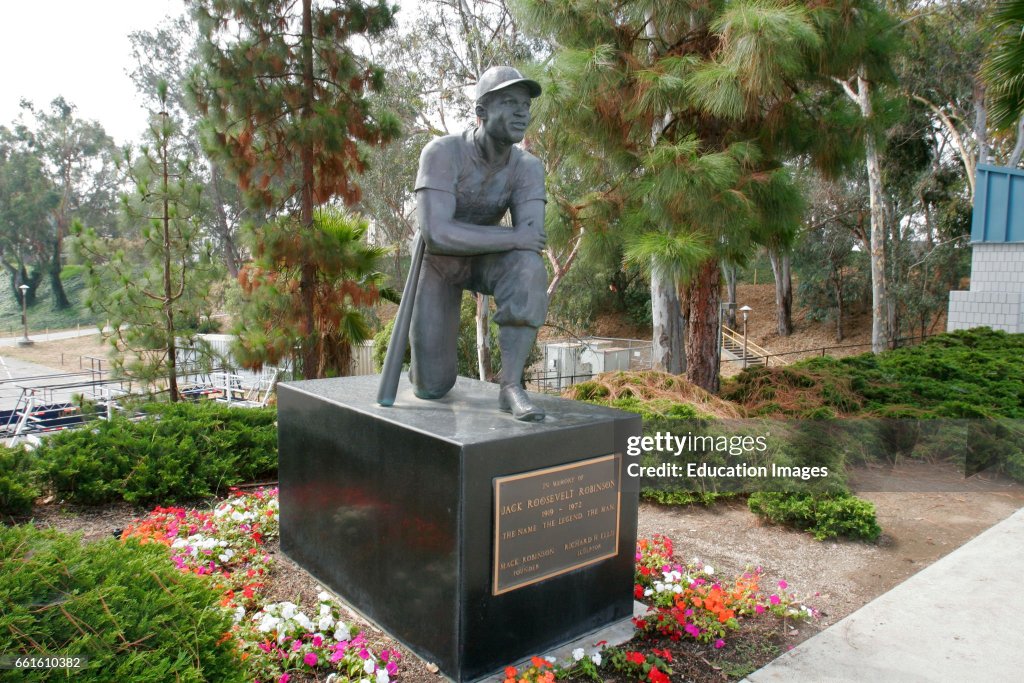
In 2004, a Jackie Robinson statue was created to sit near Jackie Robinson Stadium just west of the UCLA campus (Getty Images)
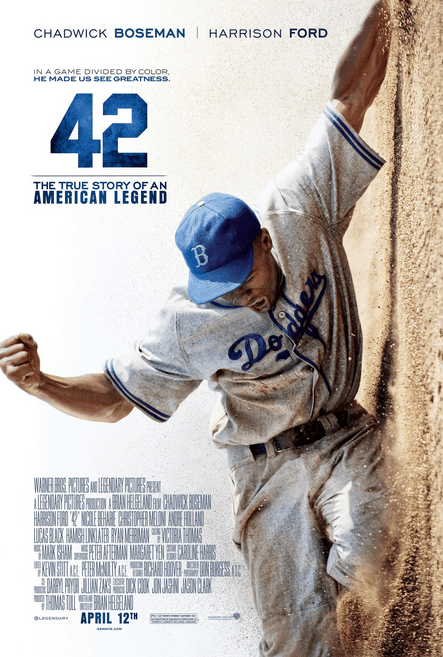
Even more convenient was UCLA announcement’s was just after the success of the 2013 film, “42.”
The late actor Chadwick Bozeman played Robinson on his journey through Pasadena to UCLA, to the Dodgers’ Triple-A Montreal Royals, before it was decided he was equipped to join the Brooklyn Dodgers and wear that number 42.
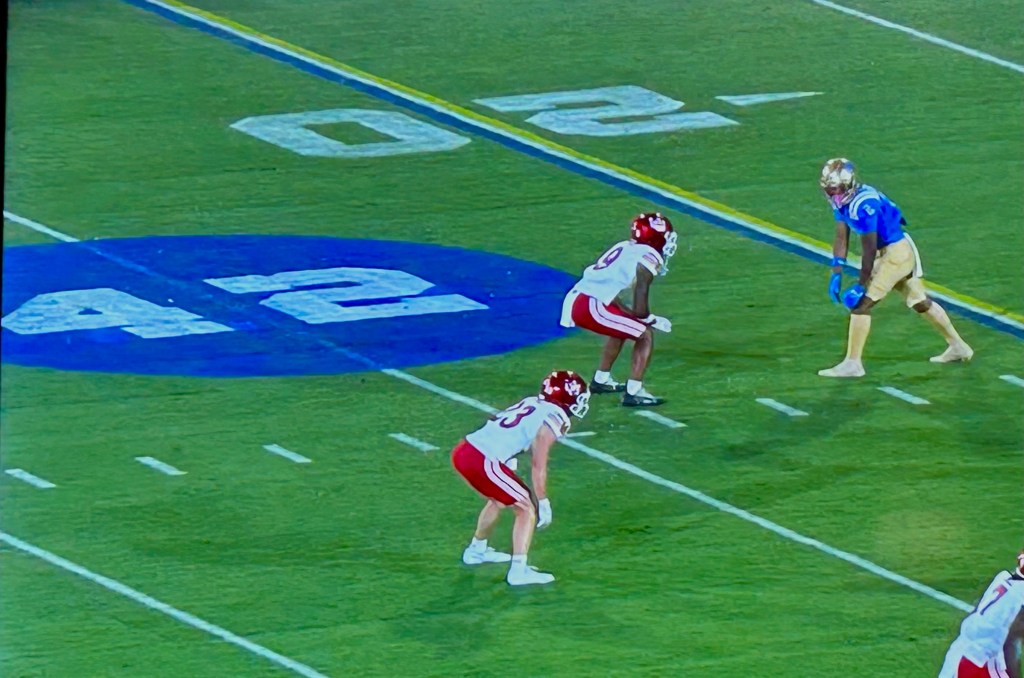
The fact that Robinson never wore No. 42 at UCLA in any sport seems to be beside the point. UCLA’s accounting department acknowledges that as it finds places in almost every athletic platform to make sure a “42” is branded somewhere.
The “42” is painted at each 25 yard line at the Rose Bowl during a UCLA-Utah game in August of 2025. Why not at each 42-yard line?
“Jackie Robinson established a standard of excellence to which people the world over should aspire,” said athletic director Dan Guerrero, a former UCLA baseball player, during the announcement. “We want to ensure that his is a legacy to be upheld and carried forward by Bruins for generations to come. While he wore several numbers at UCLA, Jackie Robinson made the number 42 as iconic as the man himself. For that very reason, no Bruin will be issued the number 42 — in any sport — ever again.”
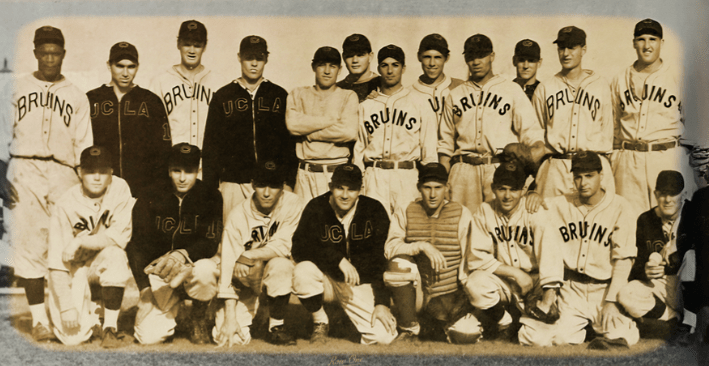
For UCLA basketball, he was No. 18. For UCLA football, he was famously No. 28. What he wore playing baseball, the Bruin statkeepers still aren’t sure.
The UCLA Bruins’ 1940 baseball team photo. Jack Robinson is top left.
We had sought out UCLA’s sports information department for more info, but it can’t find any evidence he even wore a baseball number. The Dodgers and the Baseball Hall of Fame’s research department in Cooperstown, N.Y., didn’t produce anything. Neither did a dig through the Amateur Athletic Foundation nor the Pasadena City library archives. Employees at the Jackie Robinson Foundation finally were asked to quiz Rachel Robinson about it. She replied: I don’t know.
For now, it remains an iconic, and ironic, mystery. Which seems pretty twisted in itself.
There also seems to be no magical story behind why Robinson wore 42, other than it’s what the Dodgers gave him to wear.
In Triple-A, Robinson wore No. 10. During his days with the Kansas City Monarchs of the Negro Leagues, various accounts have him wearing Nos. 5, 8 and 23.
Ken Griffey Jr. is probably most responsible for making No. 42 more ubiquitous. When then–MLB Commissioner Bud Selig retired No. 42 for all of baseball on April 15, 1997 — 50 years after Robinson’s MLB debut — Griffey, then with the Seattle Mariners, asked that his uniform number be flipped from 24 to 42 for that day. It was.
By 2004, the league started an annual Jackie Robinson Day. In 2007, Griffey, then with the Cincinnati Reds, asked Selig if he could wear 42 again for the special occasion. Selig got the OK from Rachel Robinson — and the offer was made to any MLB player who wanted to make that number change as well. Then it became a thing.
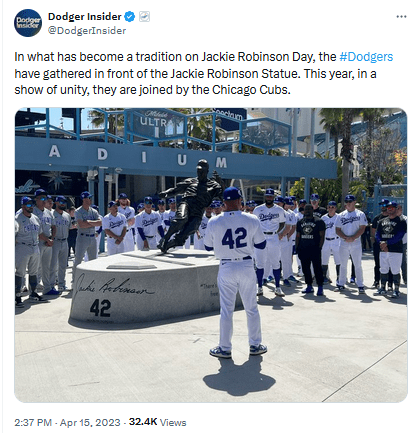
Dodgers manager Dave Roberts, a UCLA graduate, addresses the team at the Dodger Stadium Jackie Robinson statue outside of center field.
We might come up with 42 reasons why Robinson didn’t become our prime focus for No. 42, but the primary reason is that No. 42 is far more acrimonious with Robinson’s Brooklyn Dodgers career. He didn’t come with the team when it moved to Los Angeles. Robinson retired in 1957 before the Dodgers could trade him to the rival Giants.
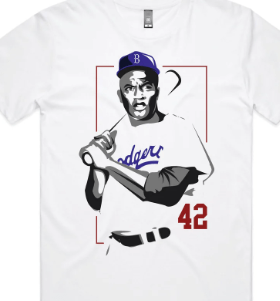
A company named PASADENA CLSC (pronounced Classic), was started in 2019 by graphic designer Dennis Robinson, the grandson of Jack’s brother, Mack, to celebrate his great uncle’s legacy as well as celebrate the community’s history. By some accounts, Robinson would not have been comfortable with this “42” branding opportunity by MLB. Especially as it seems “42” has become a selling point when put on all sorts of hats, clothes, jackets, socks … It’s easily identifiable with a man, a cause and a statement of one’s social justice beliefs. The MLB duly notes that with its own product line.
We consider Robinson’s greatest impact in Southern California sports history when he wore No. 28 playing football.
In 2017, when the Dodgers unveiled a statue honoring Robinson outside of Dodger Stadium, Vin Scully, as the master of ceremonies, told several stories about his relationship with Robinson, going back to Scully’s first year broadcasting Dodgers games in Brooklyn in 1950. Scully punctuated that speech with this “Jackie Robinson Day” celebration on April 15:
“All across the country, in every major-league ballpark, every player will be wearing 42. And what does the 42 means? It doesn’t mean that (the players) are all equal. … but the one thing they share in carrying 42 is the fact that the man who wore it gave them the one thing that no one at the time could have ever done. He gave them equality. And he gave them opportunity. Those were the two things many of those people never had to hold in their hearts when they first began to play. So, yes, 42 is a great number, it means a lot for a great man, but it is a tremendous number when you think of a man who wore it with such dignity, with such pride, and with such great discipline.”
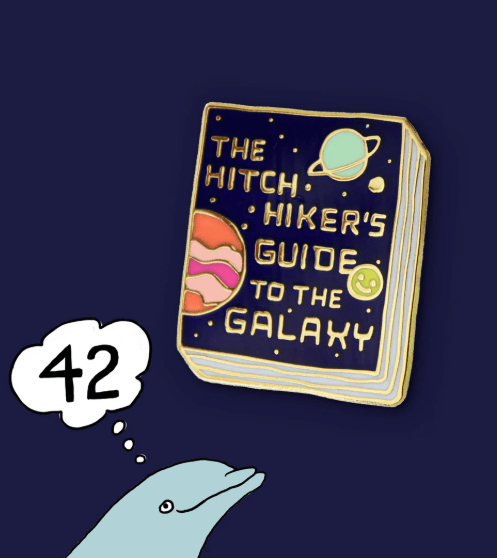
Anyone else able to explain how the number 42 seems to be somehow attached as the “Answer to the Ultimate Question of Life, the Universe, and Everything”?
In Douglas Adams’ late ’70s/early ’80s comedy/science fiction book series, “The Hitchhiker’s Guide to the Galaxy,” No. 42 is the simple answer that comes up after a super computer called “Deep Thought” spends 7 ½ billion years of calculation pondering that the aforementioned question. Or was it a real question. The creators did not actually know what the “Ultimate Question” was, rendering the answer 42 even more confusing.
Adams, when asked, said he simply picked that answer because it was an ordinary, small number.
How so? What does it all mean? Was he a Jack Robinson fan?
Sit with that awhile and see where the universe takes you.
No. 42: Tom Selleck
You never know when a low dose of a early-morning TV chat show might actually clarify some urban Hollywood legend and lead to some legitimate record-keeping.
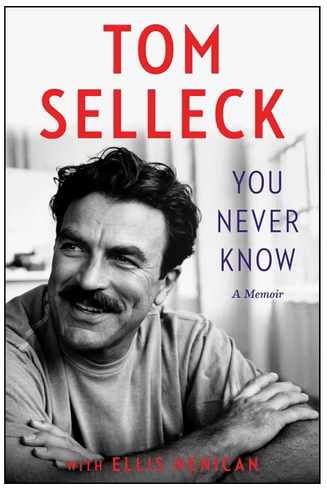
In May of 2024, Tom Selleck climbed up in the high-back chair as a guest on “Live with Kelly and Mark,” taking questions about how he went from a USC basketball player to a Hollywood actor based on his newly released memoir, “You Never Know.” The nattering ABC coffee klatch visit was also a place to get nostalgic for the end of his participation in the long-running CBS series “Blue Bloods.”
“You wanted to be — and I did not realize this — a professional athlete!?” co-host Kelly Rippa piped up as she boosted herself up in her seat.
Selleck shrugged.
“Well, it was kind of a fantasy,” he said sheepishly. “(At first) it was baseball, then I got a little burned out, and by the time I got to ‘SC, I thought it was basketball …”
“You got a scholarship, in fact!” Kelly interjected.
“No,” Selleck answered, almost apologetic. “I was a walk on. Basically my real job was riding the pine at USC … I earned a scholarship my last semester.”
Donnie Moore: California Angels Lester Hayes: Los Angeles Raiders Ron Artest/Metta World Peace: Los Angeles Lakers Kermit Johnson: UCLA football, Southern California Sun, out of Blair High of Pasadena
The not-so-obvious choices for No. 37:
Bobby Castillo: Los Angeles Dodgers Ron Washington: Los Angeles Angels manager Tom Seaver: USC baseball Ken McBride: Los Angeles Angels
The most interesting story for No. 37: Tom Seaver: USC baseball pitcher (1965) Southern California map pinpoints: Twentynine Palms, Los Angeles (USC), Manhattan Beach
Tom Seaver was a stellar bridge player. And bridge can be a tricky card game.
The trick is to gather the fewest the number of tricks bid by those playing together as partners at a four-person table. The rules seem simple, but mastering the strategy and complexity takes time. Intelligence and patience are rewarded.
That’s Tom Seaver, USC student.
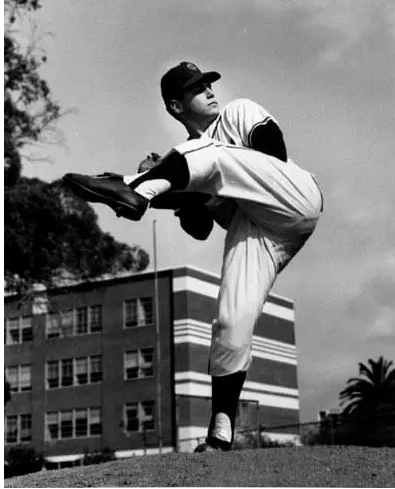
USC pitcher Tom Seaver, 1965.
As pre-denistry major — he sensed he might need a fallback career — Seaver often found himself with a group of friends at the popular 901 Club on Jefferson Blvd., famous for its hamburgers and beer. It’s been called the “9-0” since the late 1940s.
This gave Seaver a place to bridge build a career as a deep thinker.
In the abridged version of how Seaver slithered his way out of USC, could have build a bridge to becoming a Los Angeles Dodger, but crafted a Hall of Fame career as a player elsewhere speaks more to his way of playing cards close to the uniform.
Tom Seaver was already concerned about where he future would take him when the Vietnam War came onto his radar in 1962.
He wasn’t keen on being drafted for the military out of Fresno High, where he just finished his senior baseball season with a modest 6-5 record, making the Fresno Bee All-City team. There were no pro offers to field. No college interest.
Seaver’s idea to instead enlist in the U.S. Marine Corps Reserves in 1962 and ’63 led to bootcamp at Twentynine Palms, in the heart of Mojave Desert. He had to gain extra weight and strength. As it turned out, that would help him throw a more effective fastball and slider.
“The best thing that happened to me was a strenuous summer job in which I had to lift heavy crates that brought raisins in from the fields,” he explained in his 1973 book, “Pitching with Tom Seaver.” “A machine emptied the raisins but somebody had to get the empty boxes off and they were heavy. They were called ‘sweat boxes,’ which was exactly right. I was actually smaller than almost everybody in high school but that job and the six months I spent in the Marine Corps build up my whole body.”
Rod Dedeaux.
Seaver pitched one freshman season at Fresno City College and sported an 11-2 record. USC, the perennial NCAA title team under Rod Dedeaux (see SoCal Sports History 101 bio for No. 1), led to the coach calling Seaver the “phee-nom from San Joaquin.”
The Dodgers’ interests might have got in the way, too. Reports vary, but they were said to be ready to give Seaver a $2,000 deal — maybe $3,000 — in 1964. This would be the final year before the MLB Draft and teams were free to negotiate at will.
Seaver declined. He went panning for gold elsewhere.
Dedeaux’s deal was to give him one of his USC baseball full scholarships if he first pitched in Alaska Summer League of ’64. Dedeaux worked out a deal for Seaver to join the Alaska Goldpanners. Seaver, then 19, experienced his first Midnight Sun Game in Anchorage — the 10:30 p.m. start on June 21 for the summer solstice that has become part of baseball lore.
In 19 games, with five starts, Seaver struck out 70 in 58 2/3 innings, posting a 6-2 mark with one save and 4.70 ERA. Later that summer, he played for the Wichita Glassmen in the National Baseball Congress World Series in Wichita, Kansas. That’s when he hit a grand slam in a game where he had been called in as a relief pitcher. Seaver called it one of his baseball career highlights.
USC had Seaver slotted as its No. 3 starter on a staff that included junior Bob Selleck, the 6-foot-6 older brother of eventual USC basketball, baseball and volleyball player (and actor) Tom Selleck (see Selleck’s bio for No. 42).
When USC started practices in March of ’65, it was said that some of Seaver’s teammates suggested he start lifting weights to increase his upper body strength, which matched up to his already impressive leg mechanics. That was said to be the starting point of Seaver’s ultra-effective drop-and-drive delivery. His fastball went up from 85 mph to the mid-90s in that time.