
Day 1 of 2026 baseball book reviews: Sho-ing off for the kids

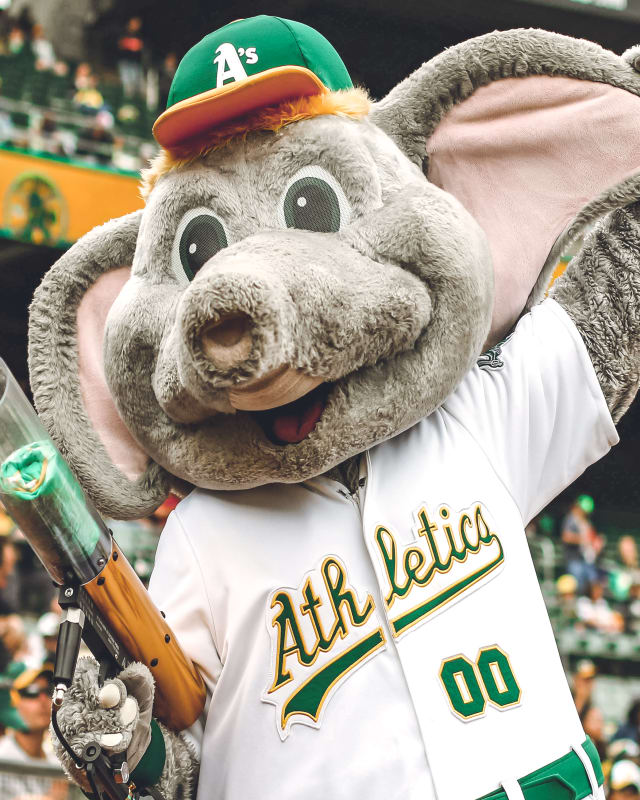
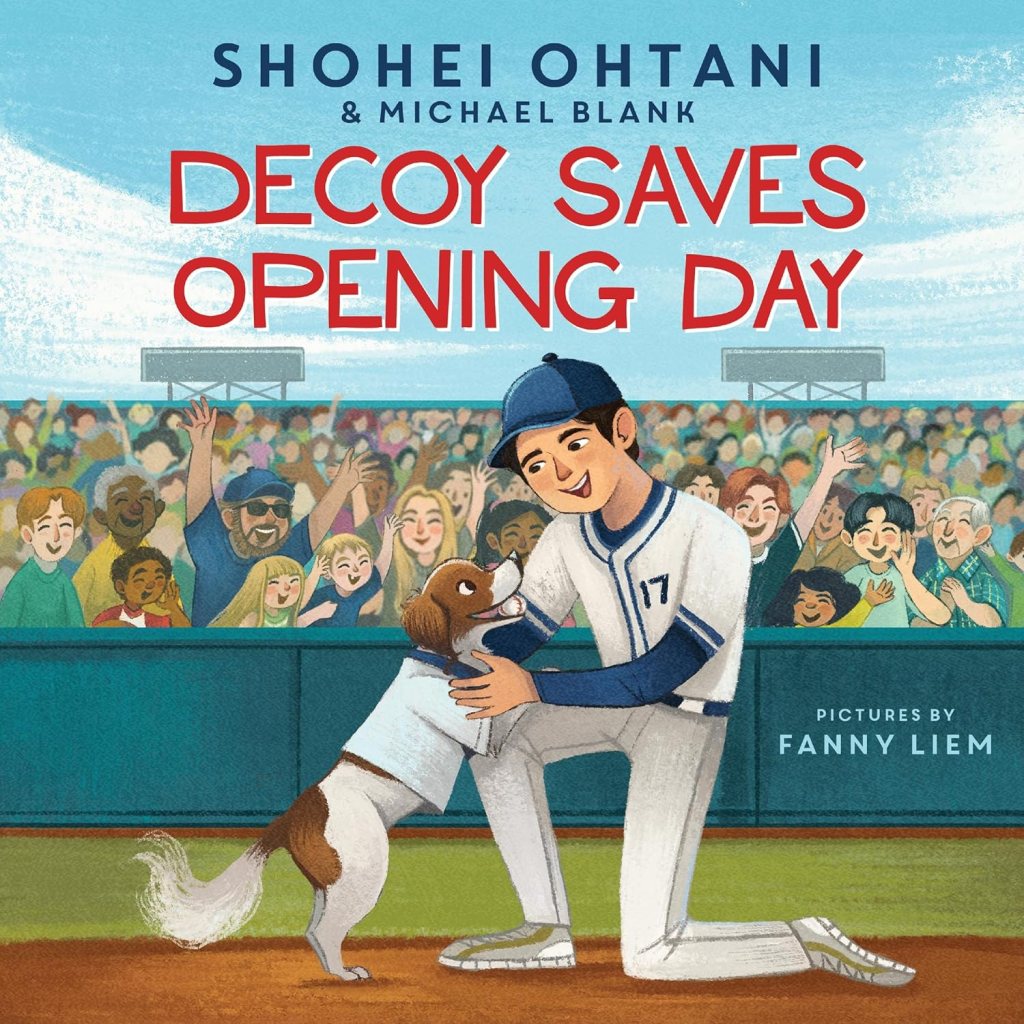
Decoy Saves Opening Day

The author: Shohei Ohtani and Michael Blank
The illustrator: Fanny Liem
The details: HarperCollins, 32 pages, $21.99, released Feb. 3, ’26
The links: The publisher and Bookshop.org

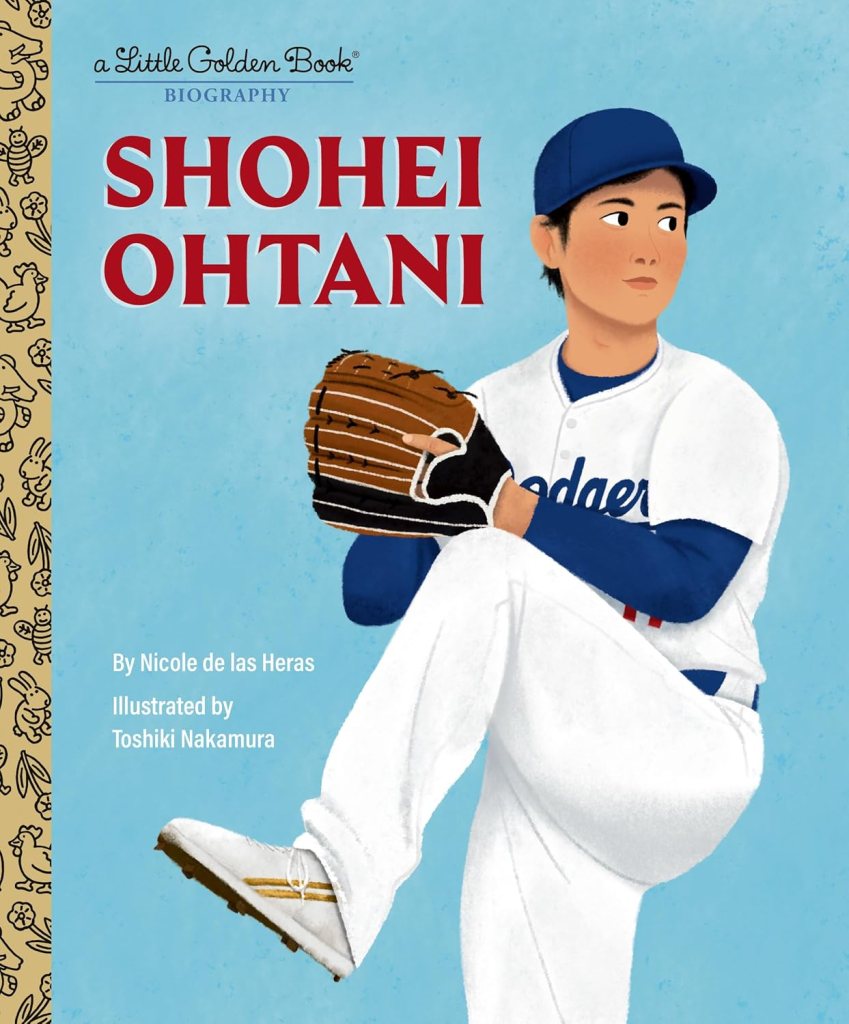
Shohei Ohtani: A Little Golden Book Biography”

The author: Nicole de las Heras
The illustrator: Toshiki Nakamura
The details: Little Golden Book Biographies/Penguin/Random House, 24 pages, $5.99; released March 3, ’26
The links: The publisher and at Bookstore.org


A review in 90 feet or less:

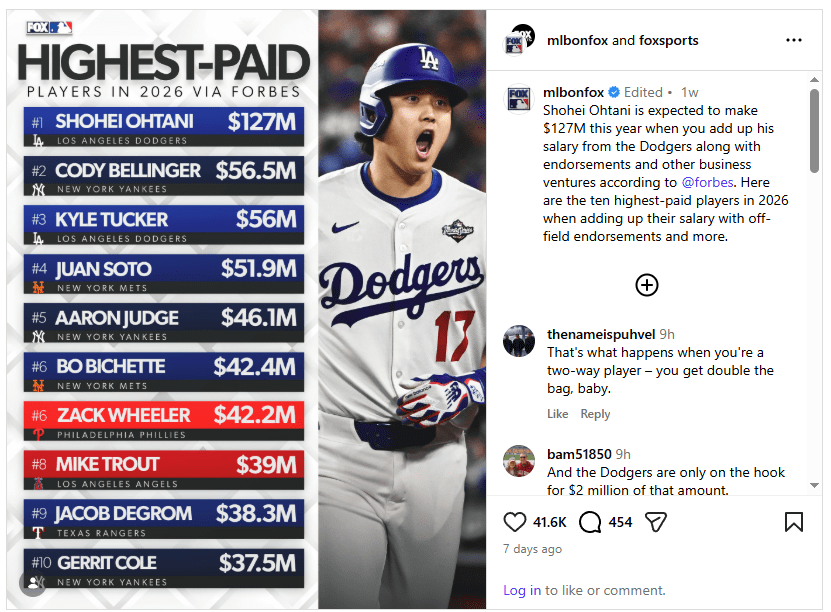
An AI overview collection of words and symbols generated from a search engine ask specifically about “Shohei Ohtani insane endorsement income” quickly will engineer this kind of answer-nugget:

“Shohei Ohtani is projected to earn an estimated $125 million in endorsement income for 2026, with nearly 20 global brand partners, making him the highest-paid athlete in the world from endorsements alone, according to Sportico data via Boardroom. This follows an estimated $100 million in marketing revenue earned during 2025, on top of a $2 million salary with the Dodgers — a threshold only previously reached by legends like Tiger Woods, Roger Federer, and Stephen Curry”

We believe this to be true, because the AI primary source for that information seems to spitting out an Instragram post made by MLB on Fox and Fox Sports. Those numbers had been regurgitated many times over by other media platforms, including the Los Angeles Times, when, in the headline “Why $100 million in endorsements says Shohei Ohtani is the global face of sport,” the writer went on to deduce: “In Ohtani, whose face appears on everything from airplanes to skin care products, baseball at long last has its Michael Jordan: the superstar that has transcended sports and ascended to the status of global pop culture icon.”

He can hit. He can pitch.

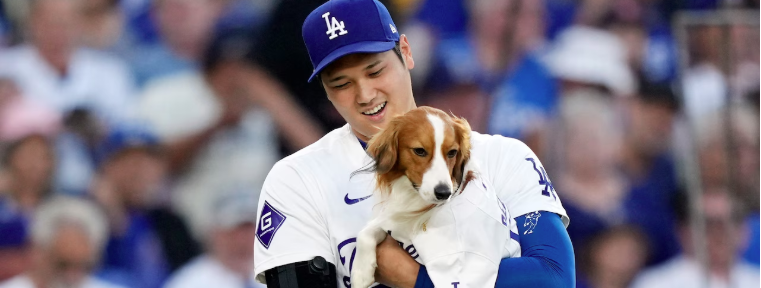
He can write a book. Not one of those “as told to” mass-market, ghost-written, give-us-the-gossip type of sordid tale.

No new dirt here on Ippei here. It’s about a different dog.

Ohtani’s handlers must be painfully aware there is no money to be made in the book publishing business.

Just ask writers such as Bill Plunkett, who did the 2025 “L.A. Story: Shohei Ohtani, The Los Angeles Dodges and a Season for the Ages” or Jeff Fletcher, who fashioned an update of his 2022 “Sho-Time: The Inside Story of Shohei Ohtani and the Greatest Baseball Season Ever Played.” All their deadline work dancing around their regular job of covering the Dodgers and Angels didn’t generate royalties that will allow them to lead a more regal suburban existence.

Ohtani’s co-author, Michael Blank, could even clue him in. Blanks is a venture capitalist who has been with Creative Artists Agency for 15 years.

Continue reading “Day 1 of 2026 baseball book reviews: Sho-ing off for the kids”

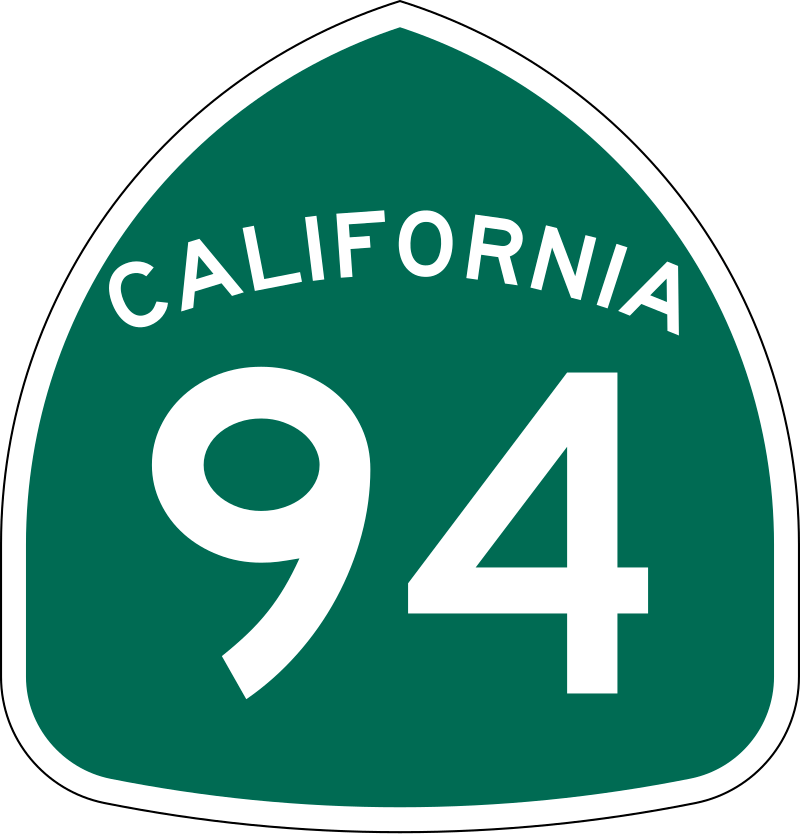
No. 94: Don Yi

This is the latest post for an ongoing media project — SoCal Sports History 101: The Prime Numbers from 00 to 99 that Uniformly, Uniquely and Unapologetically Reveal The Narrative of Our Region’s Athletic Heritage.  Pick a number and highlight an athlete — person, place or thing — most obviously connected to it by fame and fortune, someone who isn’t so obvious, and then take a deeper dive into the most interesting story tied to it. It’s a combination of star power, achievement, longevity, notoriety, and, above all, what makes that athlete so Southern California. Quirkiness factors in. And it should open itself to more discussion and debate — which is what sports is best at doing.

The most obvious choices for No. 94:

= Kenechi Udeze, USC football
= Paul Bergmann, UCLA football
= Mateen Bhaghani, UCLA football

The not-so-obvious choices for No. 94:

= Terry Crews, Los Angeles Rams

The most interesting story for No. 94:
Don Yi, Korean language interpreter for Chan Ho Park (1994)
Southern California map pinpoints:
Lakewood, Glendale, Los Angeles (Dodger Stadium)


The 1994 Major League Baseball season started with Don Yi wearing the No. 94 jersey for the Los Angeles Dodgers.

It wasn’t necessarily the Year of Yi in Dodgertown that particular season, but numerically, it made sense.

While Yi was neither bat boy, ball dude nor clubhouse attendant, the 31-year-old UCLA graduate and computer programmer spoke South Korean. The Dodgers in general, and Chan Ho Park, more specifically, could use Yi’s skill set.

As an important part of a contract stipulation when the Dodgers signed a $1.2 million landmark deal with the 20-year-old pitcher, announced at a press conference at a hotel in Koreatown, the team would provide an interpreter.

Where Yi came into the picture, it’s somewhat a mystery.

Park, as the first MLB player brought in from South Korean player, needed to acclimate and assimilate. Yi was there to accomodate. This new-fangled job would evolve, or go sideways, on a daily basis.

It started with this: What is Park’s name?

The first time Yi was in full uniform as the team arrived its Vero Beach, Fla., training camp in March of ’94, reporters and teammates wanted to know what to call him.

“Some people are calling him Mr. Ho,” said Yi.

Dodgers broadcaster Ross Porter called him “Park Chan-ho,” as per Korean custom to use the family’s given surname first. Park asked if Yi could help him get the media covering him to “Americanize” his name.

Once that box was checked, what else might get found in translation?                         

Continue reading “No. 94: Don Yi”

No. 37: Tom Seaver

This is the latest post for an ongoing media project — SoCal Sports History 101: The Prime Numbers from 00 to 99 that Uniformly, Uniquely and Unapologetically Reveal The Narrative of Our Region’s Athletic Heritage.  Pick a number and highlight an athlete — person, place or thing — most obviously connected to it by fame and fortune, someone who isn’t so obvious, and then take a deeper dive into the most interesting story tied to it. It’s a combination of star power, achievement, longevity, notoriety, and, above all, what makes that athlete so Southern California. Quirkiness and notoriety factor in. And it should open itself to more discussion and debate — which is what sports is best at doing.

The most obvious choices for No. 37:

= Donnie Moore: California Angels
= Lester Hayes: Los Angeles Raiders
= Ron Artest/Metta World Peace: Los Angeles Lakers

The not-so-obvious choices for No. 37:

= Kermit Johnson, UCLA football
= Bobby Castillo: Los Angeles Dodgers
= Ron Washington: Los Angeles Angels manager
= Tom Seaver: USC baseball

The most interesting story for No. 37:
Tom Seaver: USC baseball pitcher (1965)
Southern California map pinpoints:
Los Angeles (USC), Manhattan Beach, Twentynine Palms


Tom Seaver was a stellar bridge player.

Bridge can be a tricky game. The trick is to gather the least the number of tricks bid by the partnership at the four-person table. The rules seem simple, but mastering the strategy and complexity of it all takes time and practice. Intelligence and patience are rewarded.

During his brief time as a USC student — a pre-denistry major, because he sensed he might need a fallback career — Seaver sometimes could be found with friends hanging out at the 901 Club on Jefferson Blvd., famous for its hamburgers and beer.

And bridge building, when he was there.

In the abridged version of how Seaver went from college baseball to a pro career, there should have been a simple bridge there for him to cross from USC to the Los Angeles Dodgers’ stellar starting rotation of the 1960s.

Instead, there was a toll to pay, and the Dodgers balked.

That’s where Seaver’s poker face came into play. A fantastic 2020 book by acclaimed author and former minor leaguer Pat Jordan revealed how deep a Seaver was. But when it came to his MLB future, Seaver wasn’t bluffing on contract demands. Eventually, both the Dodges and USC lost out.

As the Vietnam War started in 1962, Seaver wasn’t keen on being drafted out of Fresno High, where he just finished his senior baseball season with a 6-5 record but made the Fresno Bee All-City team. Still, he had no pro offers, nor any college interest.

So Seaver enlisted in the U.S. Marine Corps Reserves in 1962 and ’63, with bootcamp at Twentynine Palms. He realized eventually the extra weight and strength he gained in that training allowed him to eventually throw a more effective fastball and slider.

His roadmap to the bigs started with one season at Fresno City College as a freshman, then earning a scholarship to play at USC, the perennial NCAA title team under coach Rod Dedeaux (see SoCal Sports History 101 bio for No. 1).

After Seaver posted an 11-2 mark at Fresno City, the Dodgers were interested. But not more than $2,000 interested. Maybe it was $3,000. That was their reportedly their offer in 1964, the last time MLB teams would have the freedom to sign whomever they wanted before the draft kicked in.

Seaver declined the Dodgers’ gesture and went panning for gold elsewhere.

Dedeaux, who called Seaver the “phee-nom from San Joaquin,” agreed to give him one of his five USC baseball full scholarships — if Seaver first played in Alaska summer ball in ’64. Dedeaux worked out a deal for Seaver to pitch for the Alaska Goldpanners of the Alaska Baseball League, which showcased college talent. The 19-year-old experienced his first Midnight Sun Game in Anchorage — the 10:30 p.m. start on June 21 for the summer solstice that has become part of baseball lore.

In 19 games, starting five, Seaver was 6-2 with a save and 4.70 ERA to go with 70 strike outs in 58 2/3 innings. Later that summer, playing in an National Baseball Congress World Series in Wichita, Kansas, Seaver, now with the Wichita Glassmen, hit a grand slam in a game where he had been called in as a relief pitcher. Seaver would say that was one of his career highlights.

At USC, Dedeaux slotted Seaver as the Trojans’ No. 3 starter – also on the staff was junior Bob Selleck, the 6-foot-6 older brother of eventual USC basketball, baseball and volleyball player and actor Tom Selleck.

Continue reading “No. 37: Tom Seaver”

No. 53: Don Drysdale

This is the latest post for an ongoing media project — SoCal Sports History 101: The Prime Numbers from 00 to 99 that Uniformly, Uniquely and Unapologetically Reveal The Narrative of Our Region’s Athletic Heritage.  Pick a number and highlight an athlete — person, place or thing — most obviously connected to it by fame and fortune, someone who isn’t so obvious, and then take a deeper dive into the most interesting story tied to it. It’s a combination of star power, achievement, longevity, notoriety, and, above all, what makes that athlete so Southern California. Quirkiness and notoriety factor in. And it should open itself to more discussion and debate — which is what sports is best at doing.

The most obvious choices for No. 53:

= Don Drysdale, Los Angeles Dodgers
= Keith Erickson, UCLA basketball
= Rod Martin, Los Angeles Raiders

The not-so-obvious choices for No. 53:

= Jim Youngblood, Los Angeles Rams
= Lynn Shackleford, UCLA basketball

The most interesting story for No. 53:
Don Drysdale, Los Angeles Dodgers pitcher (1958 to 1969), California Angels broadcaster (1973 to 1981), Los Angeles Rams broadcaster (1973 to 1976), Los Angeles Dodgers broadcaster (1988 to 1993)

Southern California map pinpoints:
Van Nuys, Bakersfield, Hollywood, Los Angeles (Coliseum, Dodger Stadium), Anaheim


To tell the truth about the dogma of Don Drysdale, there’s a legendary aura of “Big D” that goes beyond bigger-than-life discoveries about the 6-foot-6 right-handed sidewinder, a San Fernando Valley-reared kid who spent all 14 years of his big-league career with the Dodgers organization, moved with them back to Los Angeles from Brooklyn, and spent the last six years of his life as a broadcaster with them.

See how this works:

From the 1960 issue of Sport magazine, the self-authored story: “You’ve Got to Be Mean to Pitch”

Truth that’s been told: Don Drysdale led the league in putting the “mean” in a meaningful pitch.

Dare to discover: If some SABR-cat researcher was compelled to look it up, we’d suspect there was enough evidence to confirm Drysdale threw more brushback/purpose pitches than anyone else in his era. Four times, he led the majors in plunking batters — 154 HBP in all, more than 10 a season, and an National League record at the time of his retirement in 1969. But it played into his philosophy: You knock down/hit one of my guys, I knock down/hit two of yours. If they are hit in the process, well …

Further research from Fangraphs on the essence of the “Two For One Special,” aka the “Drysdale Revenge Factor,”‘ shows that 18 times in his career, Drysdale hit two or more batters in a game. That mindset traces back to Drysdale’s by former veteran Brooklyn teammate Sal “The Barber” Maglie. Properly stated, it puts the idea in a batter’s mind that while the pitcher could claim ownership to half of the 17-inch home plate, you weren’t always sure which half Drysdale picked in that situation.

Batters knew the drill.

“Batting against him is the same as making a date with the dentist,” Pittsburgh’s Dick Groat once said. Added San Francisco’s Orlando Cepeda: “The trick against Drysdale is to hit him before he hits you.”

In a 1979 interview with the New York Times’ Dave Anderson, Drysdale, 10 years after his retirement, said delivering the inside pitch was a “lost art.”

“I just feel,” he was saying now, his right forefinger swirling the ice in his Scotch, “that when you’re pitching, part of the plate has to be yours. … The pitcher has to find out if the hitter is timid. And if the hitter is timid, he has to remind the hitter he’s timid.”

(Love that imagery).

Continue reading “No. 53: Don Drysdale”

Day 20 of 2025 baseball book reviews: What’s good for the Mallards is good for goosing the game

“Baseball Like It Oughta Be:
How a Shoe Salesman’s Madison Mallards
And His Renegade Staff Ignited a
Summer Collegiate Baseball Revolution”

The author: Tom Alesia
The details: August Publications, $18.95; 208 pages, released May 19, 2025; best available at the publishers website and the author’s website

A review in 90 feet or less

Updated 6.2.25

There oughta be a clear path for someone like Lauren Thiesen to write a piece for Defector.com under the headline: “The Savannah Bananas Make Baseball Boring” and not be weary of getting crapped on for it. Especially when she framed it as coming “the perspective of a baseball nut and ‘sports entertainment’ obsessive.”

Read it for yourself. Good points are made.

She followed it up with a Facebook post: “I was a tiny bit miffed by the handful of ‘this reads like an old man wrote it’ responses … You can disagree with my (nuanced!) thoughts, but idk why it would ever be inconceivable that a 30 yr old woman produced them.”

Especially from a target audience member for the traveling hardball show.

When we visited the Bananas’ second game of a two-day appearance at Angels Stadium in Anaheim this week — perhaps the only two sellouts at the place this 2025 calendar year, coming off a three-game series against the Yankees — we had Thiesen’s words in our head as a frame of reference, as well as local media coverage from the Day 1 game, but otherwise, we tried to be open-minded.

Our take on the whole idea of the Savannah Bannanas and the comparison to the Harlem Globetrotters:

It’s more more “High School Musical” meshed with Horsehide Cirque du Soleil, a wedding reception with a baseball theme wrapped around an activity that looks like a game played at the pace of a batting-practice pitcher grab-and-throw-and-grove. The between-innings experiences of corny planned contests, honoring veterans and first responders, and even a shout out to a non-profit Foster kids program doesn’t drag anything down but allows for catching one’s breath.

And it works.

A DJ-stage gathering to amp up the noise and energy before, then the “show” starts, then the after-party. Perhaps an exhausting pace for some, but it’s taking the elements of action of a “regular” baseball game and heightening it, expanding it, and amping it up. It takes advantage of incorporating local entertainment nods (Disneyland, for sure) and really knows how to read the room. It works in a baseball stadium best (because of the setup with scoreboards, wifi and capacity seating depth) but wedging it as well into a football stadium or other venue will add to its quirkiness.

It’s scripted schizophrenia, pumped up performance art, wonky scorekeeping and incredible talent on display surrounding the unplanned elements of game that has to be a communal stadium experience in person instead of judging it by a Tik Tok video clip or another high light reel. There are surprise guests. There’s a mascot, “Split,” that, at least in Anaheim, dared go up into the batters’ eye area beyond center field and do what every kid has wanted to do: Roll down the green hill.

Sensory overload, but not in a toxic way. Baseball remains the framework amidst all the improve and sketch comedy. The organizers do all they can to prevent the sale of $75 going for $1,000 or more on the open market, but that’s the world we live in — those taking advantage of a situation. Hopefully, you have karma lottery and get the best seats possible (another key to the experience) and bring in as many friends who otherwise might not enjoy a “real” baseball game to see this thing under the circus tent.

Back to how Thiesen ended her essay: “So what does someone want to see in a Savannah Bananas game? I guess they want to see the players dance. But they saw that already online. There’s no need to go to the stadium and catch it again with a worse view. Just give your minor-league boys a shot this summer. They’re probably doing something almost as weird.”

That’s where Tom Alesia starts making his case for the Madison Mallards.

The book is not just on what this college summer-league team has done, continue to do, and likely will do for years to come, but why it resonates in the community, and why it doesn’t need to try to out-gimmick anyone else by trying to be a national attraction, and how it can be content in how it has kept the game relevant in a non-MLB sphere.

It has a formula. It works.

Comparing Mallards to Bananas is more like Granny Smith apples to Cara Cara oranges. They’re each sweet and special in their own fruity way. (And that’s aside from the fact the forward to Alesia’s book is written by John Kovalic, the creator of the fantastic “Apples To Apples” card game.)

Continue reading “Day 20 of 2025 baseball book reviews: What’s good for the Mallards is good for goosing the game”