
“Before They Wore Dodger Blue: Tommy Lasorda
And the Greatest Draft Class in Baseball History”
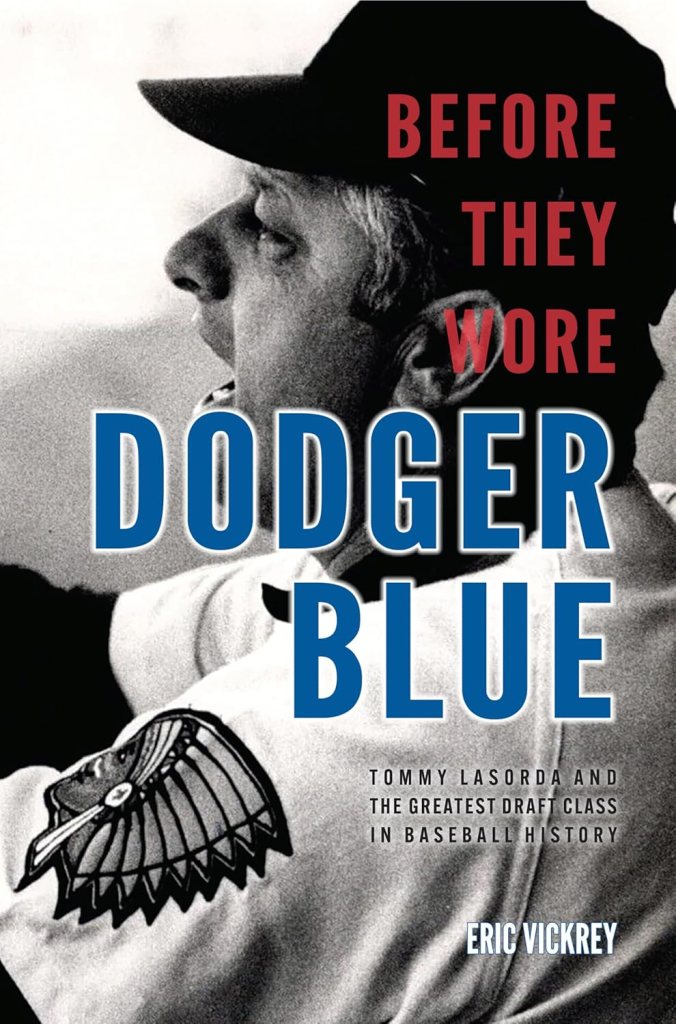
The author: Eric Vickrey
The details: August Publications, 348 pages, $24.95; released Dec. 7, ’25
The links: Author site, publisher site, Bookshop.org
A review in 90 feet or less:
The time capsule that Sports Illustrated has become, in the musky scent of its recent emasculation, can still be a bit jarring.
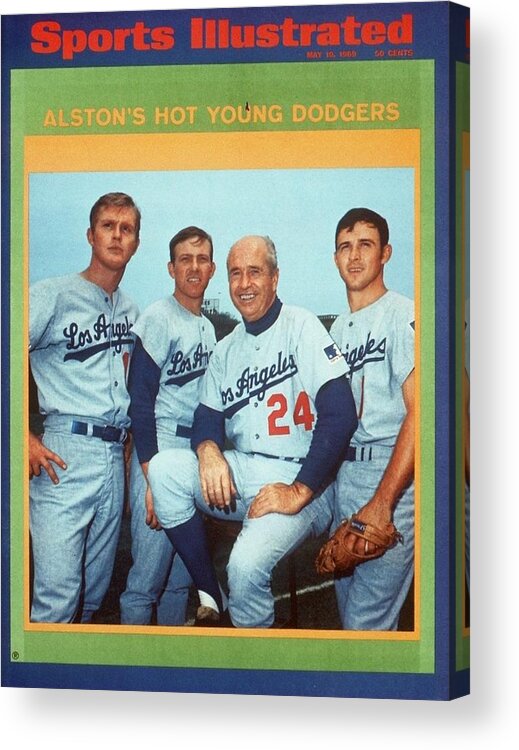
When the SI issue of May 19, 1969 arrived at our house, proclaiming a group of “hot young” Dodgers were about come to the rescue of a franchise still trying to find its footing from a 95-win team getting swept in the ’66 World Series, then watching Sandy Koufax retire, and now braced for Don Drysdale heading in that direction, there was some reason for optimism for all the kids in my neighborhood. The magazine’s 40-cent cover price our parents paid was also worth an investment in seeing the future as predicted by our wise elders.
Manager Walter Alston, as we were shown, had Bill Sudakis, Ted Sizemore and Billy Grabarkewitz all ready for the reboot. Tell Danny Goodman to start cranking out World Series trinkets.
Given that those ’69 Dodgers would finish 85-77, fourth-best and just eight-games out in the newly created National League West, it was a bit of an illusion, but much easier to compartmentalize after taking in a 76-86 showing in ’68 (seventh in the elongated NL, 21 games back) and a 73-89 free-fall from ’67 (eighth place, 28 1/2 games back).
Yet, these three Musketeers fresh out of the Mickey Mouse Club would bring it back to glory.
With mixed results.
Sudakis, a catcher and third baseman who signed as a free agent in 1964 a year before the MLB Draft began, hit .234 that ’69 season in 132 games, age 23. Sudsy, as was his nickname, seemed to be all but washed up by ’72 when the Dodgers waived him. The Angels kicked the tires on him before the ’75 season, then released him mid-way through after he hit .121 in 30 games.
Sizemore, a 15th round draft pick in 1966, somehow won the ’69 NL Rookie of the Year Award following Johnny Bench (in ’68) and Tom Seaver (in ’67) in an otherwise so-so year for up-and-coming talent. Starting at second base, Sizemore would have a career-best 4.2 WAR, hitting .271 in 159 games, age 24. After upping that to .306 in ’70, the Dodgers capitalized on his value, sending him to St. Louis with backup catcher Bob Stinson for Dick Allen (which didn’t end up so well). Sizemore came back to the Dodgers in ’76 via a trade for Willie Crawford, but by ’79, the Dodgers were done with him again, sending him this time to Philadelphia.
Grabarkewitz, taken in the 12th round of the ’66 Draft, was bestowed jersey No. 1 when he came up for 34 games that ’69 season, going 6 for 65 (.092). But the next year, he was on the NL All-Star team, hitting .289 in 156 games with a team-leading 17 homers, 92 runs scored, 84 RBIs and 19 stolen bases.
Then, poof.
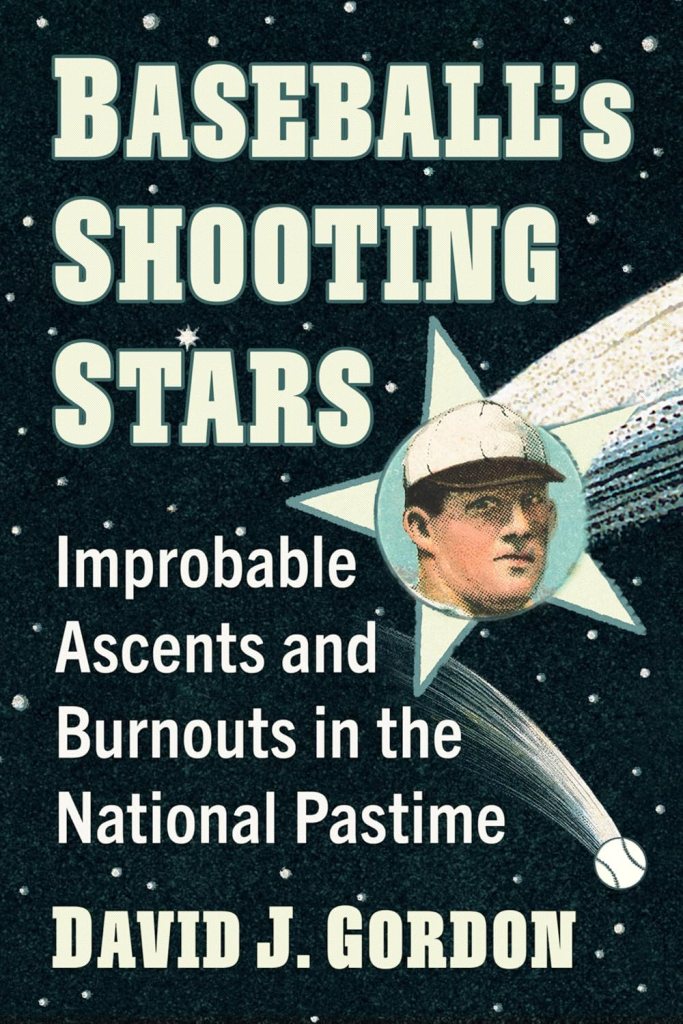
In the 2024 book “Baseball’s Shooting Stars: Improbable Ascents and Burnouts in the National Pastime,” author David J. Gordon devotes a special chapter to Grabarkewitz, the man “who led the league in consonants” but was “stymied by badly timed injuries.” His 6.5 WAR in his career year in 1970 — a stat that didn’t even exist at the time but often used in modern times to measure former players in a new light — wasn’t that remarkable, but in the aftermath, Gordon write that Grabarkewitz “may have been the most extreme one-year wonder of any non-pitcher in MLB history … I can find no other historical example of a position player with a career lasting at least five years who posted a > or = 6.5 WAR in one season but played at or below replacement level for the remainder of his career.” Why he was out of the game by age 29, after a brief time with the Angels, can be baffling to some, but Gordon has a thought on that:
“My reflexive take on one-year wonders like Grabarkewitz is their career years were flukes and the law of averages caught up with them. But Grabarkewitz is something else. Nothing about his sterling 1970 season seems lucky or flukish. A combination of lesser injuries and an overloaded Dodgers farm system — not regression to the mean — conspired to prevent him from becoming the player everyone thought he would be for more than one season. I view Grabarkewitz mainly as a very unlucky player who might very well have achieved long-term success on a different team and under more favorable circumstances.”
Gordon allusion to “an overloaded Dodgers farm system” goes to why Vickrey’s book gives a greater context to how and why the team’s 1968 MLB draft remains, by consensus still today, the greatest haul of talent in the game’s history.
Dialing back to that ‘69 season, there was a brief glimpse of a 20-year-old Steve Garvey (1-for-3), 19-year-old Bobby Valentine (five pinch-running appearances) and 19-year-old Bill Buckner (0-for-1).
Valentine, Buckner and Garvey were prized pieces of a collection that included Ron Cey, Davey Lopes, Tom Paciorek, Doyle Alexander, Joe Ferguson and Geoff Zahn. Adding in Bill Russell, Charlie Hough and Tommy Hutton, the Dodgers’ foundation had been laid and would last more than a decade — let’s call it the 1981 World Series, after they team decided to let their prized infield break into pieces.
The link to all of them is Tommy Lasorda. As Vickrey details, it was Lasorda, that scout, who was a key figure in the Dodgers’ acquisition of talent before the instution of the 1965 MLB Draft — the first pick of that draft was Rick Monday, an outfielder from Santa Monica High who had gone to Arizona State and was all but signed as Dodgers home-town talent before the Kansas City A’s were allowed to take him. Just prior to that, Lasorda was the important figure in the Dodgers signing local talent Willie Crawford from Freemont High in L.A., one of the last of the “bonus baby” players who had to spend time on the major-league roster likely before they were ready.
Vickrey’s dive into the whole process of scouting and why the MLB Draft came about in the first place sets the stage for how the Dodgers somehow pulled off their ’68 feat at a time when owners were trying to suppress run-away salary expendures.
Fresco Thompson was promoted to the Dodgers’ general manager in June of ’68 right at the time of that draft, after Buzzie Bavasi left to join the expansion San Diego Padres. But when Thompson died that offseason at age 66, scouting director Al Campanis was promoted to GM for the ’69 season.
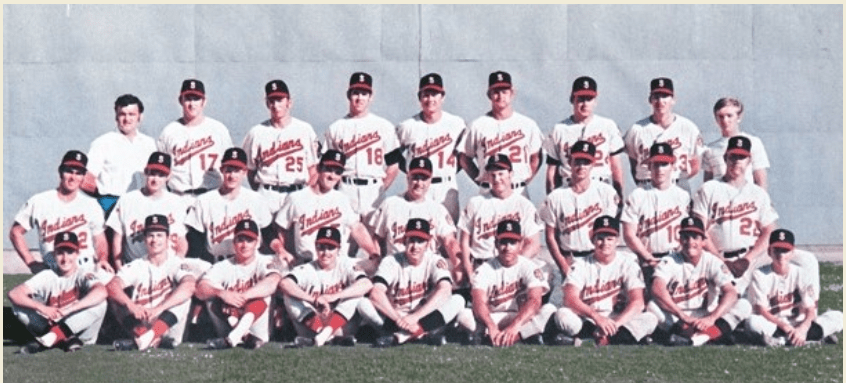
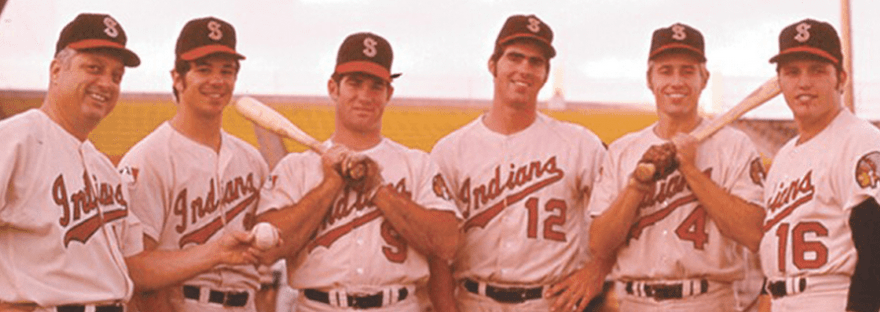
Back row: Trainer Herb Vike, Jerry Stephenson, Doyle Alexander, Mike Strahler, Tom Paciorek, George Lott, Dick Armstrong, Charllie Hough, clubhouse boy Kent Schultz.
Middle row: Bill Buckner, Geoff Zahn, Sandy Vance, Dick McLaughlin, manager Tom Lasorda, Bart Shirley, John Purdin, Marv Galliher, Jack Jenkins.
Front row: Batboy Dave Vaughn, Bob Valentine, Bob Stinson, Bob O’Brien, Tom Mulcahy, Davey Lopes, Steve Sogge, Gus Sposito, ballboy Mike Wilson.
Not pictured: Steve Garvey, Tom Hutton, Bill Russell
The Dodgers’ Single-A farm team in Ogden, which in ’68 was managed by Lasorda, followed by its Triple-A farm time, 1970 Spokane Indians, where Lasorda was promoted, would have players who went on to account for 23 World Series appearances, 23 All-Star selections and on National League Most Valuable Player Award — Garvey’s in 1974.
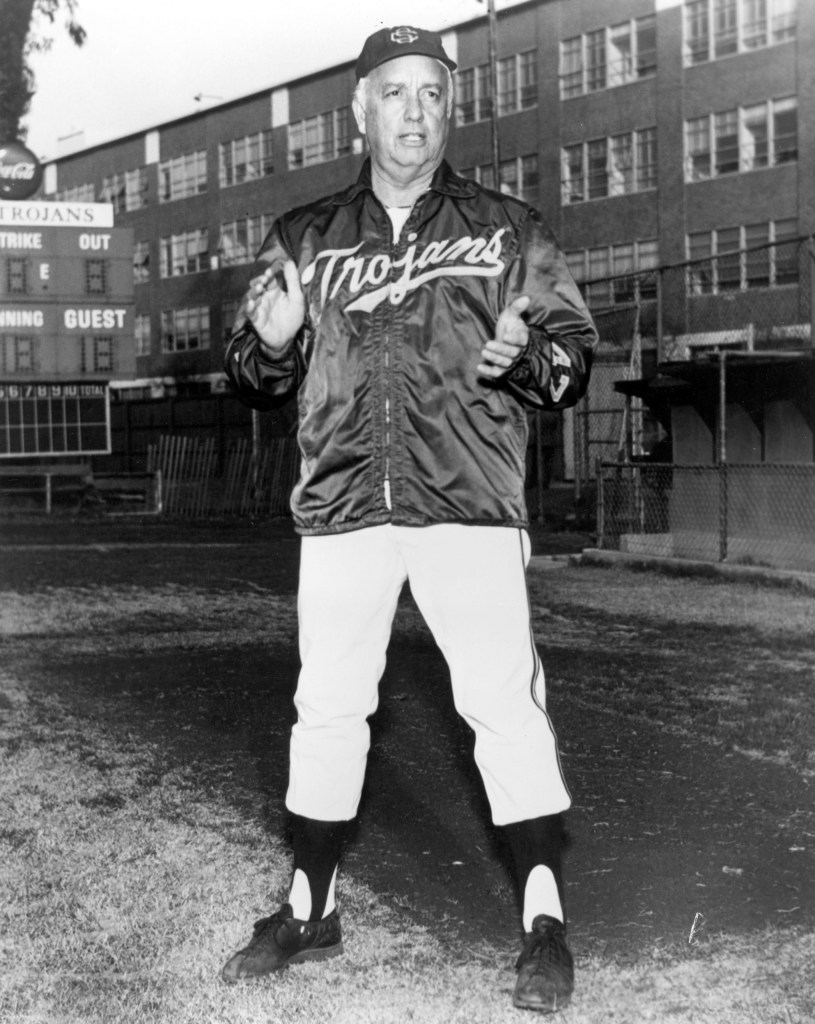
Lasorda’s role in all this is important enough to make him the cover photo of the book — in his Spokane Indians uniform. He was still trying to figure himself out.
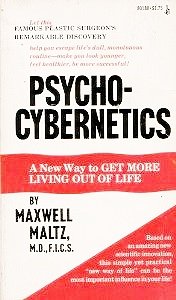
As Vickrey notes on page 115, Lasorda carried around a 1960 self-help book called “Psycho-Cybernetics: A New Way to Get More Living Out of Life,” by Dr. Maxwell Maltz — how to achieve success by changing one’s self-image, boosting self-esteem and eliminating false beliefs and negativity.
“Have you ever told a story so often over a time that you finally believed it yourself?” Lasorda asked Spokesman-Review writer Mike Lynch in an interview. “Have you ever picked out a successful man in your field that you want to be like? … You tell yourself you’re the best. I wake up in the morning and I believe. I tell myself I’m the best manager in baseball … I speak before thousands of people every winter and I have confidence that I can without preparation entertain those people because I believe.”
Vickrey, who did 70 interviews for this book, goes on to report: “One pitcher who declined to go on the record for this book described Lasorda as more a politician than a manager. Some guys who played for Roy Hartsfield a year earlier preferred his more traditional style and thought Hartsfield possessed a higher baseball IQ.”
Maybe true, but Lasorda was learning the game like the rest of the talent around him, starting in the Dodgers’ minor league system in 1966. By 1973, Lasorda was the Dodgers’ third-base coach. By 1976, he was their big-league manager.
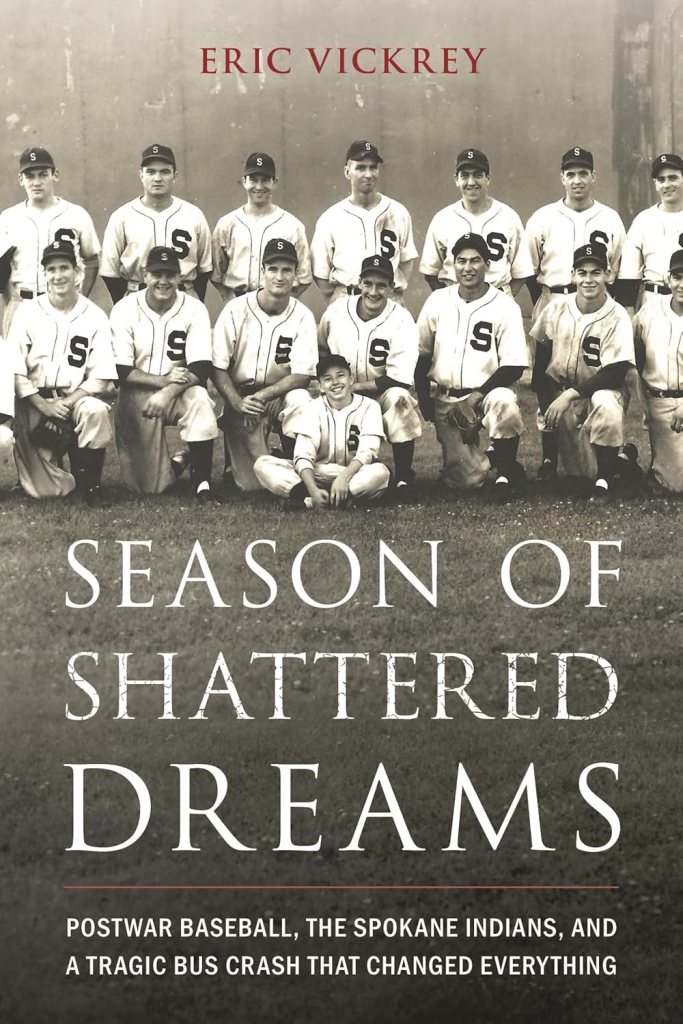
Vickrey, who lives in the state of Washington, was curious about this time in the Spokane Indians’ history after doing a 2024 CASEY Award-finalist book “Season of Shattered Dreams” about a tragic bus crash that affected the franchise in 1946. Nine members of the 1946 Western International League’s team died and the other six were injured in a June bus crash to the bottom of a ravine in the Snoqualmie Pass going through the Cascade Mountains in Washington. It remains the deadliest accident in the history of American professional sports.
It is no accident, all these years later, that the Dodgers’ ’68 MLB Draft, and its subsequent success at various levels through the minors and majors, is worth looking back to see how and why there was some magic in place. Was it scouting genius? A minor-league regime to maximize the picks’ potential? Pure luck?
All of the above.
How it goes in the scorebook:
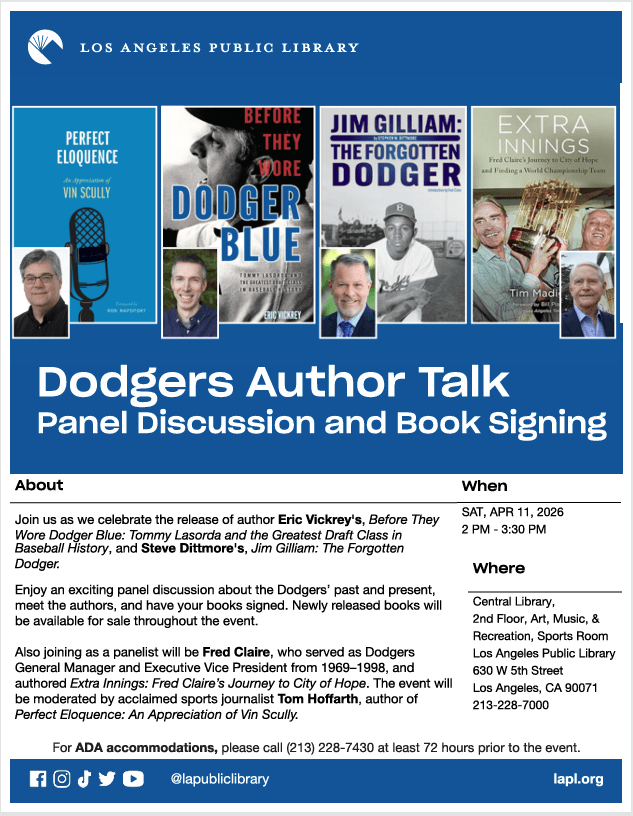
Worthy of a panel discussion.
So here you go: A panel discussing that includes Vickrey and “Before They Wore Dodger Blue” — as well as former Dodgers general manager Fred Claire — is set for Saturday, April 11, from 2-to-3:30 p.m. at the Los Angeles Central Library. Vickrey and Steve Dittman (“Jim Gilliam: The Forgotten Dodger,” which we reviewed in 2024) are also guests on this Baseball Digest/August Publications podcast.
One more thought:
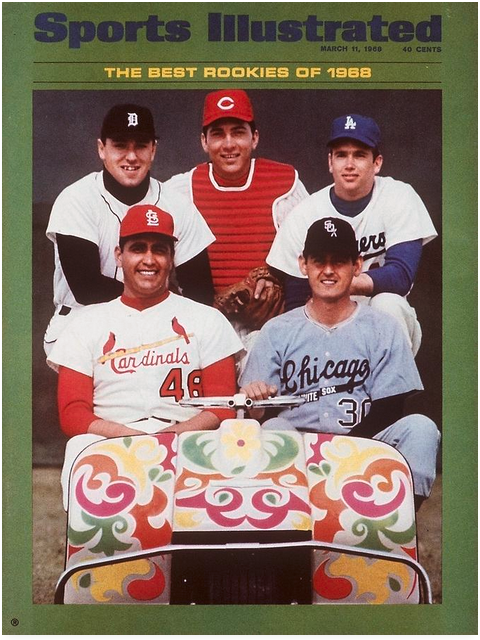
A year before that 1969 SI cover of the Dodgers’ “hot young” core, the magazine’s 1968 baseball preview issue included the Dodgers’ Alan Foster, a local kid out of Los Altos High in Hacienda Heights, was lumped in a group of “Best Rookies.”
Yes, it included Cincinnati catcher Johnny Bench. But Foster, like the other four pitchers around the future Hall of Famer, were far from “best” when their careers are reviewed. Foster, who pitched 16 2/3 innings in two starts during the ’67 season to merit all this hope, would complete a’68 season with a 1-1 mark in three starts over 15 2/3 innings. In ’69, he was 3-9 with a 4.38 ERA in 15 starts (more promise: two were complete-game shutouts). By 1971, he was traded to Cleveland, posting a 14-24 record in four seasons with the Dodgers to go with a 4.07 ERA.
More to follow up:
“The Gifts We Take from Baseball: A Dodger Photographer Memoir,” by Richard Kee (Taylor Publishing, 152 pages, $29.95; published Nov. 8, 2025)

As a follow up to his 2023 “The Dodger Collection,” Kee comes back through the lineup with more thoughtful reflections on the “gifts” he received from his years around the team capturing moments that remain cherished. Now, we have more of his back story to them. The photos may speak 1,000 words, but Kee’s own words added as a narrative make them all the more special. Especially the stories that don’t have a photo to go with them — like granting Tommy Lasorda’s “favor” to get over to Lil’ Joe’s in Chinatown to pick up a massive tray of rigatoni “so good it could’ve ended a war.” Or the one about when Ken Brett had his jeans sliced up by his teammates as a prank but played it off as if he didn’t notice it while signing autographs for kids. Or the time Vin Scully called to thank him for being at an event, another act of kindness. We miss those times, those asks, and that food. Kee is a gift we take from our profession.
“The Ross Porter Chronicles: Vol. 1: The Dodgers Years,” by Ross Porter with Mike Kunert (Halcyon Street Press, 244 pages, $24.95; released Oct. 13, 2025)
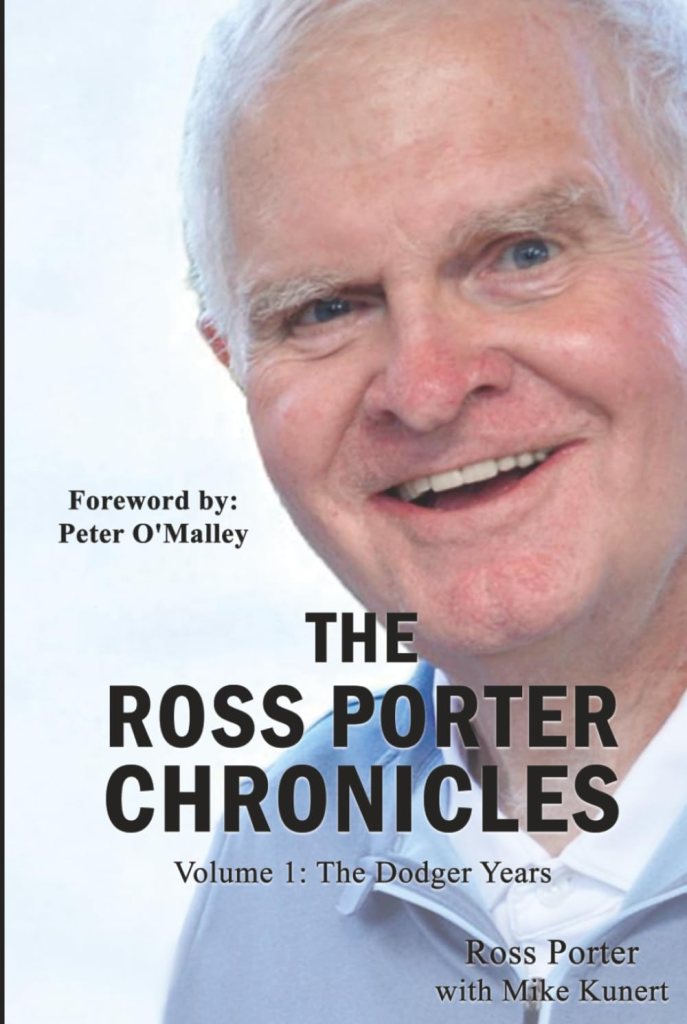
Of all the saved interviews Porter had with Dodgers players and beyond during nearly 30 years with the organization (1977 to 2004), hired to do TV and radio play-by-play as well as pre- and post-game Dodger Talk, this seems to be the first of several books full of transcript discussions he offers up. Along with some are QR codes that gets the reader to more audio and photographs. The lineup for this one: Vin Scully, Sandy Koufax, Don Drysdale, Don Sutton, Jerry Doggett, Jaime Jarrin, Ron Cey, Peter O’Malley, several stories by Tommy Lasorda, and Porter talks to Rick Dempsey (and his own wife, Lin, who was there) about that 22-inning, 1-0 game in Montreal in 1989 that Porter called in its entirety.





 Tom Hoffarth's The Drill: More Farther Off the Wall